Murmansk Woman Rescues Injured Gull and Seeks New Home
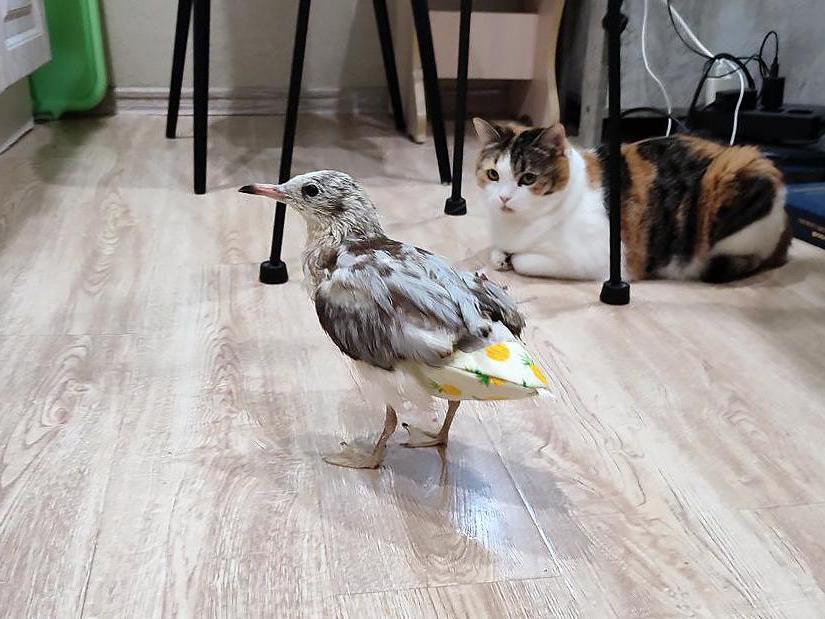

Sometimes the bird walks around the apartment in special diapers.
Last summer, Murmansk resident Elena Furtseva picked up an injured gull. The bird can no longer fly, so it cannot survive in the wild — it would die. Now the northerner is searching for a new home for the feathered one. She told 51.RU journalists about her unusual pet.
“What if I can heal it and release it?”
Elena encountered the lake gull in August on the shore of the Kola Bay, near the bridge. The bird was crying loudly — it had a broken wing, with a bone sticking out. According to the Murmansk woman, she didn’t even hesitate — she immediately rushed to help the bird.
“A month had passed since my mother’s death at that point. I was in a terrible state. Then I saw this gull, took off my cardigan and ran to it, but it tried to get away from me. But I caught up, covered it with my sweater and took it home. A thought flashed through my mind — what if I can heal this bird and release it,” recalls Elena.
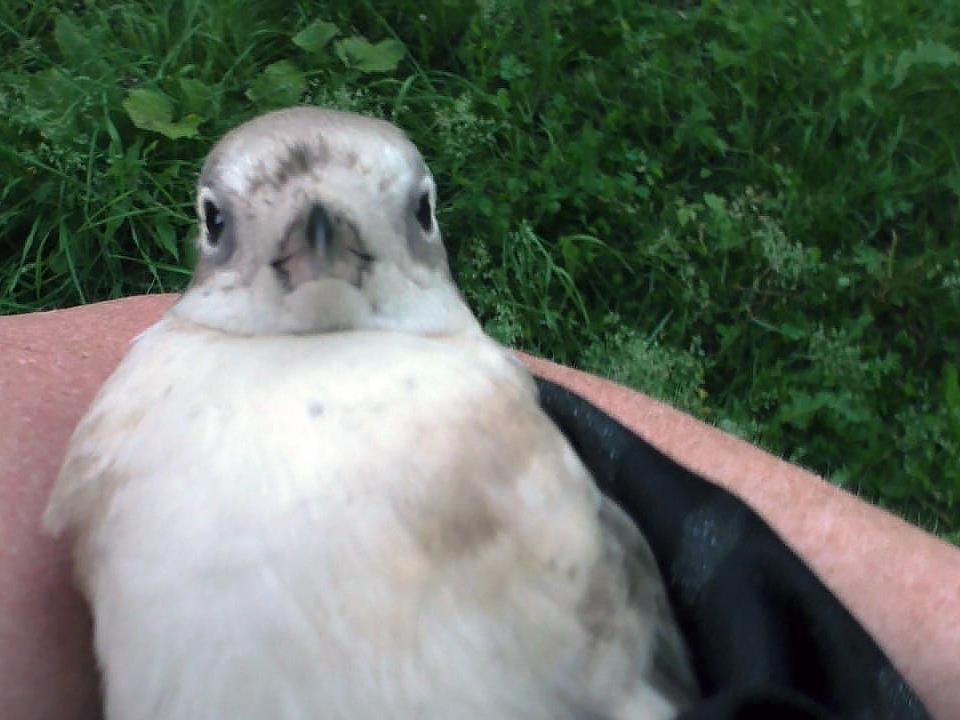
The rescuer caught the gull on the shore of the Kola Bay last August.
Euthanasia is never too late
The northerner filmed her find and showed it to Murmansk bird rescuer Natalia Raeva. The verdict was grim: the gull will not be able to fly, and releasing it outside would be a slow and painful death. Therefore, the bird must be euthanized — or else find a human for it.
“At first I decided — euthanasia. But I met a man who has two gulls living at home, he loves them, goes on vacation with them — takes them on the train in a box, can you imagine? They spend the summer in a private home. And I felt so sorry for mine! Euthanasia is never too late… What if I can still save it?” says Elena.
The lake gull is a small bird from the gull family, reaching the size of a large pigeon. It is easily recognizable by the dark brown color of its head.
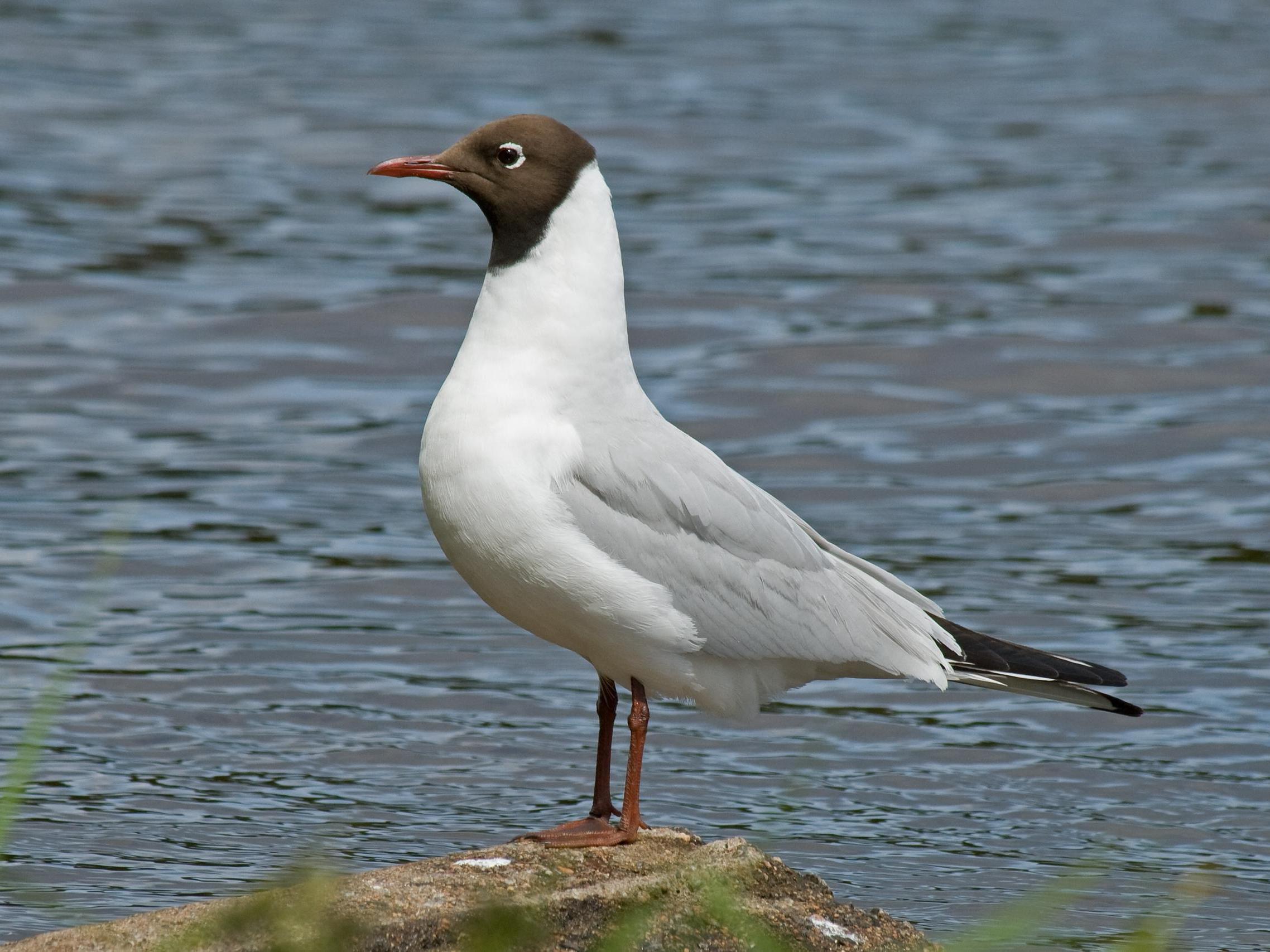
The lake gull is a small bird with a distinctive dark brown head.
How to live with a gull?
Elena named the bird Chuchundra. The estimated age is about a year, as lake gulls change their plumage at about two years, and Chucha is just beginning this process.
“The name came suddenly — he’s so frisky, runs everywhere, wants everything. It’s very hard to determine the sex, but to me it’s a boy. Although, of course, a girl could behave like that too,” laughs the northerner.
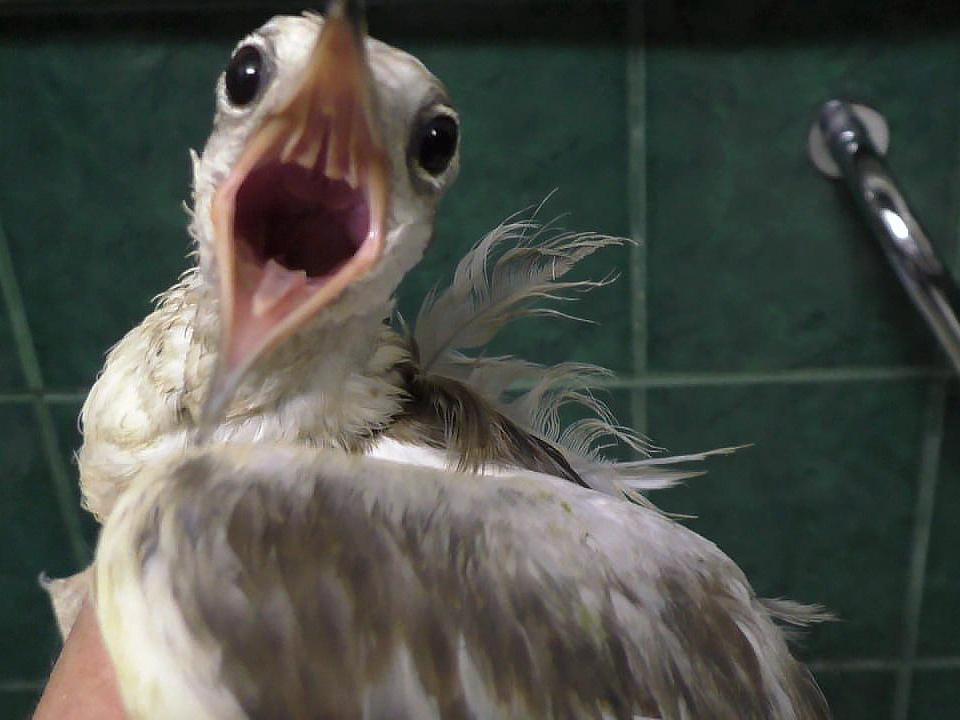
Keeping a gull has many nuances. First of all, it needs a lot of space — according to Elena, at least an aviary the size of a small kitchen:
“In an apartment, it’s bad first of all for the bird itself, not for me. I’ve already gotten used to daily cleaning.”
Lake gulls nest near water bodies, so they need freely accessible water — for example, a large basin where the bird can splash around:
“So he takes food, eats it — washes his beak. Then takes again — eats — washes. That’s how they eat. By the way, he doesn’t go to the toilet near his bowls!”
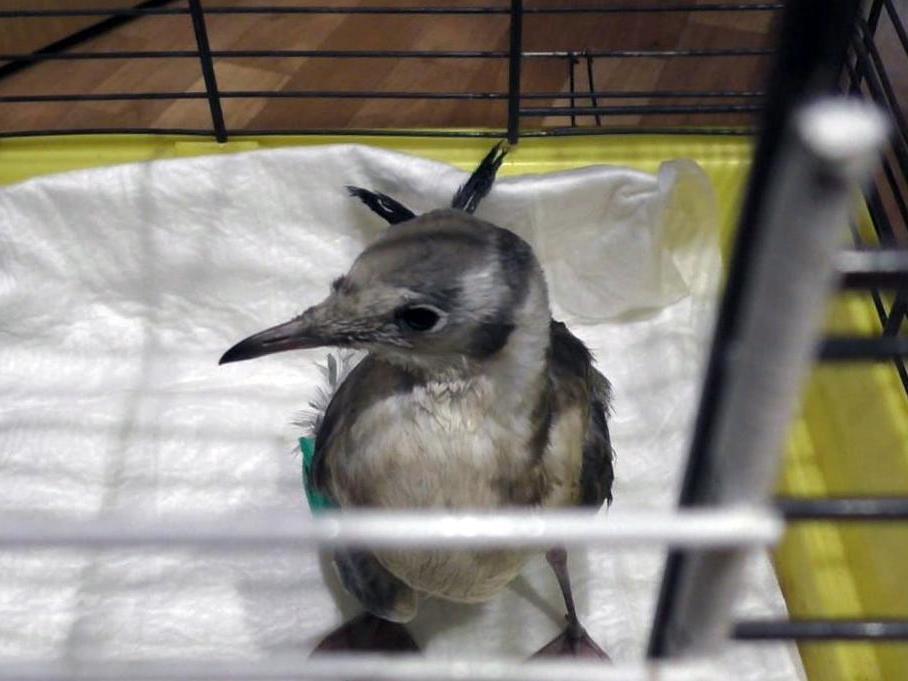
Chuchundra’s main diet is fish. Elena admits that she has spoiled her pet a bit:
“Once I gave him a river perch — and he was like… ‘I’ll eat it, I won’t.’ By the way, they should be fed not with fillet, as I did at first, but with whole fish, with bones and skin. What he doesn’t digest, he regurgitates.”
Now the bird lives on the balcony — and unfortunately, it’s cramped there:
“I had to cover the partition with cloths because he constantly beats his wings — he wants to expand the space. Sometimes he breaks them until they bleed, and I wrap them with self-adhesive bandage.”
For the bird’s ‘house,’ the northerner bought special mats. Replacing them with fabric or diapers is not allowed — it’s harmful for the gull’s feet:
“They walk on pebbles, they can’t wander on soft ground — they’ll get calluses, and you’ll have a hard time treating them. I wash the mats regularly, change them once a day so the bird lives in cleanliness.”
Sometimes Chuchundra does walk around the apartment. Before the ‘walk,’ Elena puts special bird diapers on the gull:
“He comes out in these pants and bosses everyone around! I was afraid the cats would hurt him, but no. He pecked once — and that’s it, they don’t come near anymore.”
If the cats — and Elena has two — do approach, the bird might scream. But in general, says the Murmansk woman, Chucha is quite quiet:
“Gulls usually scream, but from him it’s rare to hear that. At night he doesn’t wake me up — he either sleeps or cleans his feathers, he’s very clean.”
“Maybe I’m attributing intelligence to him”
Gulls are smart birds, but they cannot be fully tamed like a crow. Chuchundra took a long time to get used to people, but now, if very hungry, he can take food from Elena’s hands. At the same time, the northerner notes, the pet understands where its person is and where a stranger is.
“He recognizes my voice and is afraid of strangers. Maybe it’s my imagination, but he understands the command ‘Go eat.’ So I put the fish, then say: ‘Go eat.’ He looks at me like that — and goes. Maybe, of course, I’m attributing intelligence to him,” smiles Elena.
An interesting observation: Chucha doesn’t like bright or unfamiliar clothing on the northerner, he gets nervous.
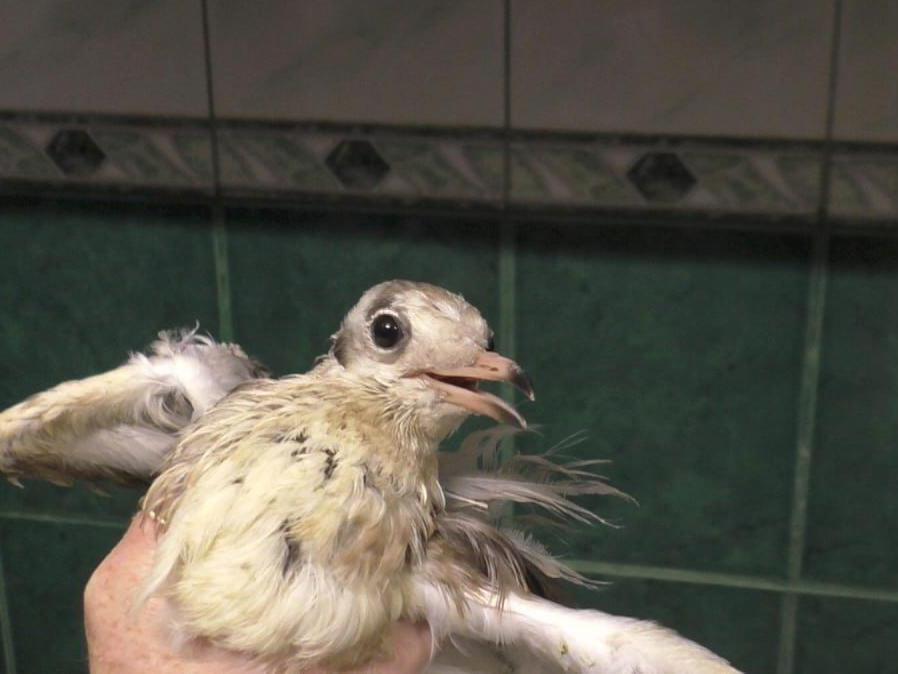
The lake gull is not the first bird the Murmansk woman has helped survive:
“I’m not a bird person at all. I have cats, also from the street, a guinea pig, a chinchilla. But it so happened that I once saved two pigeons. They spent the winter with me, in spring I released them, and they later flew back with a baby.”
The gull as a piece of the north
Chuchundra needs a zoo corner, a sanatorium, a zoo — any place with a water body where non-flying birds can live peacefully under human supervision. In Elena’s opinion, a private home would also do:
“You know, a person leaves Murmansk for Voronezh, Tambov, anywhere — and takes a gull with them as a piece of the north. That would be nice!”
The Murmansk woman made a video with Chucha and sent it to several groups, but there have been no responses yet. However, Elena does not give up and continues to search for a new home for her unexpected pet.
“I believe that someone will be found who will give it a chance at life,” says the Murmansk woman. She can be contacted by phone at 89113208513, or by writing to personal messages on VK.
Recall that recently in Murmansk, two injured ducks were rescued and now kind owners are being sought for them. And in the city of Polyarnye Zori, 10 orphaned cats are about to lose their home.