Breast Cancer Myths Debunked by a Doctor from Samara

Breast cancer (BC) remains the most common oncological disease among women in the Samara region and ranks second among all cancers overall. The disease is well-studied, yet many misconceptions still surround this diagnosis. Do they all have a scientific basis? Irina Okuneva, head of the medical prevention department at the Samara Regional Clinical Oncology Center, explained to the local news outlet 63.RU which of the known statements about cancer are myth and which are truth.

We publish the doctor«s comment under each statement.

Breast cancer only occurs in women

In reality, BC can also develop in men. Although they account for less than 1% of all cases, it is in men that the disease is more often diagnosed at late stages—due to a lack of oncological vigilance. Any lumps in the breast area, changes in nipple shape, or discharge from them are reasons to see a doctor. Early diagnosis is important regardless of gender.
Breast cancer only affects older women; young women need not worry
For a long time, the average age of patients with BC was around 60. However, in recent decades, the disease has noticeably «rejuvenated.» Approximately 5% of breast cancer cases are detected in women under 40. There are known cases of diagnosis at the age of 20–30 and even earlier.
In young patients, the disease is more often associated with hereditary factors. If there is a family predisposition, it is important to regularly see a doctor and undergo examinations according to age and risk level.
Breast cancer is a hereditary disease (if my mother or grandmother didn«t have it, I won»t either)
Heredity does play a role, but far from a decisive one. Only 5–10% of BC cases are associated with hereditary mutations, particularly in the BRCA1 and BRCA2 genes. Even if there are sick relatives, cancer is not inevitable. Lifestyle, hormonal factors, and regular preventive check-ups are significantly more important.
Breast cancer is more common in women who have not given birth or breastfed; if you have given birth and breastfed a child, there«s no need to fear
Pregnancy and breastfeeding do affect the risk of developing BC, but they do not guarantee complete protection. In the first years after childbirth, the risk may increase slightly, but later it decreases.
Moreover, the degree of reduction depends on the age at first full-term pregnancy: for example, the lifetime probability of developing a breast tumor decreases by 20% when the first child is born at age 20, by 10% at 25, and by 5% at 35. The risk of getting breast cancer is comparable for women who had their first child after 35 and for women who have never given birth.
Breastfeeding reduces the risk of developing cancer not only of the breast but also of the uterine body and ovaries. It has been proven that breastfeeding for 12 months reduces the likelihood of breast cancer by 4.3%, and this applies to all phenotypes of malignant formations developing in the breast.
Women with large breasts get breast cancer more often
Breast size does not affect the risk of developing the disease. However, with larger breast volumes, a small tumor is harder to find, which complicates early diagnosis. Usually, women with small breasts discover a suspicious lump earlier and see a doctor. In a large breast, it is more difficult to feel a lump, and cancer can remain unnoticed longer.
Breast cancer always starts with a lump in the breast. If you can«t feel it during self-examination, you can sleep peacefully
This is not always true. Cancer arises at the cellular level, and up to a certain point, its location can only be determined using professional diagnostic equipment. But this does not negate the need for regular breast self-examination and, if suspicions arise, a mandatory visit to the doctor.
Breast cancer comes from uncomfortable underwear
Some time ago, there was a belief that bras that are too tight lead to lymph stagnation, accumulation of toxic substances in breast tissue, and, as a result, cancer. But during several studies and years of observation, it has been proven that neither tight nor constricting underwear, nor bras «with underwires» increase the risk of breast cancer.
The doctors« recommendation to wear bras without underwires is related to something else. A metal insert in clothing can chafe the skin, creating a risk of damage and infection, which in turn can become a serious problem.
If nothing hurts, there«s no need to be examined for breast cancer
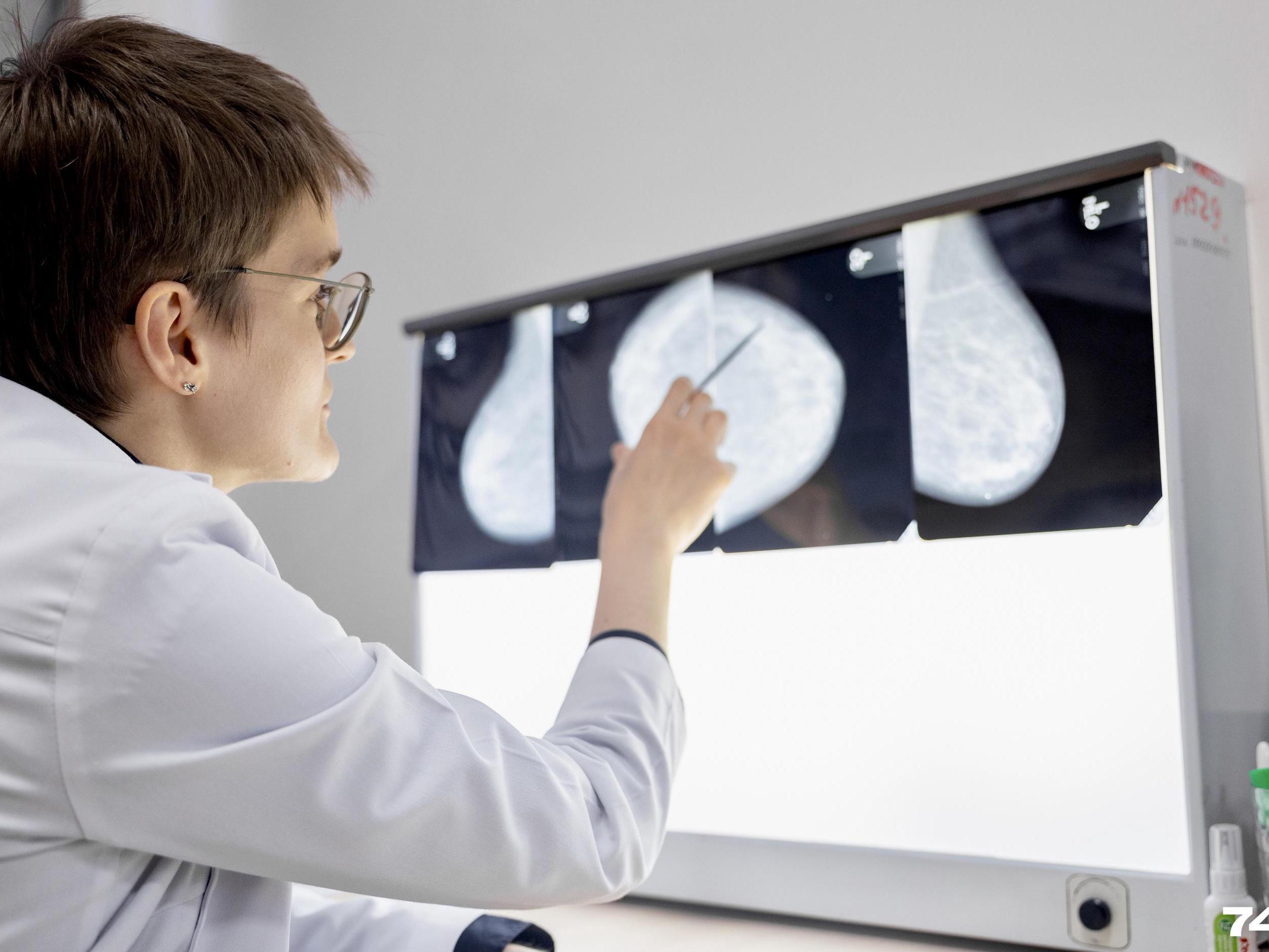
This is perhaps the most dangerous misconception. Pain appears at late stages, when the tumor is already significant. In the early stages, cancer is asymptomatic—there is no pain, discomfort, or visible changes. That is why regular preventive check-ups and screening are so important. Feeling well is no reason to postpone a mammogram.
Breast cancer is a death sentence; you don«t survive it
Breast cancer is not a fatal diagnosis. In Russia, we have crossed the threshold of 60% survival, but we should strive to increase this indicator.
Today, BC treatment is completely different than it was five, let alone ten years ago. Many innovative methods have appeared: targeted therapy, immunotherapy, radiation therapy. We understand that the same disease can develop through completely different mechanisms and requires a personalized approach to treatment.
For example, HER2-positive breast cancer (with an excess of HER2 receptors), previously considered one of the most aggressive and prognostically unfavorable, is now one of the most successfully treatable. This has become possible thanks to the development of targeted therapy, where the drug recognizes the HER2 protein, binds to it, and releases an active component inside tumor cells, thereby causing less damage to healthy ones. The effectiveness and targeted principle of action are confirmed by the results of international randomized studies.
But the main thing is to remember that the earlier the tumor is detected, the greater the chances of preserving the breast and your health!
After breast cancer treatment, you have to give up on yourself; you can«t return to your previous life
It would seem that treatment is behind you, and you can finally return to your usual life. But a logical question arises: what next? How will surgery, chemotherapy, and radiation therapy affect the quality of life? Will there be complications that will require some treatment again?
In fact, after completing therapy, a new stage begins—rehabilitation, a logical continuation of therapy. It helps to recover and return to a full life, eliminating the consequences of the disease and its treatment.
Even with inoperable forms of cancer, it is possible today to achieve significant results: stop progression, prevent new metastases, and not only prolong life but also preserve its high quality. Thanks to modern treatment methods, an oncological diagnosis ceases to be a death sentence—it turns into a manageable chronic condition with which one can live fully and happily for many years.
The unavailability of innovative drugs makes modern treatment in Russia impossible
World science is not standing still, and today Russian patients have access to innovative drugs for the treatment of breast cancer. It is important that the Russian healthcare system expands access to advanced treatment methods and that the scientific community continues to work on creating even more effective and safe drugs.
Breast cancer is a disease surrounded by too many myths and fears. But it is knowledge, regular check-ups, and a responsible attitude towards one«s health that provide a real chance for early detection and successful treatment. Do not postpone a visit to the doctor and rely on misconceptions—timely diagnosis saves lives.