The Iron Age of St. Petersburg: An Era of Reforms and Enlightenment

In October 1879, a sternly dressed, short woman—Nadezhda Vasilyevna Stasova—stepped out of the main entrance of an apartment building on Sergiyevskaya Street. At 57 years old, she remained an energetic public figure, one of the founders of the first higher educational institution for women in Russia—the Bestuzhev Courses. Her day, as usual, was scheduled down to the minute.
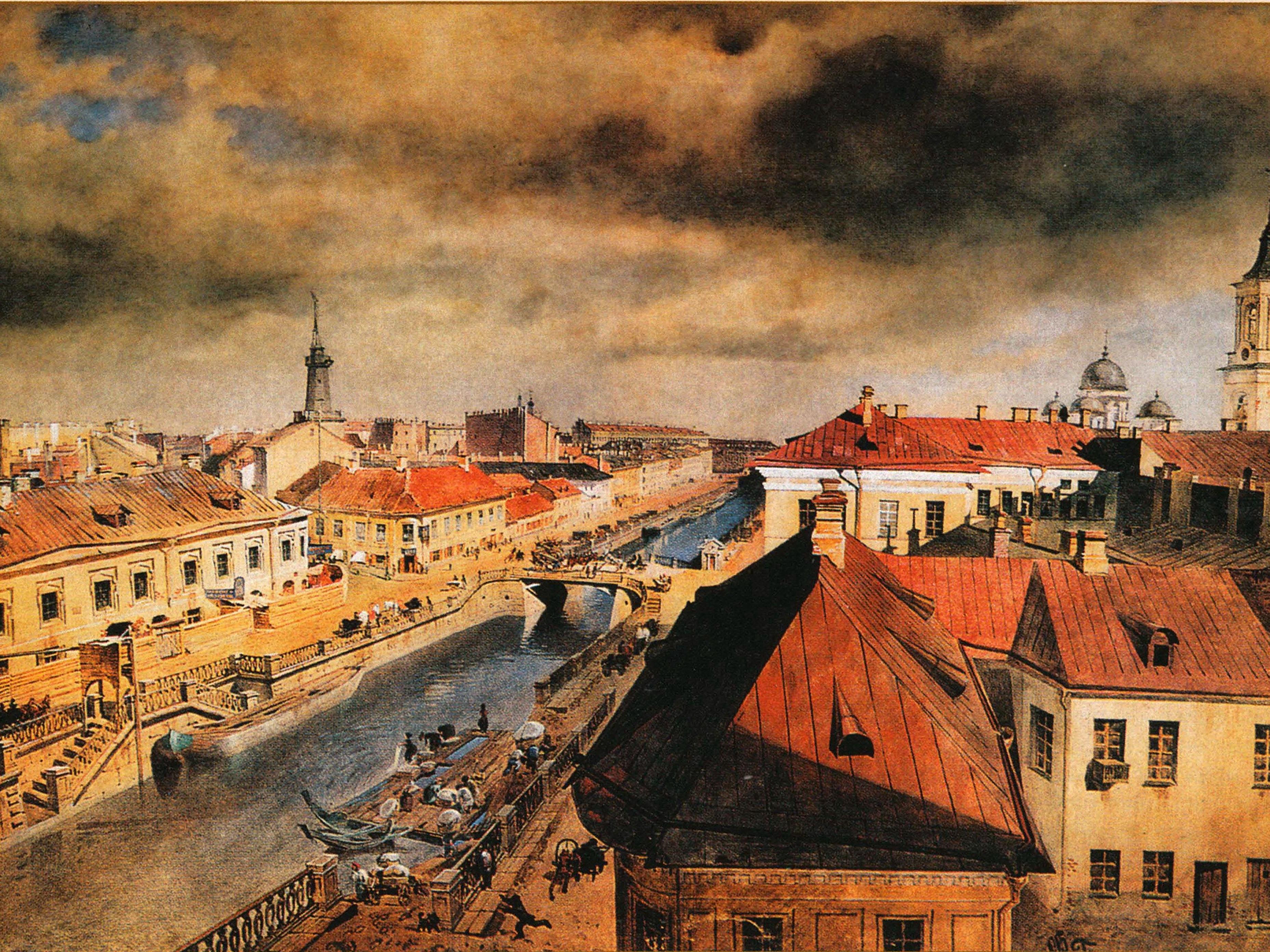
The Liteiny District where she lived had recently been considered the outskirts, but by the 1870s it was transformed. Instead of wooden cottages, fashionable mansions and multi-story apartment buildings now stood there. The construction boom of the 1860s–1870s changed the face of St. Petersburg: in three decades, the number of stone buildings in the Liteiny District grew from 600 to 1,400.
Nadezhda Vasilyevna was in a hurry. Today she had to travel across half the city to resolve issues related to her main endeavor—the Bestuzhev Courses. It was especially important not to be late to meet her brother Dmitry on Malaya Morskaya Street, where at a musical soirée she hoped to meet the famous pianist Anton Rubinstein and persuade him to give a concert in support of the courses.
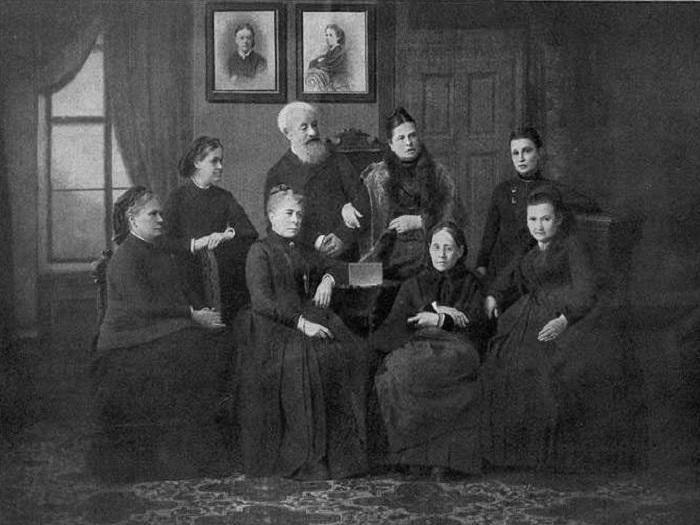
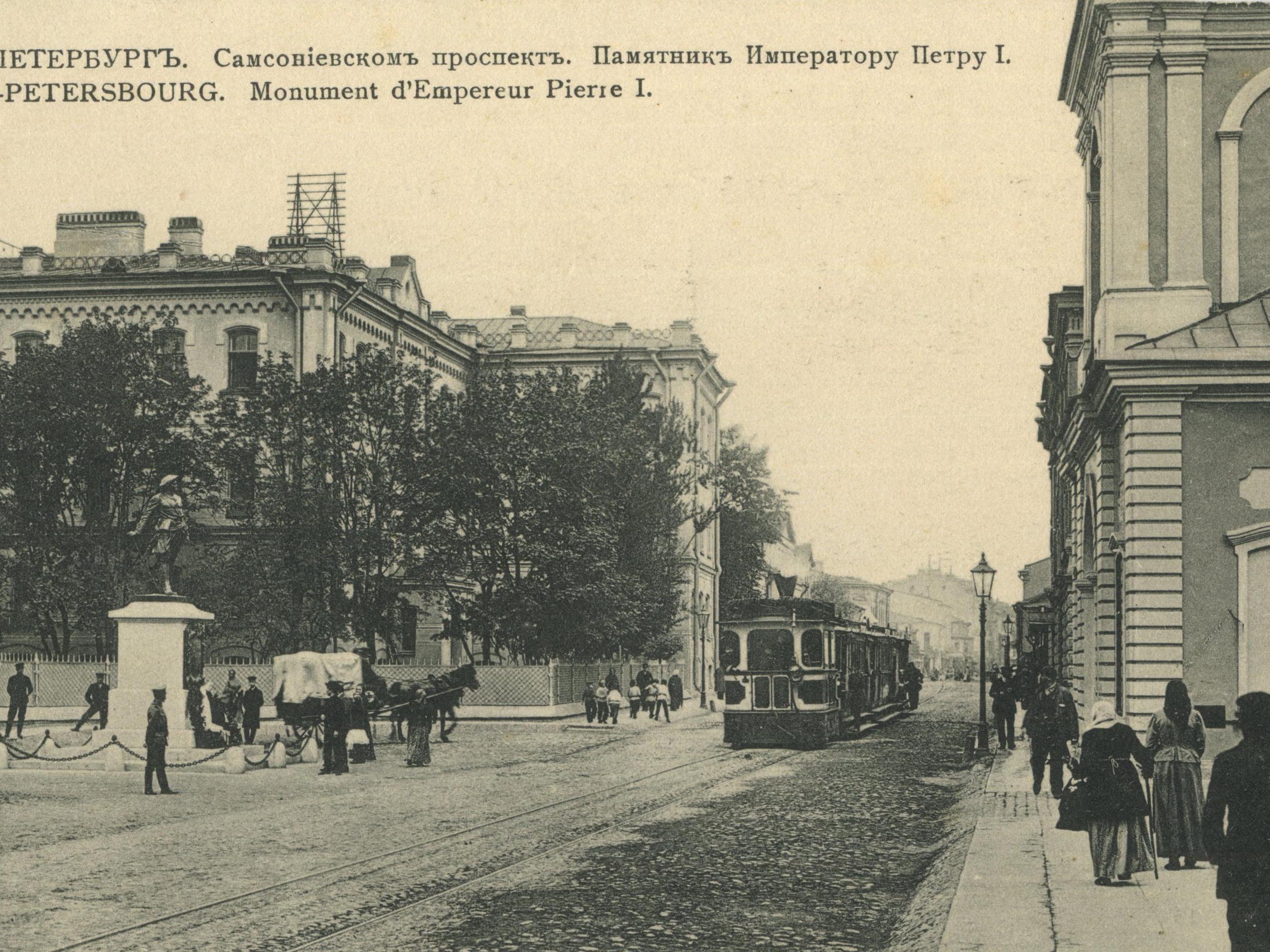
St. Petersburg in the 1870s was already a city of horse-drawn railways—«konki» (horse trams). The first line was laid along Nevsky Prospect in 1863, and by the end of the decade, tracks stretched along many streets. The blue carriages pulled by pairs of horses became a common sight, although women, because of their voluminous dresses, rarely climbed to the «imperial»—the upper open platform. Stasova, however, preferred a hired cab for speed.
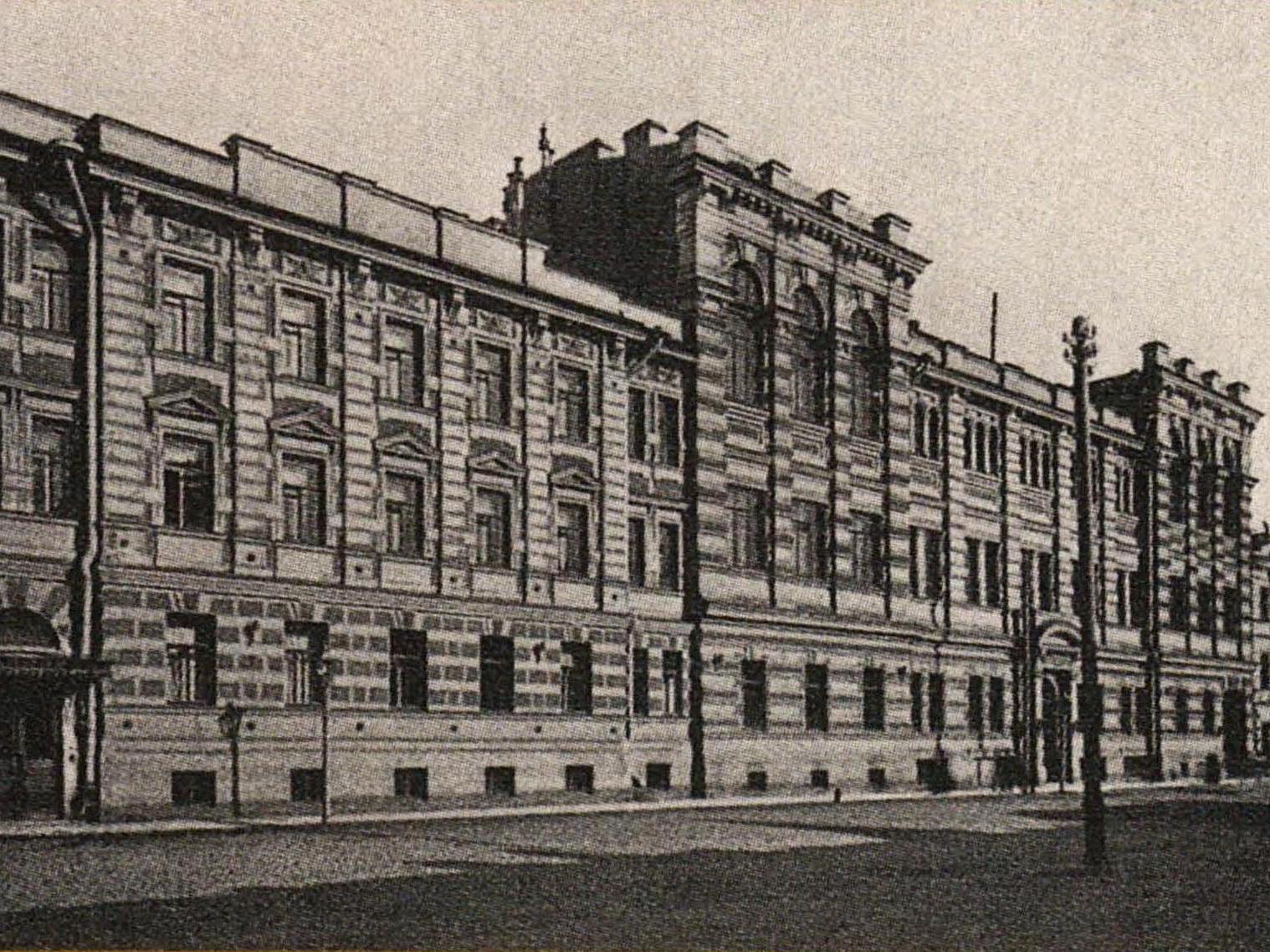
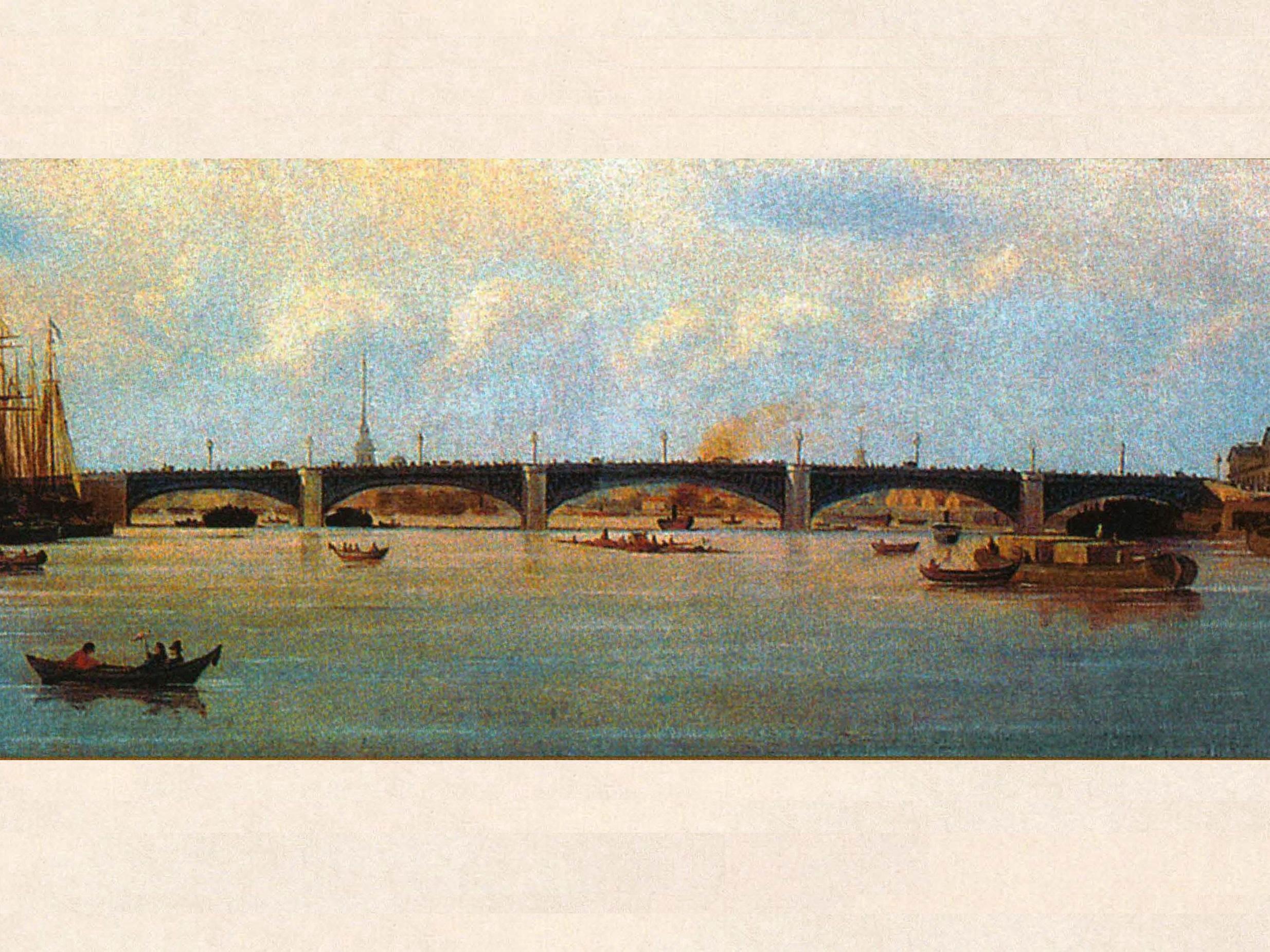
The carriage crossed Liteiny Prospekt, which was unusually lively. Just a few days earlier, on 1 October, the new Liteiny Bridge across the Neva had opened—the second permanent bridge after the Blagoveshchensky Bridge. Its construction, designed by engineer A.Ye. Struve, lasted almost six years and was fraught with difficulties, but its significance for the city was immense. The bridge connected the center with the Vyborg Side, where since 1870 the Finland Station had been operating, sending trains to Vyborg and Helsingfors (now Helsinki).
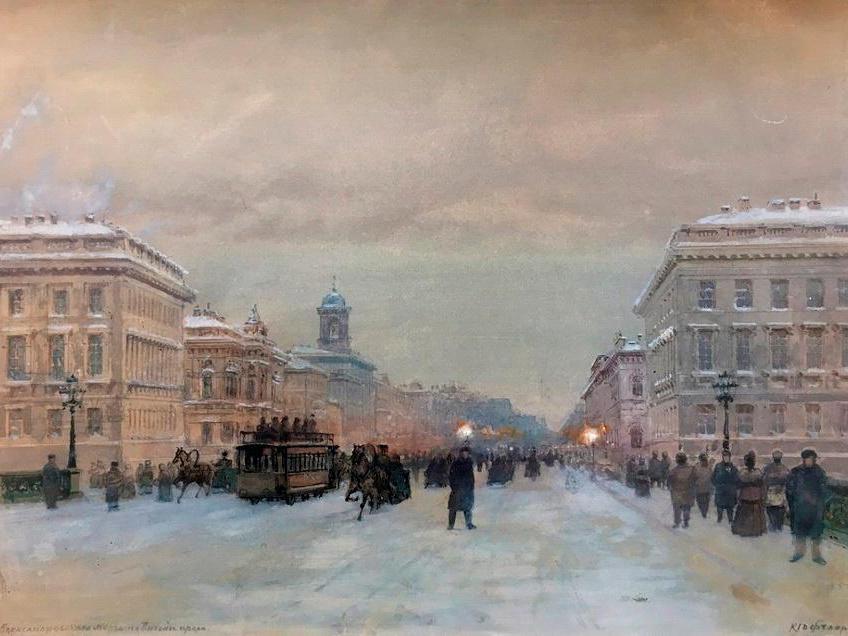
The Vyborg Side at that time was one of the main industrial districts of St. Petersburg. Out of the capital«s 280 factories and plants, about 40 were located here. Among them were G.A. Lessner»s «typographical supplies establishment», later transformed into a large plant producing steam engines and the first torpedoes; the mechanical plants of Ludwig Nobel (now «Russian Diesel»); the machine-building plant of V.S. Baranovsky, inventor of a rapid-fire gun; and Russia«s first copper-rolling plant of Rosenkrantz (the future »Krasny Vyborzhets«). The smoke from factory chimneys defined the appearance of this part of the city.
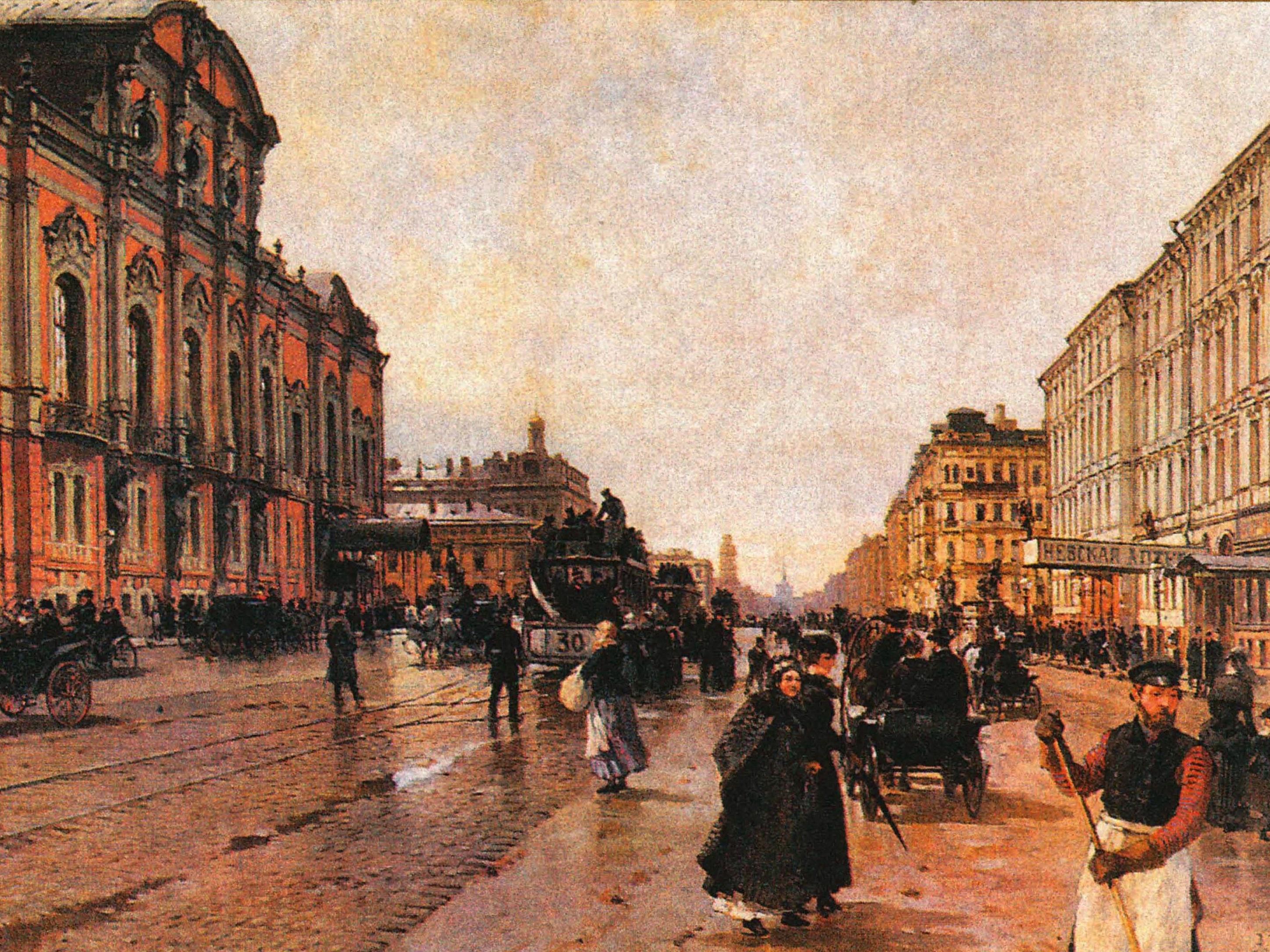
The «Iron» Stride of Industry
St. Petersburg was surrounded by a dense ring of industrial giants. Beyond the Nevskaya Zastava (outpost), a steel foundry had been operating since 1863, later named Obukhovsky—in honor of metallurgist P.M. Obukhov, creator of high-quality steel for artillery guns. Beyond the Narvskaya Zastava, engineer N.I. Putilov acquired the former state iron foundry, establishing production of railway rails. According to his design and with his funds, construction of the Sea Canal began in 1874—a unique 32-kilometer (20-mile) fairway along the bottom of the Neva Bay, which to this day allows ocean-going vessels to enter the port.
A Breakthrough in Women«s Education
Nadezhda Stasova got out of the carriage on Mokhovaya Street, at the house of Y.A. Botkina. Just a month earlier, on 10 September 1878, classes had begun at the Higher Women«s Courses, which entered history as the Bestuzhev Courses—named after their first director, historian K.N. Bestuzhev-Ryumin. For Russia, this was a revolutionary step: until the mid-19th century, girls from noble families mainly received home education, and higher education for women was absent.
Only from 1858 did women«s gymnasiums begin to appear, but universities remained closed to women. Many went abroad to study: in 1872, out of 67 female students at the University of Zurich, 60 were Russian. In St. Petersburg, the idea of higher education for women was supported by leading scientists: D.I. Mendeleev, I.I. Mechnikov, I.M. Sechenov and others were ready to give lectures free of charge. However, the main role in overcoming bureaucratic obstacles was played by women—Nadezhda Stasova, Mariya Trubnikova and Anna Filosofova.
The first attempt was the Alarchinsky Courses, opened in 1869, but they provided only secondary education. Authorities long refused to permit courses at a university level. Only in 1878, after eight years of effort, did they manage to launch the Higher Women«s Courses. In the first year, 468 regular and 346 auditor students enrolled. Studies were conducted in three departments: history and philology, natural sciences, and mathematics.
In the beginning, the courses had almost nothing: premises, equipment, money. Stasova headed the Society for Providing Funds, organizing collections through charity concerts, lotteries, and public lectures. A year later, they managed to rent the second floor in the Botkin house, where the courses were located until 1885, and then moved to a specially built building on the 10th Line of Vasilyevsky Island.
After inspecting the classrooms, Stasova set off again—this time on a horse tram. She traveled along Liteiny, Vladimirsky and Zagorodny Prospects towards the Izmaylovsky Regiments. Liteiny Prospekt in the 1870s was still a straight street with rows of low buildings, among which the five-story Muruzi House on the corner of Panteleimonovskaya Street stood out. Built in 1874–1877 for the fantastic sum of 800,000 rubles (approx. $11,000 USD at current rates), it also became known as the address of writer N.S. Leskov, who wrote «Lefty» there.
At the intersection with Basseynaya Street (future Nekrasov Street) stood house No. 36 on Liteiny—a well-known center of intellectual life. Editors of the journal «Sovremennik» (The Contemporary), I.I. Panayev and N.A. Nekrasov, lived here, and the circle of authors included I.S. Turgenev, L.N. Tolstoy, N.G. Chernyshevsky. The journal, founded by Pushkin, became the voice of progressive society, which ultimately led to its closure in 1866.
Crossing Nevsky, Stasova glanced at house No. 86 with its classical portico—the former Yusupov Palace, now owned by merchant Benardaki. This section of Nevsky between the Fontanka and Znamenskaya Square was actively built up with multi-story apartment buildings in eclectic styles. Land here had sharply increased in price, reflecting the city«s growth.
At Vladimir Church, the horse tram turned onto Zagorodny Prospekt. On the right flashed the building of the district school, where in 1872 public lectures for women were held (it was demolished in the 1980s during construction of the Dostoevskaya metro station). To the left, in Kuznechny Lane, at house No. 5, F.M. Dostoevsky had lived since 1878—here he would write «The Brothers Karamazov» and die in 1881.
Next opened the space of the Semyonovsky Parade Ground—the place where in 1849 Dostoevsky experienced a staged execution before his exile to Siberia. Part of the parade ground had been given over in 1837 for Russia«s first railway to Tsarskoye Selo. The horse tram car passed the station building (the future Vitebsky Railway Station) and headed towards the Technological Institute, which had been training engineers since 1831.
The area of the Izmaylovsky Regiments retained the character of a quiet suburb: wooden houses, front gardens, plank fences. Renting an apartment here was much cheaper than in the center. Stasova got off at the 1st Rota (now 1st Krasnoarmeyskaya Street) and headed towards Tarasov Lane, where one of her youth projects was located—a house of cheap apartments.
Champions of Women«s Equality
This house was connected to Mariya Trubnikova, whom Stasova met in 1859. The daughter of Decembrist Vasily Ivashov and Frenchwoman Camille le Dantue, Mariya was born in Siberian exile, married early, and in St. Petersburg, together with her friends—Nadezhda Belozerskaya and Anna Filosofova—engaged in charity work. Stasova, though older, felt part of their circle.
In the house of cheap apartments, Stasova was recognized and shown new sewing machines in the workshop. Suddenly a carriage pulled up to the entrance—it turned out to be Anna Filosofova, one of St. Petersburg«s first beauties, who had also decided to visit their shared »child«. The friends inspected the house together, then set off in Filosofova»s carriage to the Moyka River, where in her apartment the cream of the capital«s intelligentsia gathered.
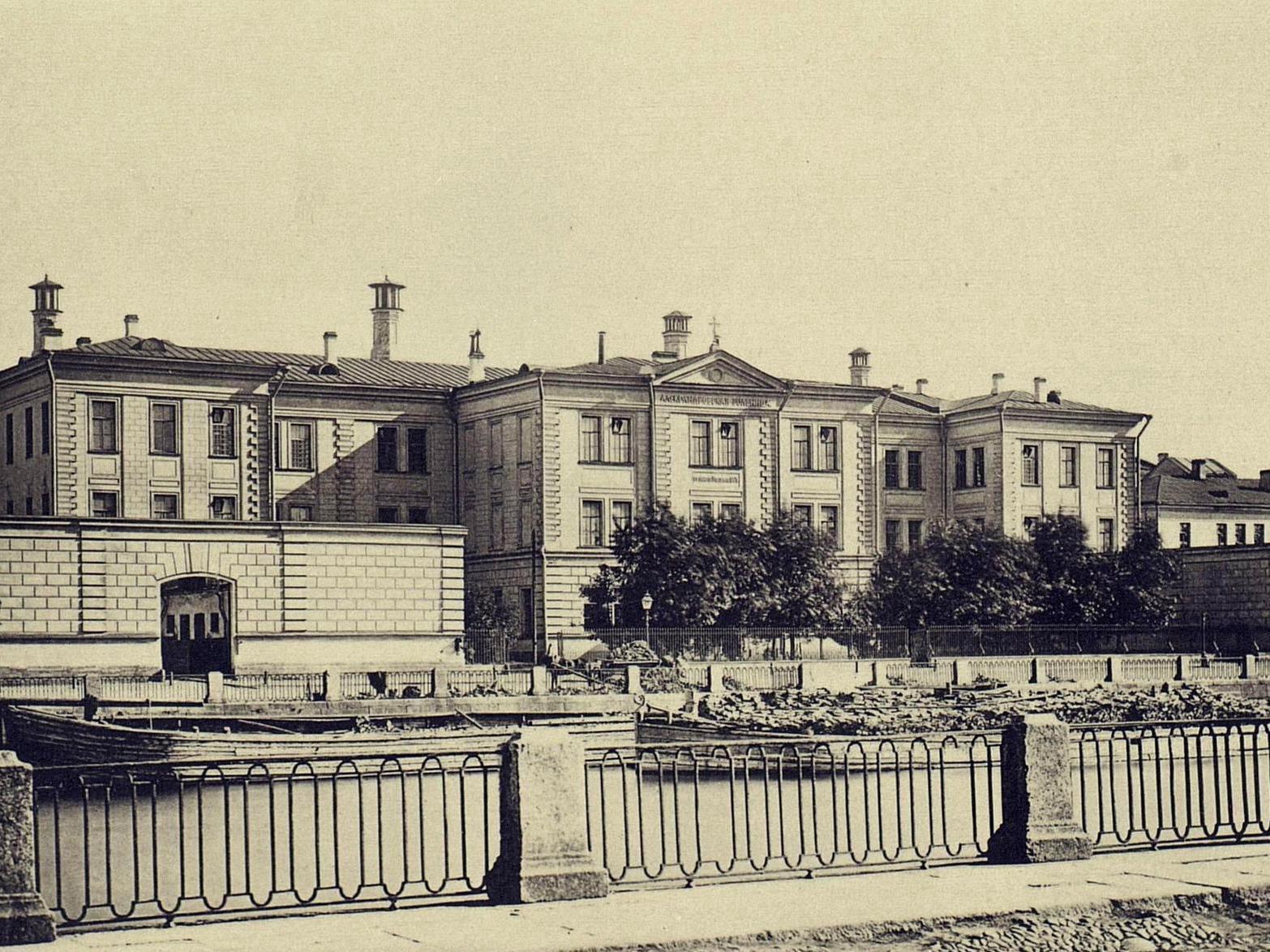
The carriage rolled softly over the cobblestones, passing the Trinity Cathedral built by Stasova«s father, and the Alexander Hospital for workers on the Fontanka. The hospital complex was built in 1864–1866 by architect I.V. Strom after Stasova personally appealed to Alexander II, shocked by the conditions of impoverished patients.
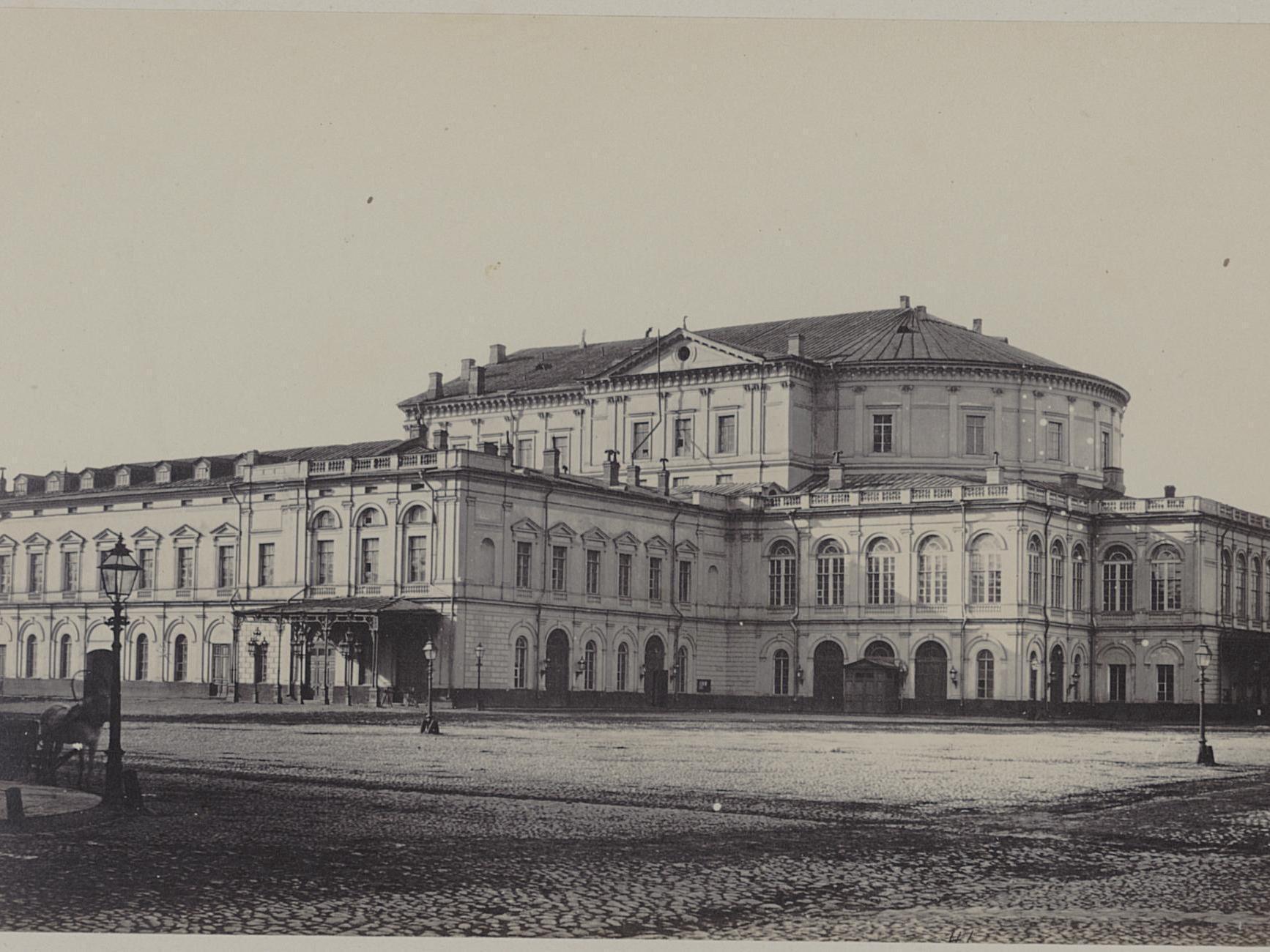
On Theatre Square, the building of the Bolshoi Theatre rose on the right (the conservatory would later be built in its place), and opposite—the Mariinsky Theatre, opened in 1860. On its stage in the 1870s, premieres of operas took place, including Dargomyzhsky«s »The Stone Guest«, Rimsky-Korsakov»s «The Maid of Pskov», and Mussorgsky«s »Boris Godunov«, which provoked heated debates.
In the Service of Progress
The house of cheap apartments was one of the first projects of the emancipation supporters. In 1861, they founded the Society for Cheap Apartments and Other Aid to the Needy. Starting with a capital of 500 rubles (monthly contributions of one ruble), within a year they attracted over 300 members. The society rented apartments for single women with children, paying the difference, and to provide residents with work, organized a sewing workshop with a laundry, shop, and kindergarten.
Another direction was Sunday schools for workers. On the initiative of professor P.V. Pavlov, 3 women«s and 7 men»s schools opened in 1860–1861. The government, suspecting sedition in any initiative, closed them after the fires of 1862, but Stasova continued secretly teaching girls at her home.
In 1867, Stasova organized a lottery that raised 50,000 rubles (approx. $680 USD at current rates). With this money, a stone house was built in Tarasov Lane, designed by engineer P.P. Mizhuev—with a laundry, school, and public kitchen. From 1871, a sewing workshop operated here, fulfilling military orders for twenty years and providing stable earnings for women.
The Many Faces of St. Petersburg
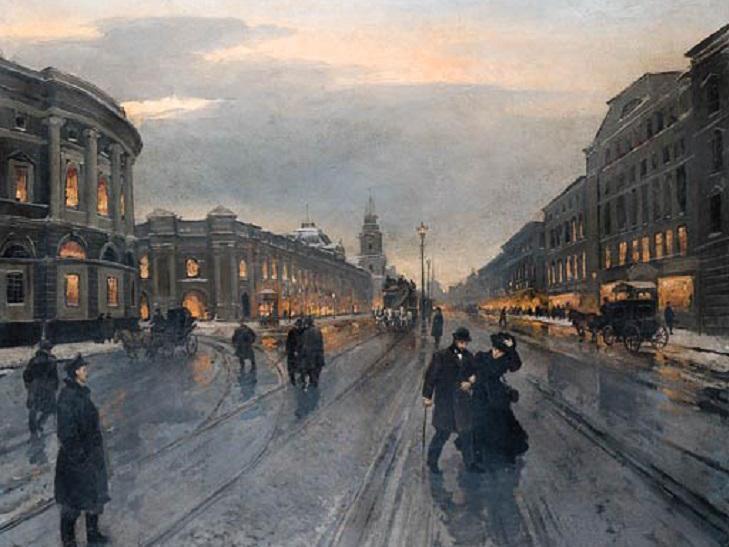
By evening, Stasova finally reached her brother«s house on Malaya Morskaya. Alas, Anton Rubinstein never appeared—the hope for a charity concert collapsed. The return journey to Sergiyevskaya passed quickly in Filosofova»s carriage along Nevsky, illuminated by gas lamps. The wooden block pavement made of pine beams seemed velvety after the jolting over cobblestones.
Nighttime Nevsky with the bright shop windows and restaurant entrances presented the ceremonial face of St. Petersburg. But behind this facade lay a city of contrasts: Narodnik terrorists and railway magnates, emancipated students and great writers, smoking factories and poor markets. All this was St. Petersburg of the 1870s—an era of the Iron Age, harsh and rapid.
The Stasov Family
The Stasov brothers and sisters were close. Nadezhda lived with her younger brother Vladimir, who had given up a legal career for art. A fierce defender of the national element in Russian culture, he worked for half a century at the Imperial Public Library, systematizing the catalog of foreign books about Russia.
In 1878, brothers Dmitry and Alexander Stasov were briefly arrested in connection with the attempted assassination of General Trepov—they were mistakenly suspected of having ties to revolutionaries. Although the Stasovs held liberal views, they did not support violence. Interestingly, Trepov himself had once helped Nadezhda and Anna Filosofova rescue a thirteen-year-old girl from a cruel father; she was later settled in a village and trained as a teacher.
Nadezhda Stasova never married—in her youth, her chosen one preferred a marriage of convenience. She devoted herself to public work, surviving the loss of her sister Sofia and her father. Her life reflected the spirit of the times: faith in enlightenment, perseverance in the struggle for women«s rights, and practical help for those in need.