Time as Currency in the Real Estate Market

Time has become one of the main resources for homebuyers. According to a study by HSE University, they are willing to pay an extra 1.5-2% for every 5 minutes saved in walking distance to a metro station or public transport stop. In St. Petersburg, this leads to apartments near the subway being on average 12-17% more expensive.
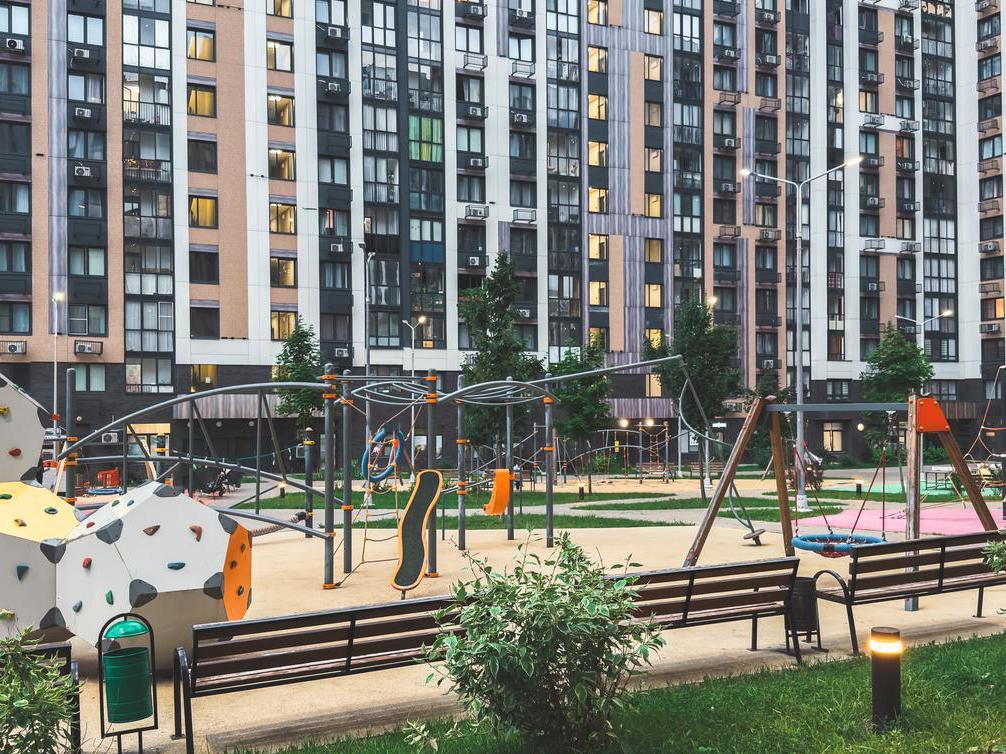
Not less important is proximity to key infrastructure: shops, schools, kindergartens. Today, developers in new projects strive to create an environment that minimizes residents« time costs.
The concept of the «15-minute city» is evolving into a «three-minute» format. Alexei Bushuev, commercial director of Glavstroy St. Petersburg, notes a fundamental shift in perceiving time as a key resource. In a metropolis, time becomes a deficit, and people are willing to pay for it.
According to him, the demand for housing is increasingly formed around the ability of the living environment to reduce daily time costs. Projects with developed infrastructure within walking distance are perceived by the market as more valuable.
Pavel Melnikov, director of the project development department at Setl Group, recalls that 10-15 years ago, about half of the supply on the new-build market was economy class. With the development of comprehensive territory development projects, the share of comfort-class housing has grown to approximately 75%. This gave impetus to the development of a fundamentally different level of infrastructure.
— Now the concept of a «city within a city» has become virtually a mandatory standard in the residential real estate market, — he added. — Projects that lack comprehensive infrastructure turn out to be uncompetitive.
Anna Chernukho, head of the sales department at 17th Line LLC, notes that today the pace of life has sharply increased and the structure of consumption has changed. A modern city dweller is often unwilling to spend time on the road, even 3 minutes, if the service can be obtained remotely. Talk about the «three-minute city» is not so much about meters and minutes, but about maximizing the reduction of any household movements.
Evgeny Kolesnikov, head of the PR direction at Leader Group, adds that in the conditions of St. Petersburg«s rapid development, the time spent on daily affairs becomes a critically important factor. Therefore, modern St. Petersburg residents strive to purchase housing in self-sufficient mid-rise districts with essential facilities within walking distance.
Maria Orlova, commercial director of A101 Group in St. Petersburg, emphasizes that the concept of the «15-minute city» has ceased to be a marketing gimmick and has become a necessary requirement for any project. Sergei Sofronov, commercial director of PSK Group, believes that the «three-minute city» is more a property of a residential building where everything necessary is accessible by elevator, which is feasible in skyscraper conditions.
Key Time Drains
According to Alexei Bushuev, it is impossible to single out one key factor — everything depends on the totality of life scenarios. For a developer, it is fundamentally important to have comprehensive territory development, including:
- Creating points of employment within residential quarters (commercial premises, service sector, coworking spaces).
- Accessibility of education and children«s development (kindergartens, schools, clubs, sports sections).
- Availability of commercial infrastructure for daily needs (shops, pharmacies, services).
Anna Chernukho says that residents of new districts spend most of their time on daily pendulum movements — commuting to work and back, accompanying children. Reducing these costs is helped by competent quarter planning: placing schools and kindergartens within residential arrays, creating local jobs.
Maria Orlova notes that the optimal solution is to create not only housing but also jobs, as well as opportunities for remote work right in the district, for example, through the integration of coworking spaces.
New Criteria for Choosing Housing
According to Anna Chernukho, when choosing housing today, it increasingly makes sense to look at life scenarios: how much time is spent on the road, where schools and sections are located, whether household issues can be resolved without leaving the quarter. A good example is the 17 Line residential complex on Vasilyevsky Island, where infrastructure complements the historical context: a kindergarten in the courtyard, a reconstructed leisure center, a theater 170 meters away.
Sergei Sofronov believes that the choice of a place to live is not always dictated by distance from work. The advantages of a remote residential complex with developed transport and all services can compensate for its location.
Alexei Bushuev cites data from a 2025 study: 89% of buyers consider the presence of schools near home a decisive factor when choosing housing.
Maria Orlova emphasizes that walking accessibility should take into account the needs of all age groups: for example, activity zones for teenagers (pump tracks, skate parks) and a barrier-free environment for the elderly. Landscaping comes to the forefront, creating a «garden city» instead of «concrete jungles».
Evgeny Kolesnikov names transport accessibility as another key factor. Considering the high level of car ownership in St. Petersburg, proximity to the Ring Road and Western High-Speed Diameter becomes strategically important. An example is the AEROSITY quarter, where after the launch of the high-speed tram, real estate began to experience a surge in demand.
Pavel Melnikov adds that modern housing must meet demands for a healthy lifestyle, green standards, and the presence of a neighborly community. Social infrastructure within walking distance — schools, kindergartens, clinics — is mandatory.
Reducing Pendulum Migration
Sergei Sofronov clarifies that pendulum migration is smaller the closer the new quarter is to the existing urban infrastructure. Inside the quarter, everything necessary can be placed, moving commerce to the perimeter, as implemented in the Plus Pulkovsky and Respect projects.
Alexei Bushuev believes that reducing pendulum migration is possible only with the synchronous development of housing, social, commercial, and transport infrastructure. In the Kronfort. Central and ecodistrict Yuntolovo projects, social facilities are built simultaneously with residential buildings, and recreational spaces (Park of Forts Island, Yuntolovsky Reserve) improve the quality of life.
Evgeny Kolesnikov believes that it is important to create in-demand centers of attraction within the district — cultural, educational, and sports facilities. The development of transport infrastructure is also critical to avoid traffic jams. At the same time, he is skeptical about the idea of creating jobs inside quarters, linking it to the Soviet experience of mono-settlements.
Organizational and Financial Aspects
Alexei Bushuev notes that the key difficulty is the need for comprehensive design, which requires modeling all family life scenarios. In St. Petersburg, this approach is additionally regulated by the requirements of the Urban Planning Commission.
Maria Orlova adds that the main difficulties are high cost and the need to coordinate numerous participants. However, in green-field conditions, this is cheaper than fitting projects into the existing urban fabric. Competent landscaping and infrastructure can increase the cost per square meter by up to 20%.