Yekaterinburg man shares his life with a cyber-prosthetic arm
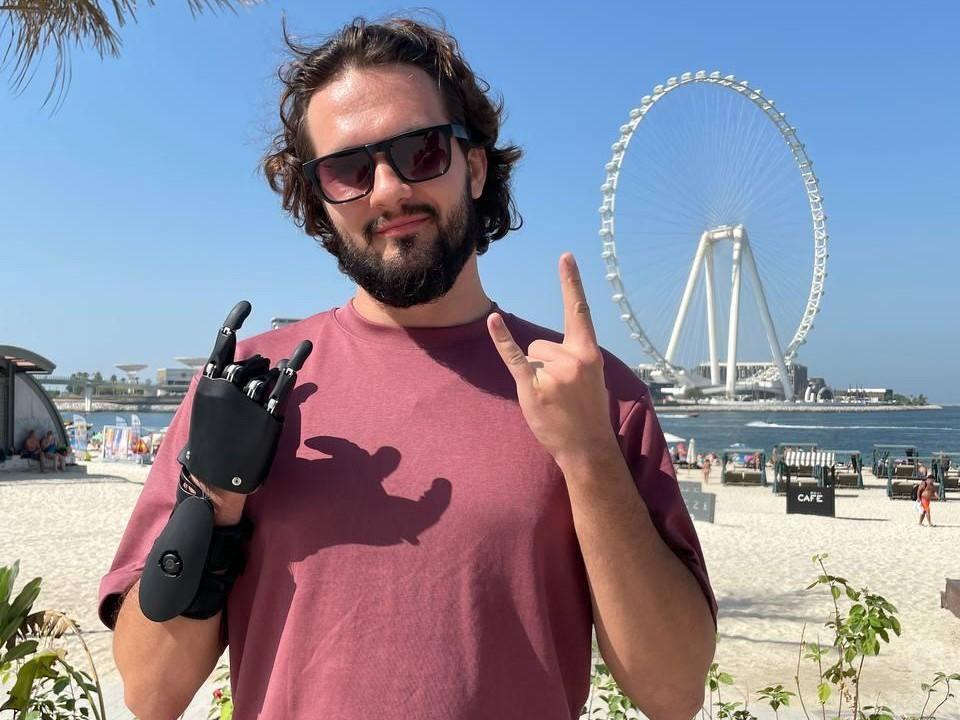

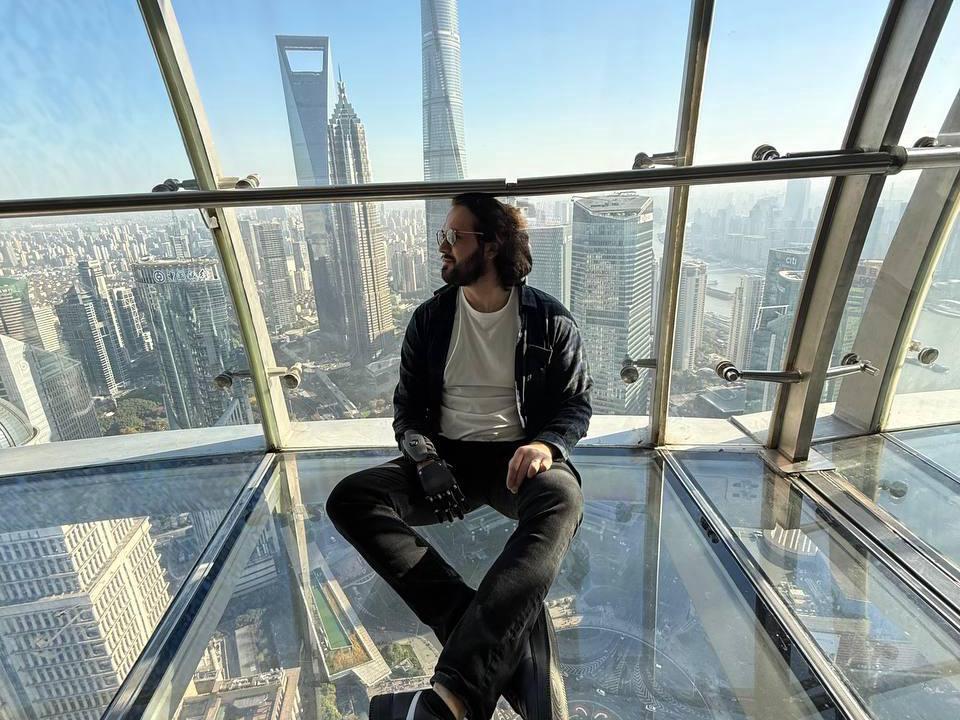
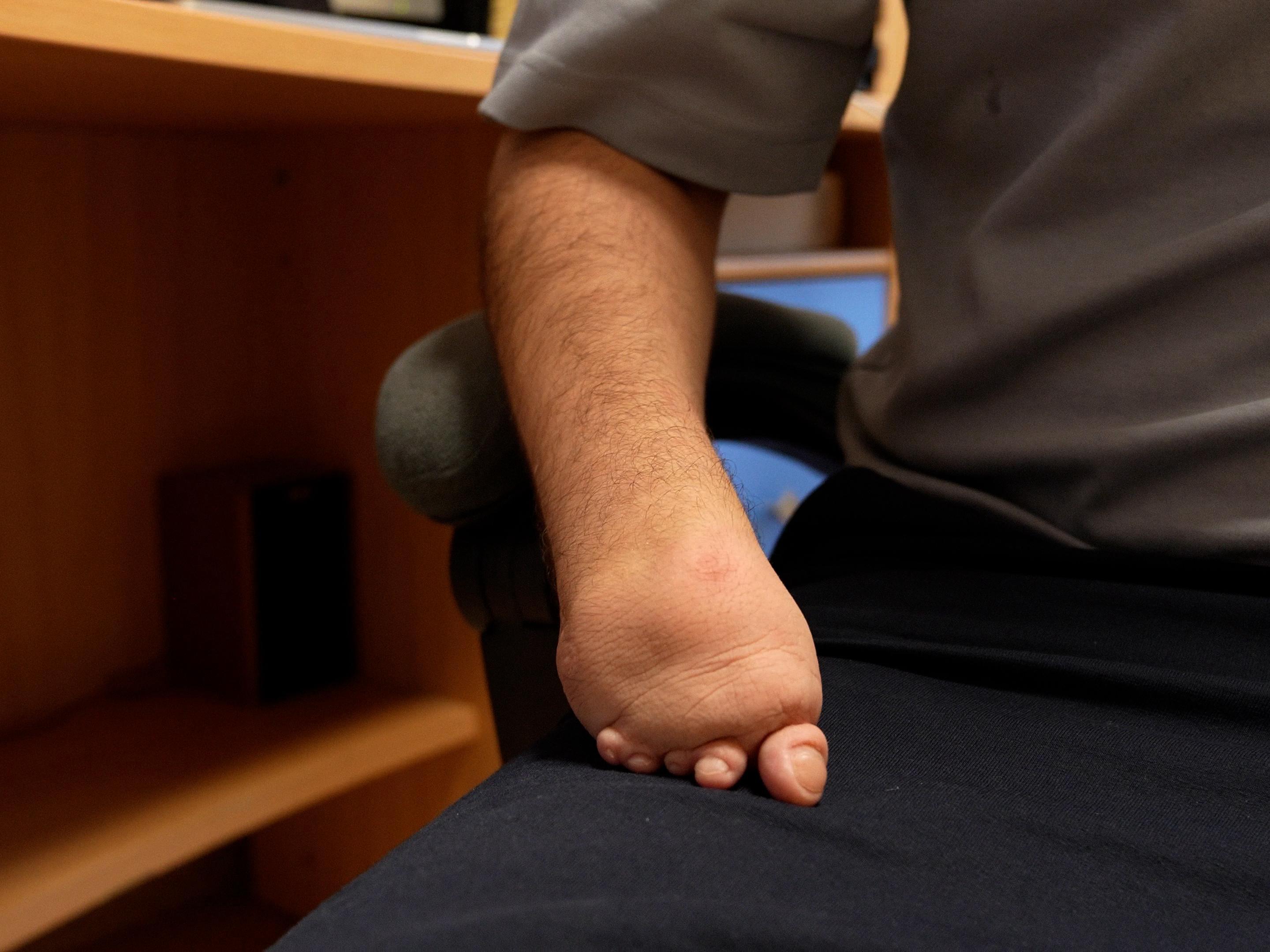
Yekaterinburg resident Andrei Marsakov has turned his physical deficiency into a distinctive feature. Andrei was born with a congenital hand anomaly — he has no fingers on his right hand. The guy never felt inferior — he managed all everyday tasks himself, learned to drive a manual car, earned a higher education, plays sports, works, and travels.
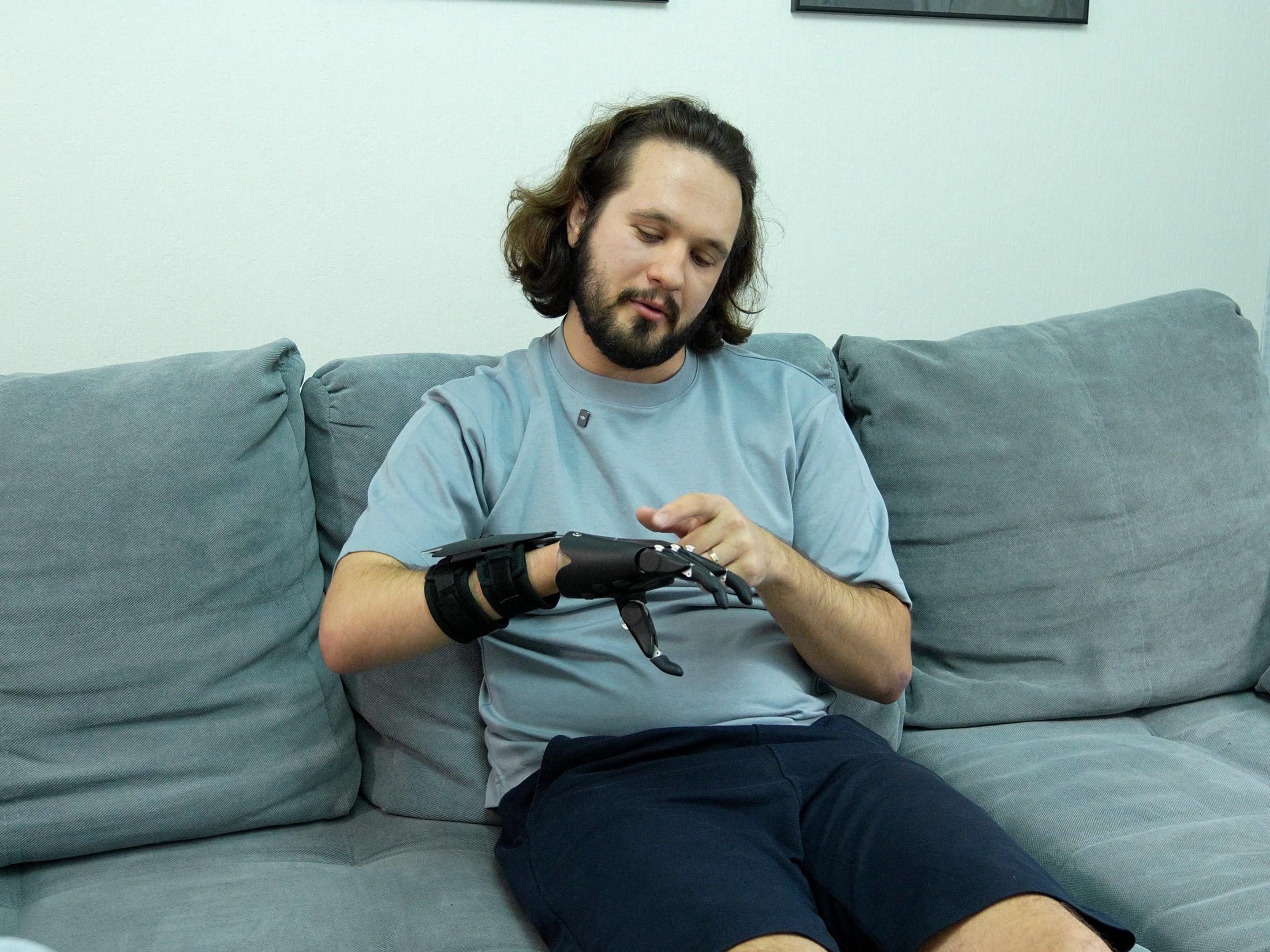
Two years ago, Andrei became the owner of a cyber-hand and thus started attracting people«s attention. The guy told E1.RU how he got the prosthesis, learned to live with it, and how others react to his feature.
First prosthesis, like a pirate«s
«I»m 27 years old, I«m married, I work as a developer. I love swimming, volleyball, and computer games — mostly strategies that are about 20 years old. One of my recent hobbies is flying drones,» the guy briefly introduces himself.
Andrei was born and raised in Orenburg. He says he didn«t have a special period of acceptance.
«I was born this way. Sometimes people get an injury and have to come to terms with it, learn to live anew. But for me, it was always like this; I don»t know any other way. My classmates were great. There were isolated cases of bullying, but who didn«t get teased in school? Many people don»t even notice immediately that I don«t have a hand — they only pay attention a week after meeting, for example.
Only once did I get really upset, thought it was a bummer. During the medical commission at the military enlistment office, back when I was in school, everyone was preparing to go into the army. But they told me right away — you won«t go. But I came to terms with it pretty quickly,» Andrei notes.
For a long time, Andrei didn«t think about a prosthesis. Especially since the first experience wasn»t the most successful.
«I had a prosthesis — very massive, almost covering the whole arm, and I never managed to use it. It was a model with attachments, you know, like pirates»: you could screw on, for example, a wrench, a hook, a fork, a spoon. A very uncomfortable thing, I never got used to it,« Andrei noted.
But a few years ago, manufacturers contacted him themselves via social media. Potential clients are found in support groups for people without limbs, through online ads, and word of mouth.
«Russian citizens can get a prosthesis for free, of course you can buy one at your own expense, but it»s very expensive. To get a prosthesis, you need to go through a medical commission, show that you need it, that you can wear it, and prove that the hand won«t grow back. Generally, it»s not easy; you need to go through all bureaucratic procedures, take many tests, and some aren«t even related to the diagnosis — for example, you give blood, do a fluorography. But it»s possible,« Andrei explained.
Andrei made his first attempts when he still lived in Orenburg. But the process dragged on.
«In regional hospitals, doctors never made such diagnoses, didn»t give referrals, for them it«s often new too, and you go through the process for the first time together. I tried for several months, collected documents, but in the end, everything stalled,» the guy noted.
In Orenburg, Andrei studied information security, but as a student, he accidentally took programming courses. That«s how he decided on his specialty. After studying, he worked remotely and decided to live in St. Petersburg.
You need to learn to live with a prosthesis
«In St. Petersburg, I decided to try getting a prosthesis again and was surprised that everything went so quickly — within a month, I came to the hospital a few times and that was it. In big cities, doctors are more experienced, know where to turn, what the requirements are.
Every prosthesis is unique, made for the person, taking into account shoulder size, muscles. For mine — they took a mold, adjusted it so it fit, another one simply wouldn«t suit me,» the guy explains.
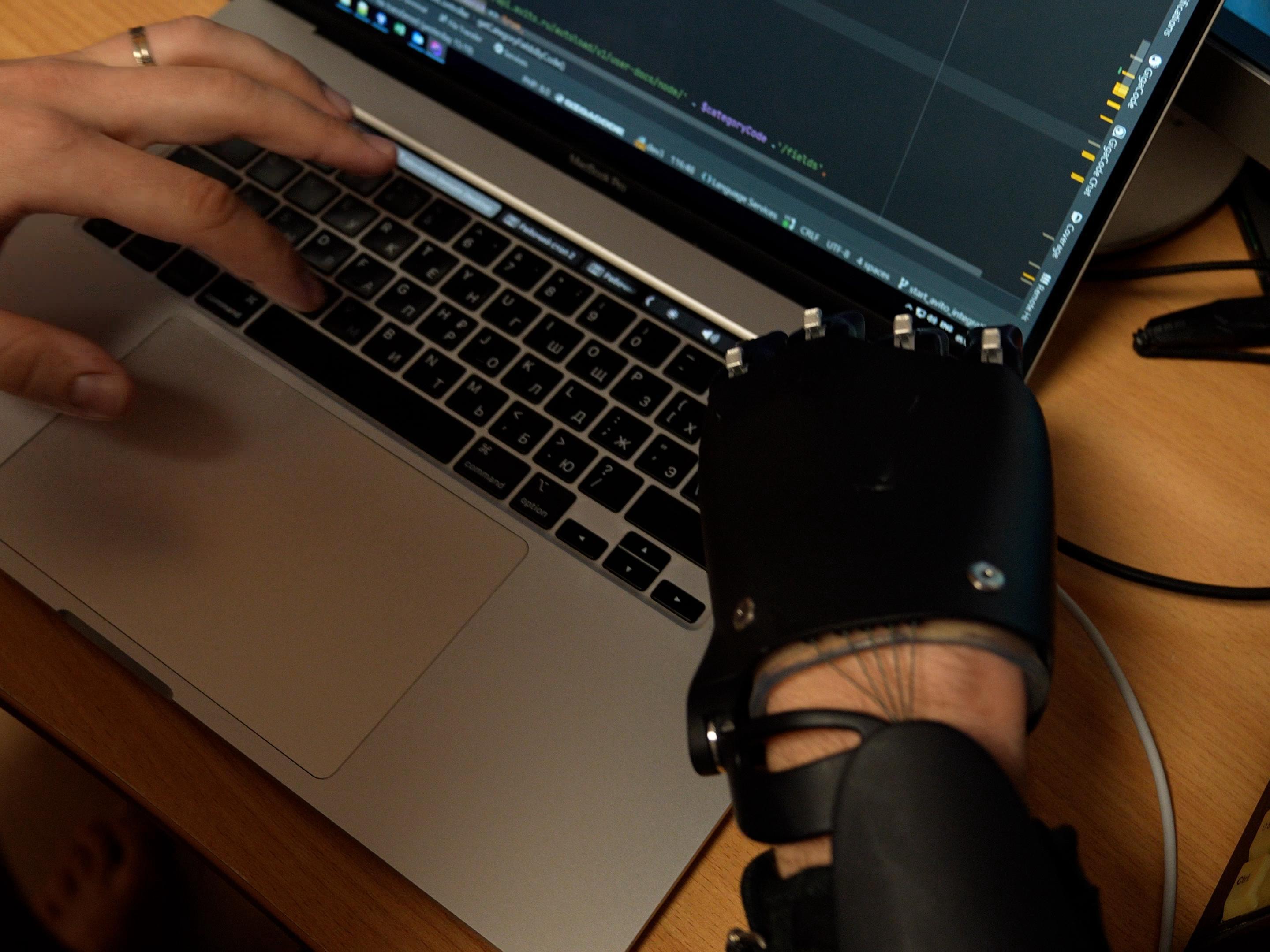
Andrei«s prosthesis is a traction type. It»s controlled via cables. When the guy bends his wrist — the cables tighten and the fingers bend. To carry objects — the fingers can be locked via a switch.
«I think I»m still getting used to it because after all, it«s not part of the body. Of course, those who use them since childhood — it»s easier for them. I lived my whole life without a prosthesis and am better at managing with just my hand. You need to learn to live with a prosthesis.
Even after two years, for me to drop something is a piece of cake. Plus, sometimes the hand gets hot, especially in summer when you sweat. Some use powders, I just wipe it with a towel, so to speak — and that«s it. The prosthesis doesn»t require special care,« he noted.
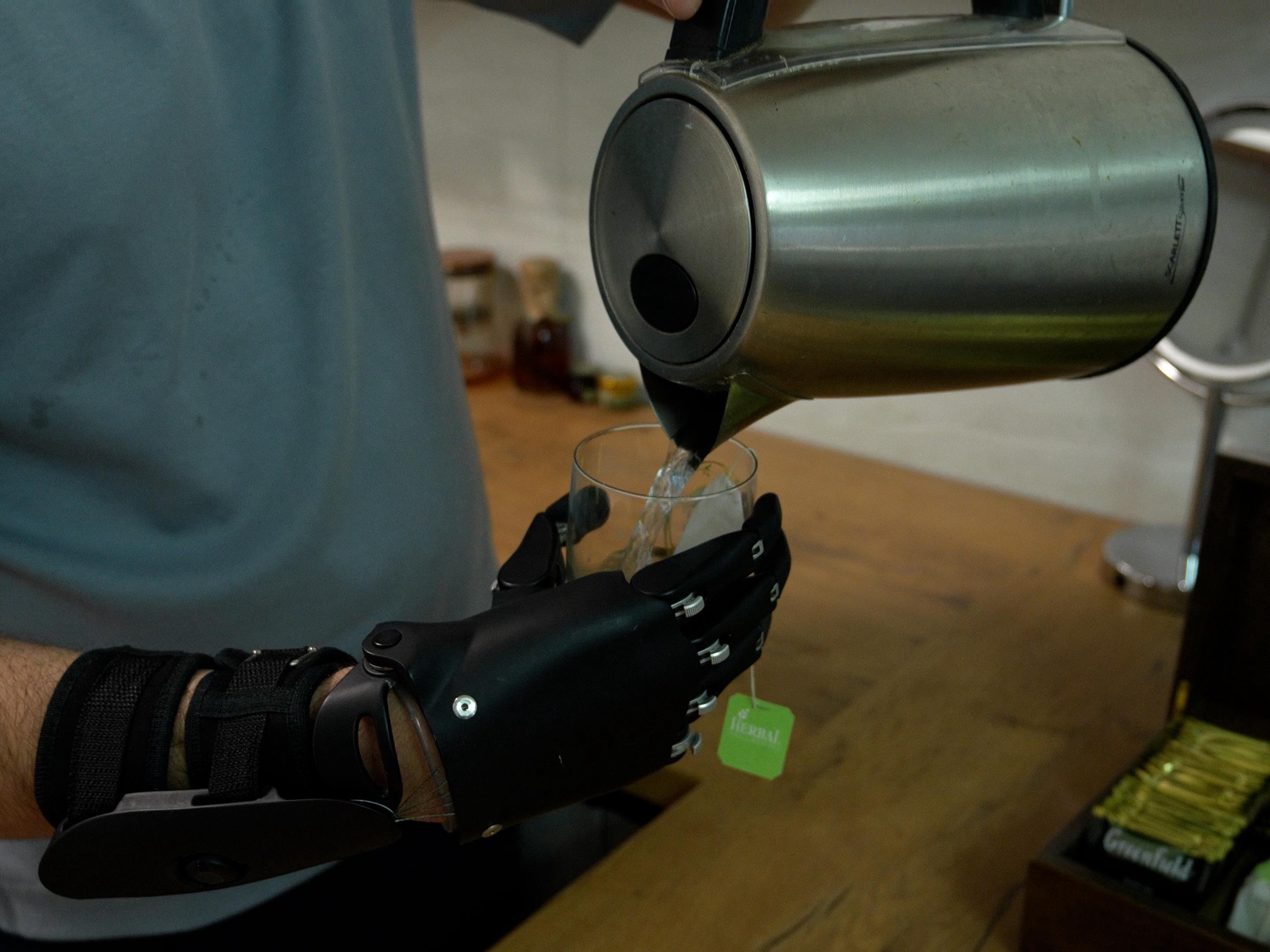
Andrei noted that using the prosthesis is important and useful.
«If you don»t use the hand, it starts to wither like an unused organ. I still have a difference in muscles between my left and right arm, but the prosthesis helps reduce it. Thanks to it, I can carry a backpack or bags; to grab something — you also need to apply a lot of effort.«
«I don»t like pity«
When Andrei lived in the northern capital (St. Petersburg), he met his future wife, who is from Yekaterinburg. It was his wife who convinced him to move to the Urals.
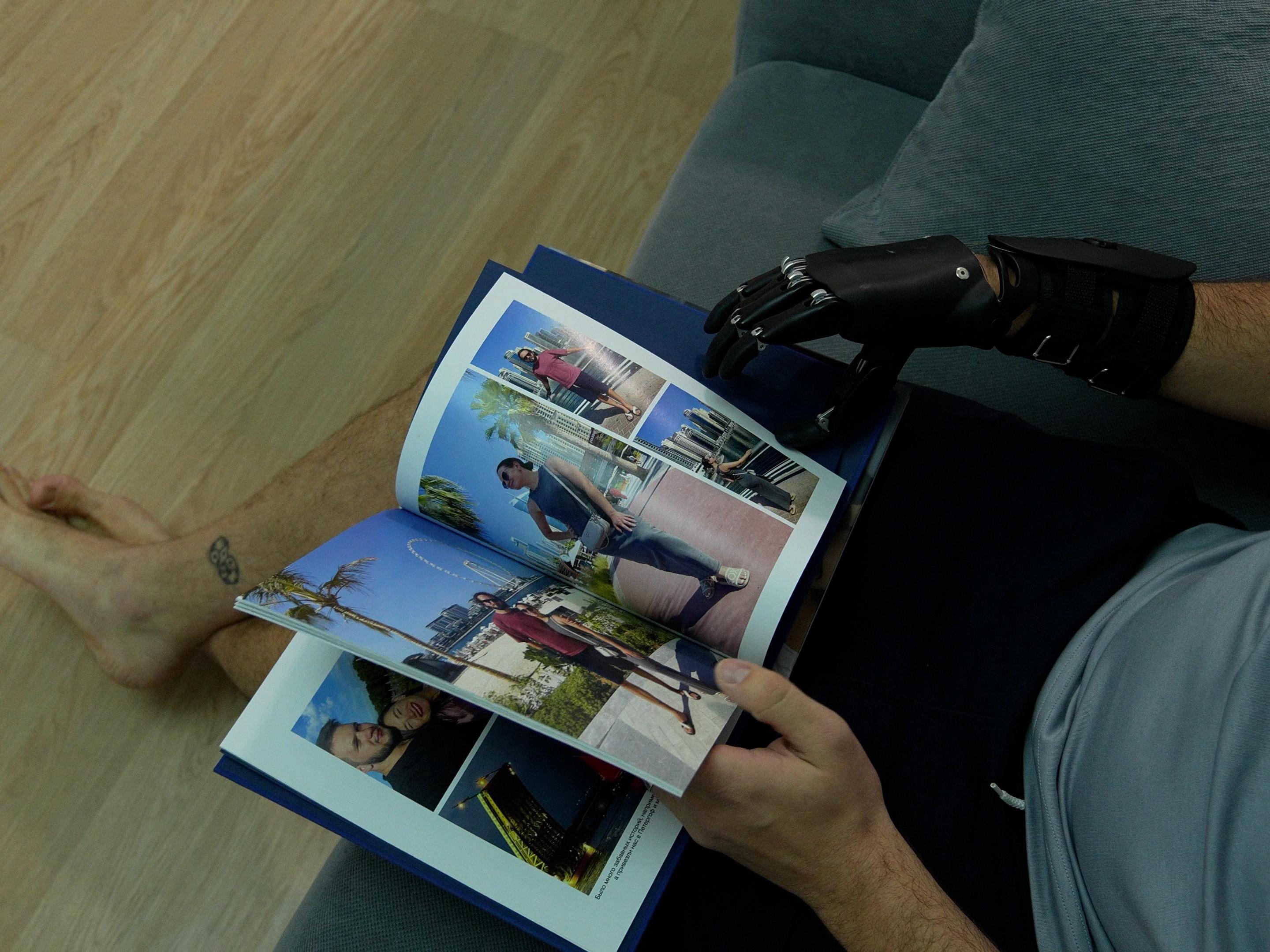
«People react normally — both to the prosthesis and the hand. Most often, children ask directly because they aren»t shy. I answer questions, say that the prosthesis doesn«t bother me, that I was born this way, everything is fine.
But I really don«t like it when people show me pity. For example, when I tie my shoelaces myself or take a bag, it seems half the people consider it their duty to ask if I need help. If I can»t handle something — I«ll ask for help myself,» Andrei explained.
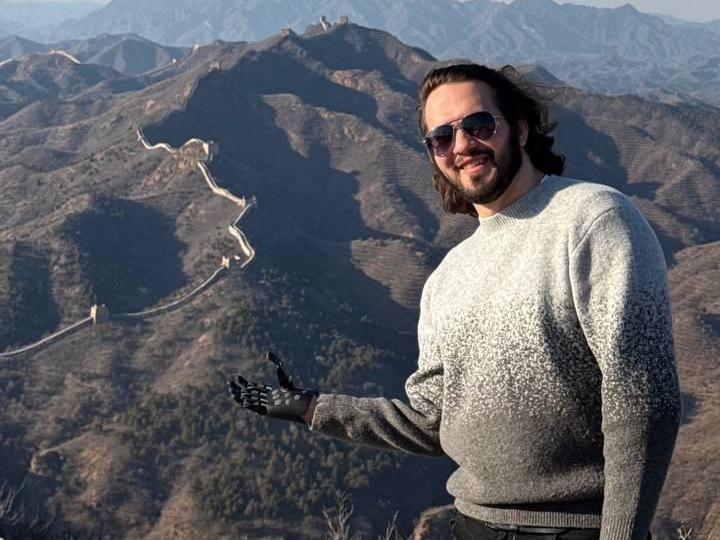
He added that he uses the cyber-arm mainly outside the home. And first and foremost — for aesthetic purposes.
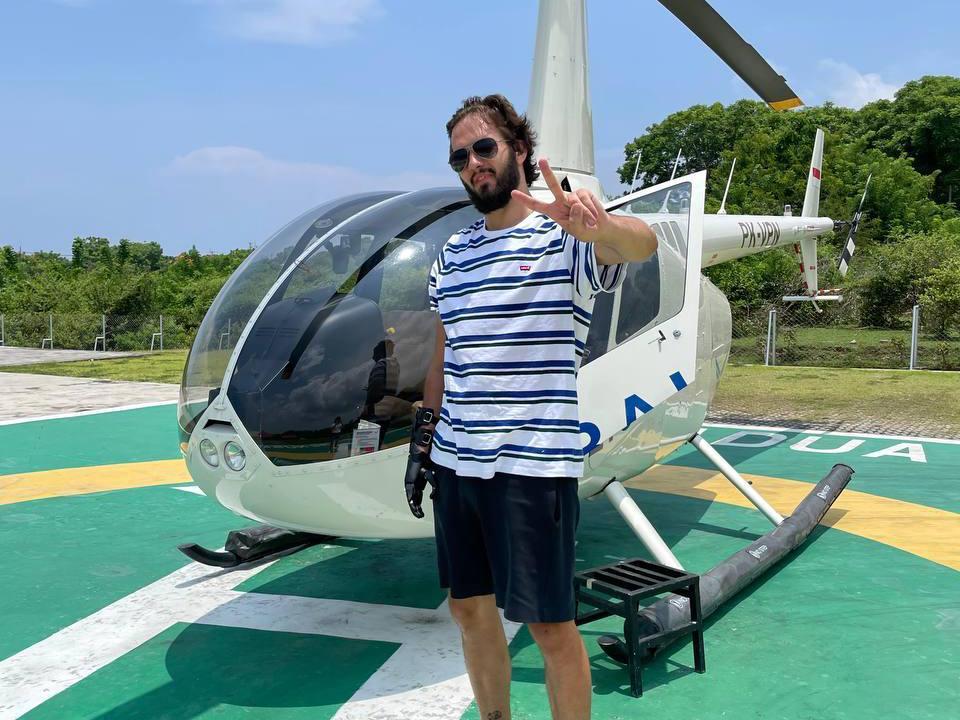
«It»s beautiful, black, matte — as if from the future. You immediately stand out with such an accessory. But I lived 25 years without it — and at home, I want to be myself, so nothing constrains me. And for practical purposes — it«s more convenient to carry things and drive with it.
By the way, my dad taught me to drive a manual. And when I went to get my license — with my hand, at the medical commission, they first only allowed an automatic. Although on an automatic gear lever — usually you need to press a button to shift, and I can«t do that. In the end, the first time they flatly refused, and I had to go to another doctor, to whom I managed to convey — that I already even know how to drive a manual and want to take the test on it,» the guy added.
«Don»t be afraid of yourself«
In the near future, Andrei dreams of switching from his traction prosthesis to an electric one. It«s more convenient and controllable — sensors read impulses and the grip is performed by individual actuators on each finger. At the same time, due to its weight — it also trains the muscles. Similar prostheses can also be obtained through federal support programs.
«Of course, I checked the prices, even when I was first collecting documents. And a simple prosthesis like the one I have now cost about 300,000 rubles (approximately $3,300 at current rates) a few years ago. You can still afford to buy that. But the price for electric ones starts at several million,» Andrei noted.
To everyone who finds themselves in a similar situation, Andrei advises not to give up.
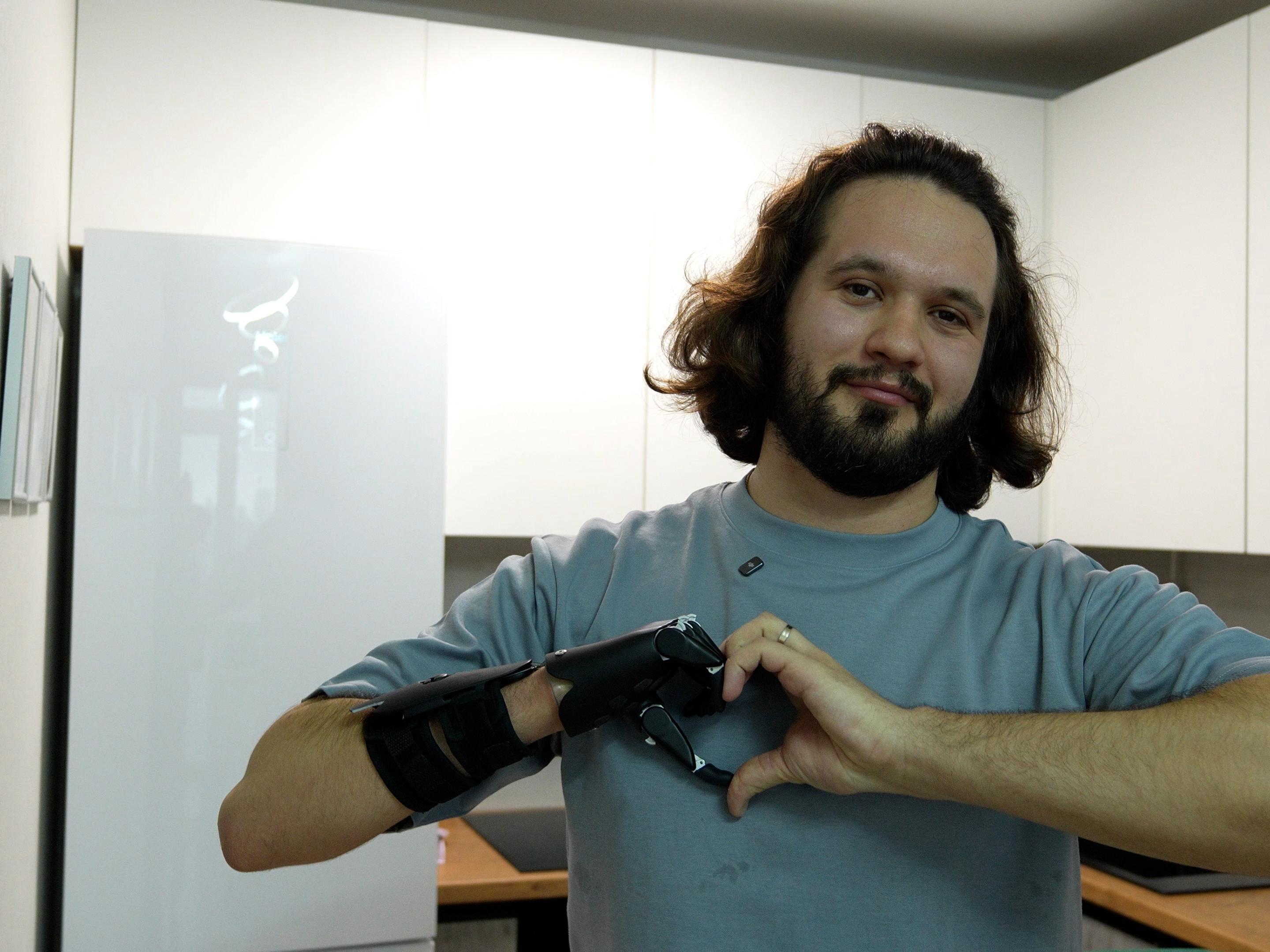
«Don»t be afraid of yourself, get prosthetics, try. You won«t lose anything, but it might help you accept yourself. I»m not a very shy person, but this accessory has brightened my life. Don«t be ashamed of anything, achieve your goals. It»s not always easy, but it will definitely work out,« he concluded.
We also told the story of another Ural resident who was also born without a hand. He runs a blog and helps others get prostheses.
Read a detailed report about the life of athlete Olya with cyber-legs. Her mother Yulia Dolgosheeva said she learned about her daughter«s features only after her birth. We also have the story of a blogger with bionic prostheses. After a personal tragedy, the man learned to live anew and now helps other people.
World champion in paratriathlon Mikhail Astashov was born without arms and legs. Because of this, doctors convinced his parents to abandon him at the maternity hospital. Now Mikhail is a professional Paralympic athlete who has traveled half the world.