Volzhsky father, 43, dies after hospital refusals
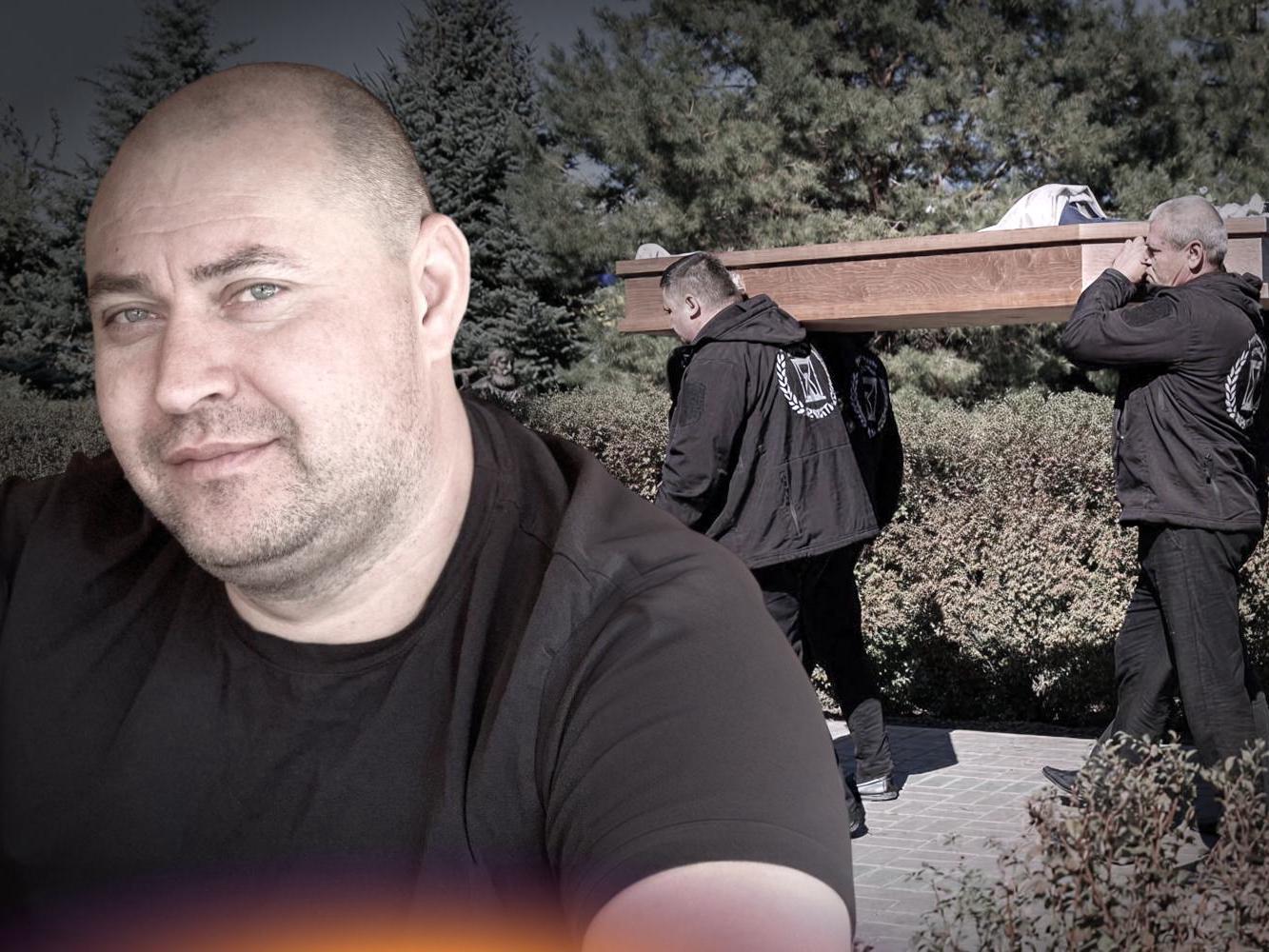

Two ambulance crews declined hospitalization, and hospitals turned Duyunov away during the night.
In Volgograd’s satellite city, they said farewell to 43-year-old father of three Sergey Duyunov. Struck by an attack of excruciating pain, he was twice refused hospital transport by ambulance crews, and when his wife drove him herself — he spent long hours being sent from one hospital in Volzhsky (Volgograd Oblast, Russia) to another, denied admission. Sergey died at the Volgograd Regional Clinical Cardiology Center, never making it to the operating room. Two hours before his death, he managed to call his wife and children to say how much he loved them.
«Our daughter won’t even remember her dad…»
Sergey Duyunov was only 43. According to his wife, Natalia, he was strong in spirit, a protector who looked after his family. The birth of their third child brought him special joy — the baby girl is just one year old now.
— No one will ever say a bad word about him, — says Natalia Duyunova. — He tried to help everyone, was very responsive, loved his family. He always told me: “You are everything to me. I live for you.” He carried all the children in his arms, never yelled at them or hurt them. He ran a business, and he helped me: cook, feed the kids, tidy up. His employees would say: “We will never have such a director again.” Without me he couldn’t last five minutes, and I couldn’t without him. Even if he just left the house, he would immediately call for any reason — just to ask how things were, to hear my voice. A very loving dad and husband. There’s simply no one like him in the whole wide world. And now I’m left with three children. He was so happy about the baby. And she won’t even remember her dad…

A happy family once awaited a third child, now their baby is only one.
«Bunny, it hurts so much…»
On the evening of 26 September, Sergey came home from a workout in good spirits and did not complain about how he felt. But in the night he woke up from pain in his lower back.
— Nothing foreshadowed disaster. He returned from training full of energy and in an excellent mood, — his wife recalls. — We were planning to go on vacation to Arkhyz (Karachay-Cherkessia, Russia) in the coming days and were discussing the trip. At night he kissed the baby and me: she and I sleep together, and he in the next room. A little later he woke me and said: “Bunny, my back really hurts, it’s some kind of girdling pain.” I rubbed ointment on his lower back, but it didn’t help. I gave him an anti-inflammatory suppository and went back to sleep with the little one.
After some time, Natalia woke up to her husband’s cry. The pain hadn’t subsided; it kept getting worse.
— He shouted: “Bunny, it hurts, I’m in such pain.” That was around two in the morning. My husband never complained about anything; he was always completely healthy: 43, a sturdy country guy. I simply didn’t know what to do, — Natalia recalls. — He was sitting white as a sheet, cold sweat pouring off him. His skin is usually rosy, but now he was completely white — I had never seen anything like it in my life.
Natalia immediately called an ambulance. But the crew that arrived diagnosed osteochondrosis.
— My husband was already starting to lose clarity of consciousness, — Natalia admits. — He’s usually very communicative, but then even his gaze became sluggish from the pain shock. And most importantly, he could only sit. He tried to lie down, but the pain immediately intensified so much he would pass out. And the guy from the ambulance says right away: “Have you been drinking?” My husband answered: “No, I just got back from a workout, I haven’t been drinking.” That was their attitude from the threshold. They — the paramedics — walked around in their shoes on our white carpet, among the children’s toys where our baby plays. They sat down next to him, took his blood pressure, did an ECG. “It’s osteochondrosis, there’s nothing wrong with you.” And he was already losing consciousness. Right in front of them I grabbed smelling salts and cotton, held it to his nose, told him to hold on — I, not the doctors! “Is it really osteochondrosis?” I asked the doctor. And he told me: “Of course, you haven’t seen anything yet,” and they turned around and left. They said they’d come back again in about two hours. And my husband was screaming in pain, constantly blacking out. Then he’d come to, covered in cold sweat…
«His ECG is better than mine at 25»
After the paramedics left, Natalia stayed with her husband, who was suffering from agonizing pain. The thought occurred to her that Sergey was having a heart attack. She called an ambulance again.
— I immediately began to suspect that something was happening with his heart or near it. I called the ambulance again and asked for a cardiac crew. They told me: “But a crew was just at your place.” I was terrified; I had never seen my husband like this. I wanted to drive him to the hospital myself; we had already stepped outside when the ambulance finally pulled up. A young girl said to me: “Why did you call us? We just left from you.” I said my husband was in bad shape, and she answered: “His ECG is better than mine at 25. Fine, we’ll do it again.” They took him into the ambulance; I stood outside at night with a one-year-old baby in my arms and asked them to come into the house, and they said: “Why would we go in? We’ll do it here.” They did it. The girl looked at the result and said my husband’s ECG was perfect. I begged them to take him to the hospital. They told me that with osteochondrosis no one would admit him: “If you need a hospital — drive him yourself.”
The ECG from the first crew, Natalia and her son uploaded into ChatGPT. The machine ‘read’ signs of a myocardial infarction on the cardiogram and strongly recommended urgent hospitalization.
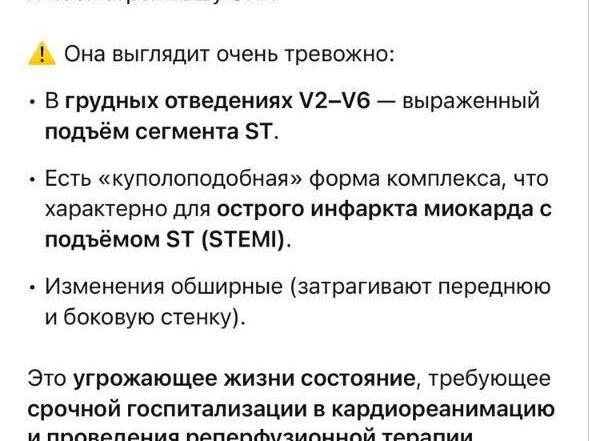
Machine analysis flagged myocardial risk, underscoring the severity of his deteriorating condition.
«Seryozha, please, we have three children»
After the second ambulance left, Natalia brought her husband back into the house and took his blood pressure herself. The reading was below normal — 80/60. Then, taking the children with her, she drove Sergey to the hospital.
— He told me: “Maybe I can sleep it off, I want to sleep so badly,” — Natalia recalls. — My son and I pushed him into the car and rushed to our cardiology unit at BSMP (the cardiology department at City Clinical Hospital No. 3 of Volzhsky). Some woman opened up. I said: “Urgent, I have a one-year-old child in the car, my husband is dying, help him, call someone!” She said: “We only accept ‘with blood pressure’; go to Fisher (City Clinical Hospital No. 1 named after S. Z. Fisher).” I dropped everything and sped there. I ran in and said: “Girls, I brought my husband, he’s very ill, we were sent here.” They first asked irritably why I had brought him, but in the end they admitted him. I wasn’t allowed to stay with him. They made me leave. But my husband still had his phone. He wrote that they took blood from his finger, did an X‑ray, and that they were calling me because he couldn’t make sense of what they were saying to him. Apparently, his low blood pressure had already caused confusion. And I still don’t understand why all of this was overlooked…
They decided not to keep Sergey at the Fisher hospital and redirected him to what became the third medical facility.
— One of the doctors said he had pleurisy and gave a referral to GPZ (Volzhsky City Hospital No. 2), — Natalia says. — We drove there; I ran through the barrier and begged them to admit my husband. He was already in hellish pain, his whole body burning, and they told me: “Why did you bring him here?” That was already the third hospital. I said we’d been directed there from Fisher, and they said: “Fine, bring him in.” Imagine, across the whole grounds, past the barrier — I led him in. He was already walking like a drunk, as if he had no strength at all. They admitted us, and do you know what they did? They laid him down — and he seized up in front of me! Imagine: such a big, strong man who had just recently kissed me, and now he was convulsing, gasping. God, I was terrified. I started to lift him; they tried to stop me, but he was worse lying down! I sat him up, rubbed him, slapped his cheeks, saying: “Seryozha, please, Seryozha, we have three children.” I literally began to beg him.
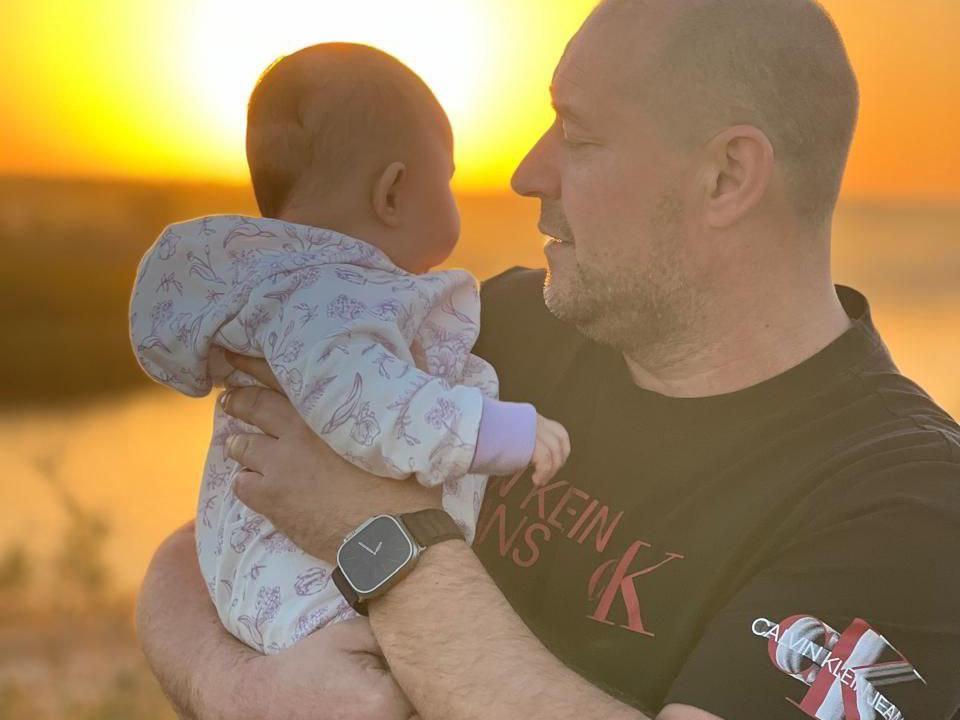
He called his wife and children to say he loved them shortly before dying.
In despair, Natalia tried to call an ambulance right to the hospital. But she was brusquely interrupted. Meanwhile, Sergey was only getting worse.
— I was shouting for resuscitation, and two or three sleepy young women were just standing there watching. I could see that, again, no one wanted to help. I started calling the ambulance again. One of those women pushed me aside: “What are you talking about? This is a hospital; we’ll handle it ourselves, we’ll call now.” Time was dragged out again. Eventually other doctors came; I begged them to help. And they said: “What resuscitation? Give him glucose and dexamethasone and that’s it.” They took him back to where we had been admitted and laid him down again, can you imagine? He was screaming in pain, his right arm started to fail, it kept dropping. In the end they gave him dexamethasone and something else, and only after that did they take him to intensive care.
Only there did they run diagnostics and discover an aortic aneurysm in the thoracic segment. After discussion, they decided to transfer him to the Volgograd Regional Clinical Cardiology Center.
— Honestly, I was no longer expecting anything, because I was told this aneurysm was bad, — Natalia recalls. — They asked me to prepare things for transfer. I put a note in there telling him how much the kids and I love him and are waiting for him. And we were at home, shattered. The children were crying, and I was crying. Then a call came from an unknown number at 14:27. “Bunny, how are you doing?” It was as if someone had called from the other world, really. My son burst into tears; I asked: “My God, Bunny, is that you?” He said: “Yes, it’s me; the guys are taking me to a hospital in Volgograd, you probably already know. I asked them to let me call you.” I said: “My God, has it finally happened? They said the best doctors are waiting for you, they will save you, Bunny, my love.” Our son cried: “Daddy, Daddy, how are you there?” And my husband said: “Son, I’m okay.” He gathered his last strength — he hadn’t even talked like that in the hospital when I was handing him over. I asked him to call when they arrived. He said: “Okay, yes, I will for sure.” And around five in the evening they called me and said he had died.
More than two hours passed between Sergey’s last conversation with his family and the moment of his death.
— When he got to the hospital, the aneurysm was still a bubble. And when they were transporting him — it ruptured. What were they doing all that time? They told me he had been brought in, but he never reached the operating room. He spoke to me — he could have been saved… If only someone had paid attention: the man is sitting white as a sheet, with no blood pressure, in hellish pain, confused. Is it really — really — osteochondrosis? I don’t know… It’s just an outrage. They shattered such a family, deprived such a person of the chance to live. He had so many plans for the future. He always said: “Bunny, you and I must live to old age; we must help our children raise our grandchildren”…
«There must be a patient-centered approach»
A participant in the project ‘FaktChek: Zdorovye bez mifov’ (FactCheck: Health Without Myths), head of the Department of Internal Medicine at VolgGMU (Volgograd State Medical University), Professor Mikhail Statsenko is certain that the doctors in Volzhsky — starting with the first ambulance crew — underestimated the patient’s condition.
— I believe the doctors underestimated the severity of the condition. The principle should be one: if a patient cries out, groans, asks for help — admit him and start figuring it out. There must be a patient-centered approach; the patient must be at the center of your attention, and everything must be done to determine the cause of his condition, — Professor Statsenko is convinced. — A thoracic aortic aneurysm is uncommon; many doctors have simply never encountered it. When a young man is crying out from girdling lower-back pain, an aneurysm isn’t the first thing you think of. Its diagnosis requires an extremely scrupulous, attentive approach.
Mikhail Statsenko noted that ECG is not the most effective way to diagnose an aneurysm.
— ECG does not always help in diagnosing an aneurysm. As a rule, the method is not very informative if there are no striking aneurysmal changes, especially at the very beginning. The most informative methods are ultrasound and radiographic examination of the organs of the chest. There you can see a dilation in the thoracic aorta.
According to Mikhail Statsenko, medical care for an aneurysm differs depending on the patient’s condition.
— As a rule, with an aneurysm they try to relieve pain, lower arterial pressure, and deliver the patient as quickly as possible to the unit where operations on the thoracic aorta are performed, — explains Mikhail Statsenko. — In the case of a major dissection, when there are absolutely no other options, they perform a major operation and place a vascular graft. An aneurysm — a “little pouch” — expands like a balloon that is inflated until it pops. Blood keeps expanding the area where the dissection is occurring, the vessel walls thin, and a rupture occurs. In such a case, a person dies very quickly. If the diagnosis is made earlier, other treatment options are possible. It all depends on the specific case. At a young age, the cause of an aneurysm is usually a congenital pathology associated with weakness of connective tissue — “connective tissue dysplasia.” There may be vascular abnormalities. It is often accompanied by elevated blood pressure, hypertension. And of course, aneurysms also occur with atherosclerosis, but that is more characteristic of the elderly.
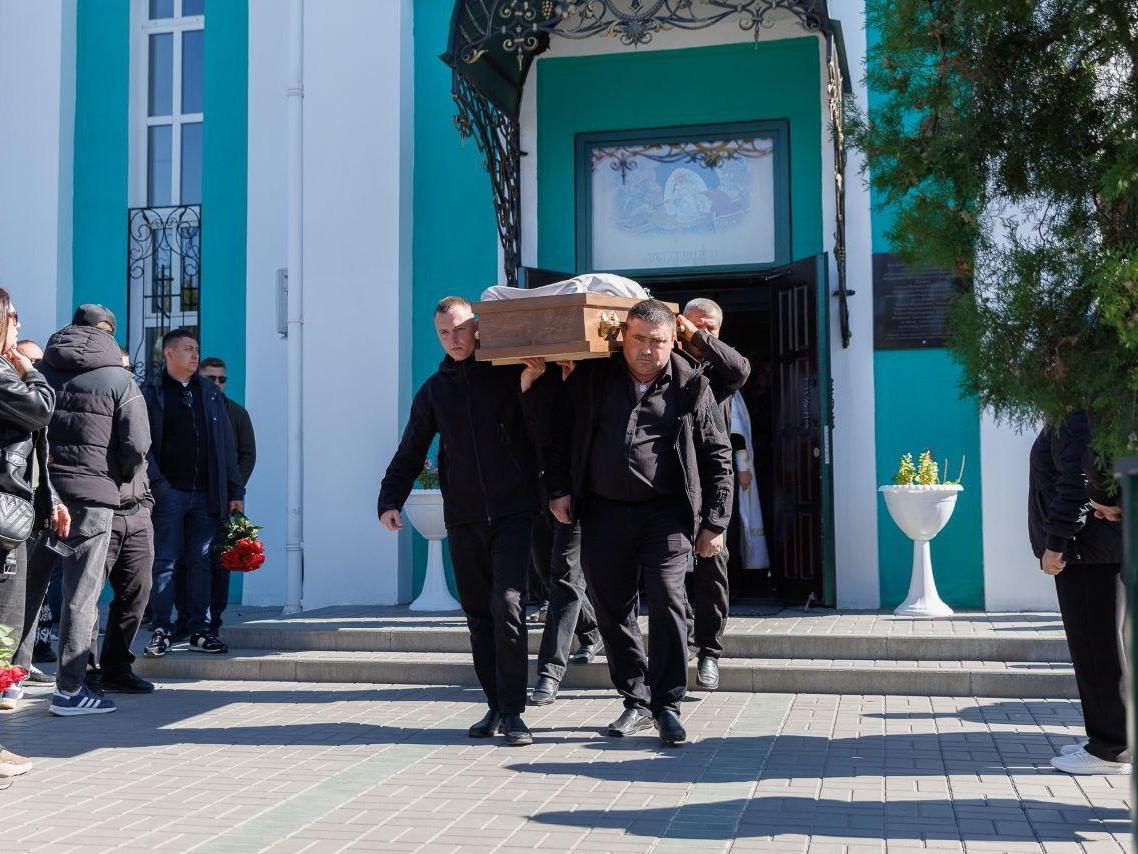
Friends and relatives gathered to bid farewell at the funeral in Volzhsky.
«A criminal case has been opened»
At the Komitet zdravookhraneniya administratsii Volgogradskoy oblasti (Health Committee of the Administration of Volgograd Oblast), in response to V1.RU’s request to comment on Sergey’s death, they said only that the situation had been taken under control.
— The Health Committee has taken control of this situation. A review will be carried out, — the regional health department reported.
The head of the Sledstvenny Komitet Rossiyskoy Federatsii (Investigative Committee of the Russian Federation, ICR) Alexander Bastrykin ordered that a criminal case be opened over the improper provision of medical care to Sergey.
— It has been reported that unqualified medical care was provided to a father of many children in the city of Volzhsky, Volgograd Oblast, which led to his death, — the Investigative Committee’s press service said. — Due to the deterioration of his condition, the man’s wife called an ambulance twice; however, the victim was refused hospitalization. As a result, the woman independently took the man to medical institutions, one of which diagnosed a disease in the patient. Due to an incorrectly chosen treatment strategy, the patient died. The Chairman of the Investigative Committee of the Russian Federation, Alexander Bastrykin, instructed the head of the SU SK Rossii po Volgogradskoy oblasti (Investigative Directorate of the ICR for Volgograd Oblast) Vasily Semenov to open a criminal case and submit a report on the progress and results of its investigation. Compliance with the instruction has been placed under control at the central office of the agency.
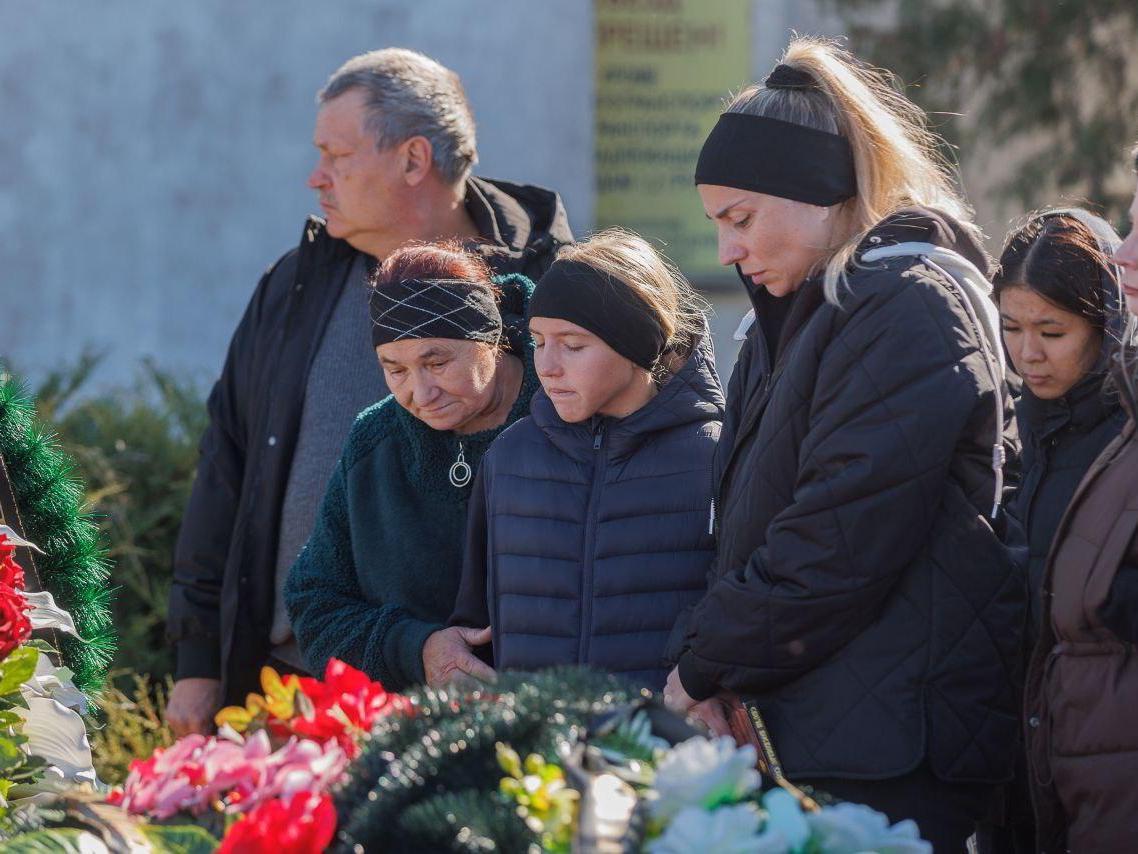
Questions remain about missed diagnoses and delays as the case moves to investigators.