Strongest magnetic storm in years strikes Rostov Region

The Rostov Region was hit by the strongest magnetic storm in a long time on 20 January. This is according to data from the Solar Astronomy Laboratory of IKI (Space Research Institute) and ISZF (Institute of Solar-Terrestrial Physics).
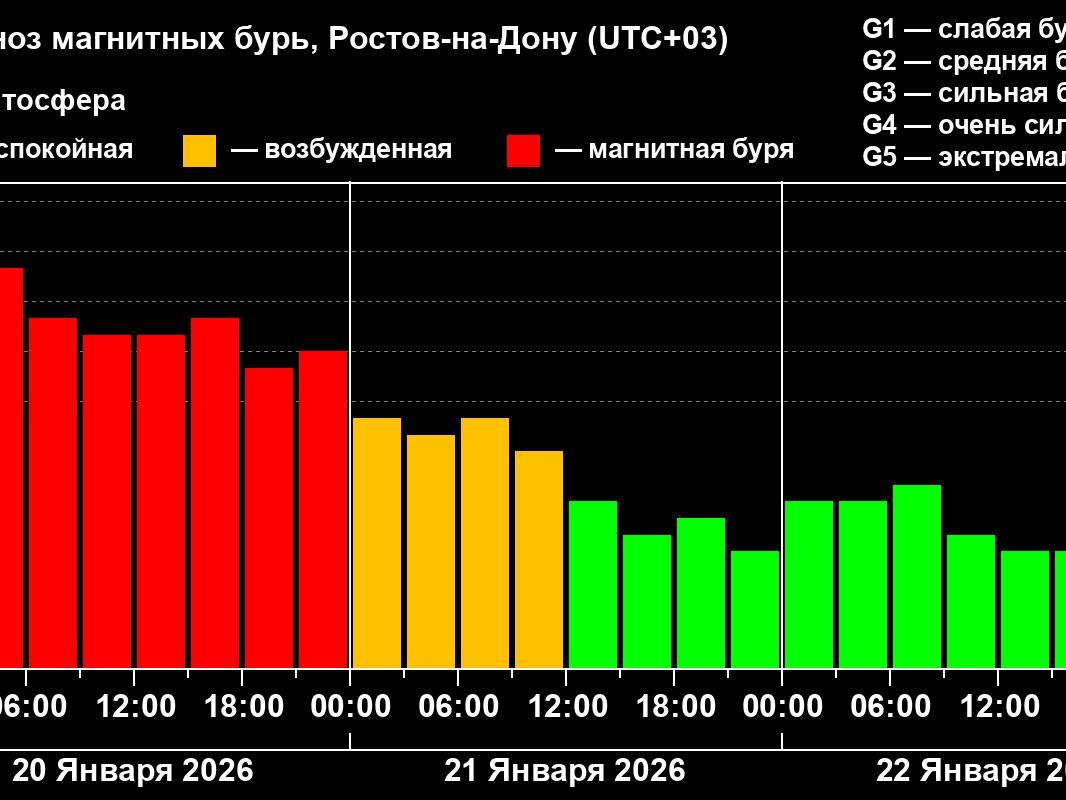
The magnetosphere over the Rostov Region became agitated at midnight. By 03:00, a storm had begun, almost immediately reaching G4 level, which corresponds to a «very strong» storm. Only G5 is higher—an «extreme» level.
By 06:00, the magnetosphere had calmed slightly, with the storm subsiding to a level between G3 and G2—strong and moderate. The magnetosphere over the Rostov Region was expected to remain in this state until 18:00.
After that, until midnight, the storm level was forecast to drop closer to G2 (moderate level). From the first minutes of 21 January, the storm was predicted to subside. However, the magnetosphere over the region was expected to remain agitated and would only return to a calm state after midday.
According to staff at the Solar Astronomy Laboratory of IKI and ISZF, an X1.95-class solar flare occurred on 18 January—the first of 2026 and the largest since 14 November 2025. On 19 January, astronomers confirmed it was accompanied by a major plasma ejection directed precisely at Earth.
«The moment of impact with Earth will be accompanied by strong geomagnetic disturbances up to G4 level. The probability of magnetic storms of the highest, 5th level, is about 10%. Exceptionally strong auroras are expected on the night from Tuesday to Wednesday, the signs of which, preliminarily, could be observed across almost the entire territory of the country,» the scientists reported.
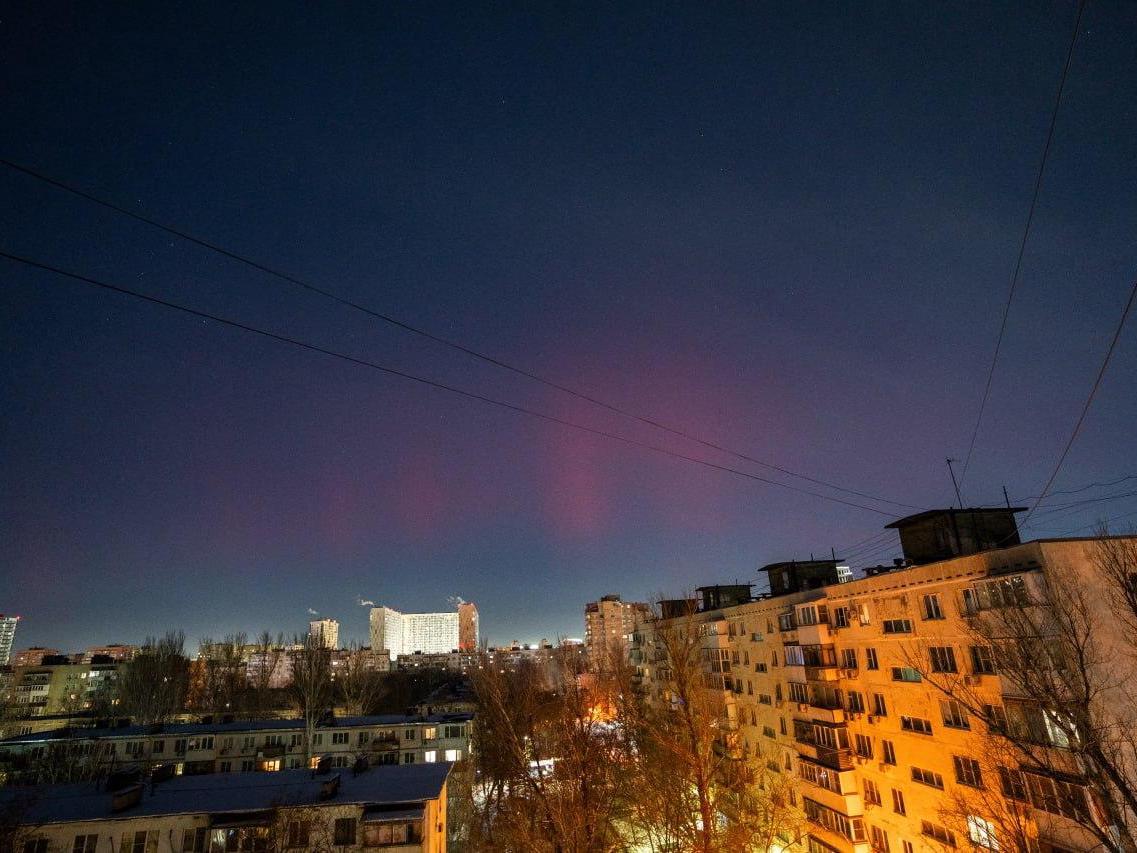
However, the astronomers were slightly mistaken. The northern lights (aurora borealis) flared over Russian regions already on the night of Tuesday. Residents of the Rostov Region were among those who could observe it.
The next magnetic storms in the region are expected on 26 and 27 January. But, according to preliminary forecasts, they will be weak.