Strongest Magnetic Storm in Years Hits Rostov Region
A major solar flare triggered a powerful geomagnetic storm that impacted Russia's Rostov region overnight on 20 January. It reached severe G4 intensity.
Jan 21, 2026 0
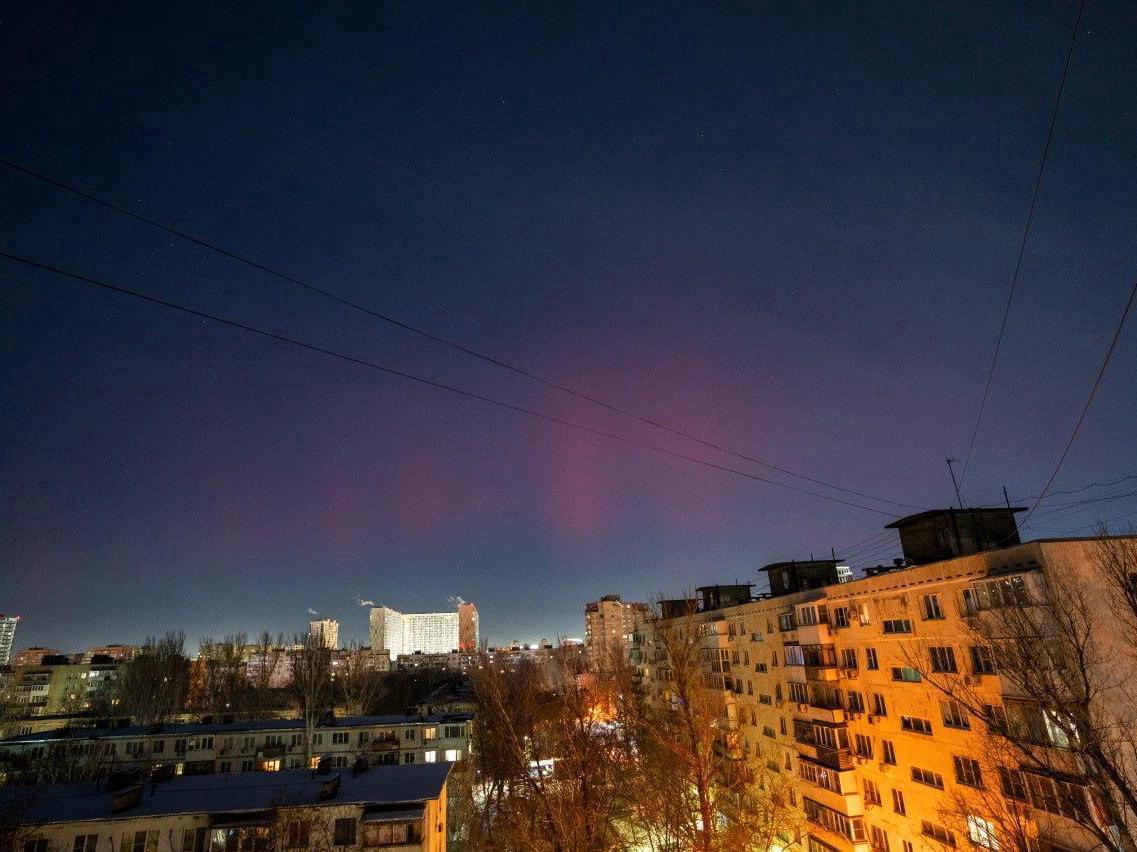

The aurora borealis was observed in Rostov region overnight on 20 January during the geomagnetic storm.
Source:
On 18 January, a powerful X1.95-class solar flare occurred, the first in 2026 and the most significant since 14 November 2025.
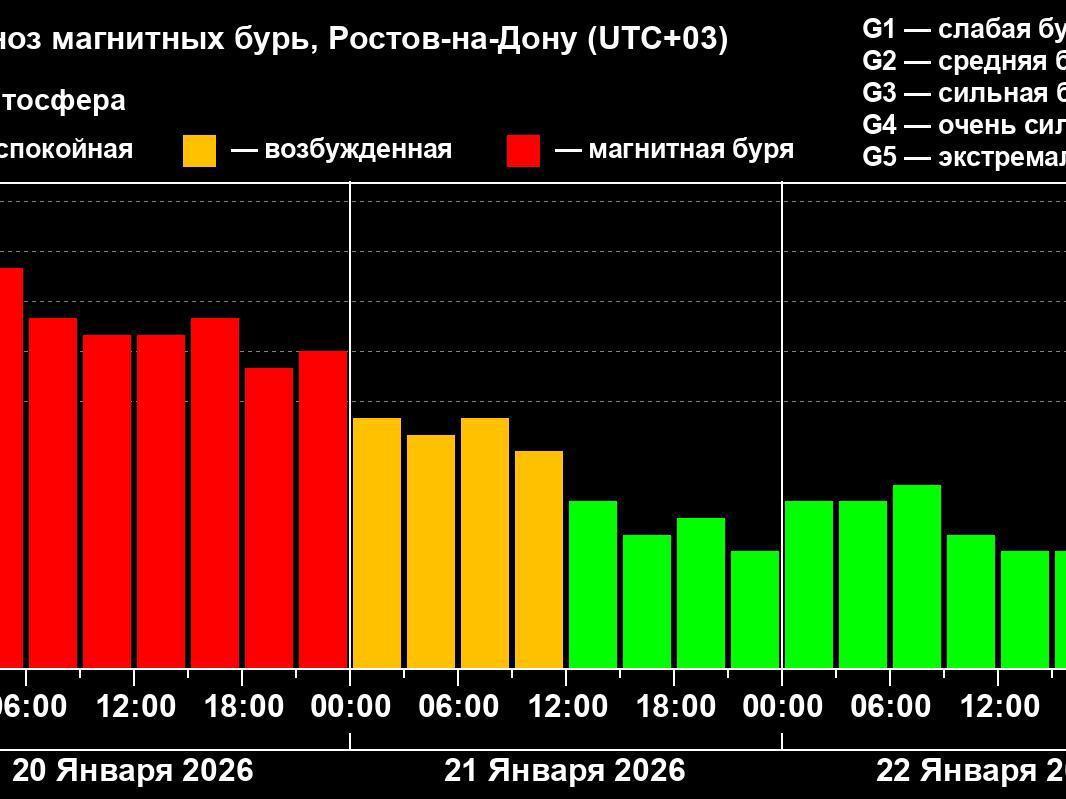
A visualization of solar activity correlating with the geomagnetic disturbance.
Source:
On 19 January, astronomers from the Laboratory of Solar Astronomy of the Institute of Space Research (IKI) and the Institute of Solar-Terrestrial Physics (ISZF) confirmed that the flare was accompanied by a major coronal mass ejection aimed directly at Earth.
As a result, the strongest magnetic storm in a long time hit Rostov region overnight on 20 January. The magnetosphere over the region became agitated around midnight.
By 03:00 MSK, the storm almost immediately reached G4 level, corresponding to a severe intensity. By 06:00 MSK, disturbances decreased to the range between G3 (strong) and G2 (moderate storm) and remained there until 18:00 MSK.
After 18:00 MSK and until midnight, the level dropped closer to G2. From the start of 21 January, the storm subsided, but the magnetosphere remained agitated and was expected to calm only after noon.
Scientists had warned in advance:
The moment of impact on Earth will be accompanied by strong geomagnetic disturbances of up to G4 level. The probability of magnetic storms of the highest, 5th level, is about 10%. Exceptionally strong auroras are expected overnight from Tuesday to Wednesday, signs of which, preliminarily, could be observed across almost the entire territory of the country.
However, the aurora borealis flared over Russia already on Monday night, and it was seen by residents of Rostov region, among others.
The next magnetic storms in the region are expected on 26 and 27 January, but, according to preliminary forecasts, they will be weak.
Read more