Siberian Woman Helps Terminally Ill Die with Dignity After Losses
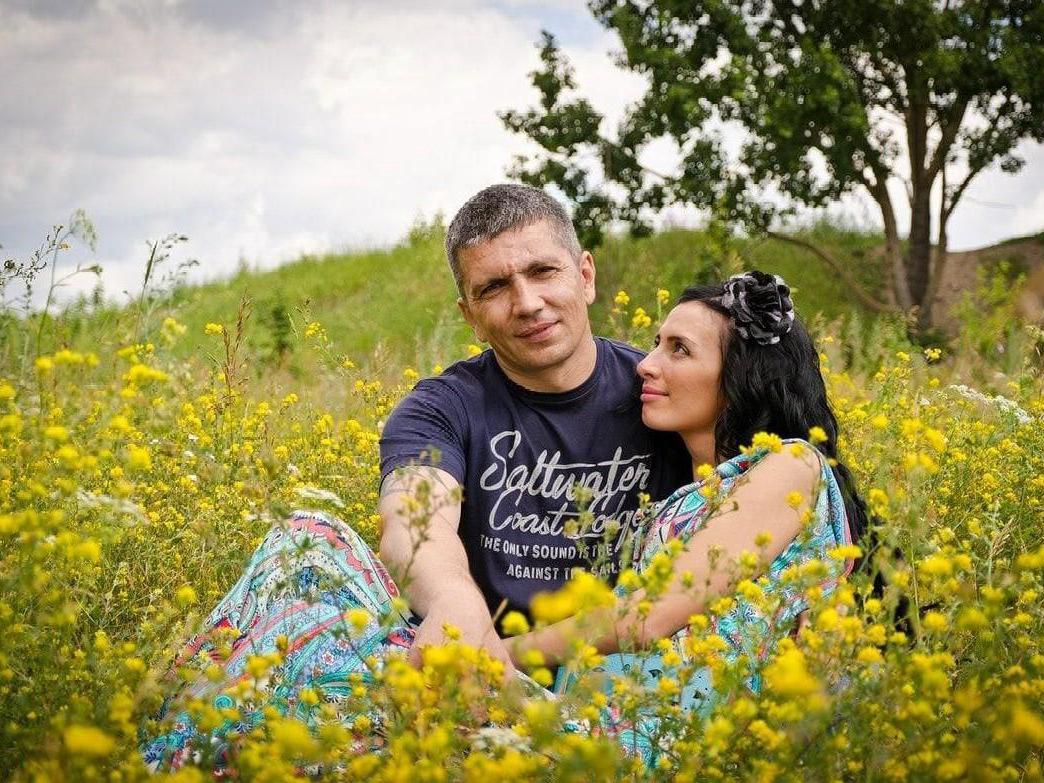

Yulia«s first husband Viktor died of lymphoma, and she named the foundation and hospice after him.
Yulia Sviridova lost four close people in a fairly short time: her mother, niece, brother, and beloved husband. What might have broken another person made her stronger: she did not give up, remarried, founded a foundation, and now heads a Novosibirsk hospice that accepts men with stage four cancer. NGS correspondents spoke with the Siberian woman about what a good death is and how private palliative centers work today.
How It All Began
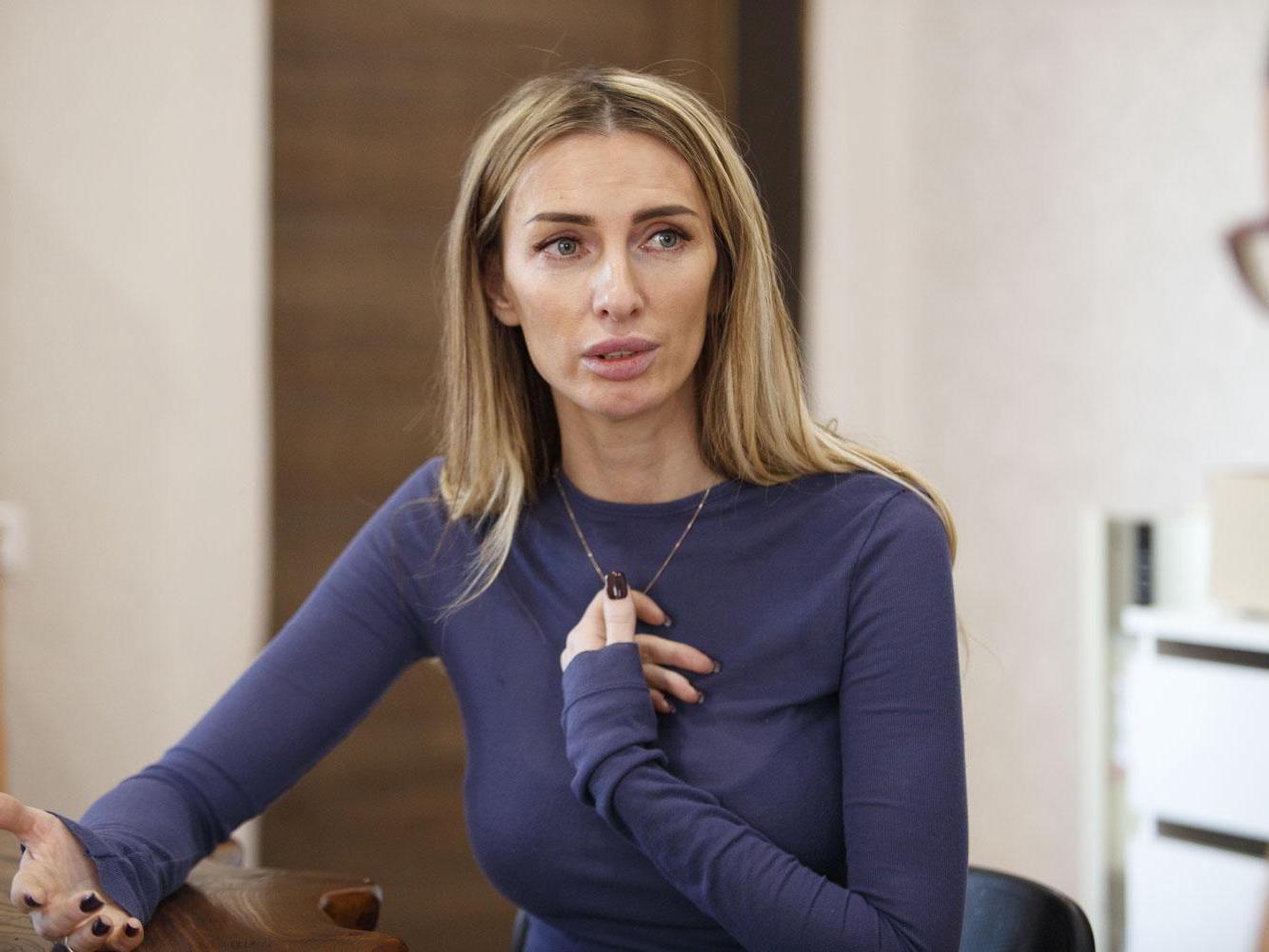
Yulia Sviridova is actively combating the societal taboos that often surround discussions of death.
Yulia Sviridova founded the charitable foundation «Viktor and I» in 2021, after the death of her first husband from illness. Along with the foundation, a center for social palliative care of the same name appeared near the village of Blue Bay (near Novosibirsk, Russia). But Yulia first encountered the topic of death of loved ones even before her husband«s illness. She was working in cleaning at the time and, to avoid boredom, turned on a video on her phone. It was an interview with Nyuta Federmesser — the daughter of Vera Millionshchikova, one of the founders of palliative medicine in Russia.
«The video was called “Life for the Rest of Life”. She didn«t say anything special there, she was talking about the death of her grandmother, about her mother. But what she said touched me so much that I listened to it three times,» Yulia admitted. «Somehow it happened that in childhood I often encountered death. We had a big house, and for some reason, everyone was buried from our house. And back then it was customary to bring the deceased into the house, the coffin stood for three days, we sat around with relatives near the coffin. And then there was an orchestra! And I still remember this horror of the farewell, the end of life. And here I learned that death can be different.»
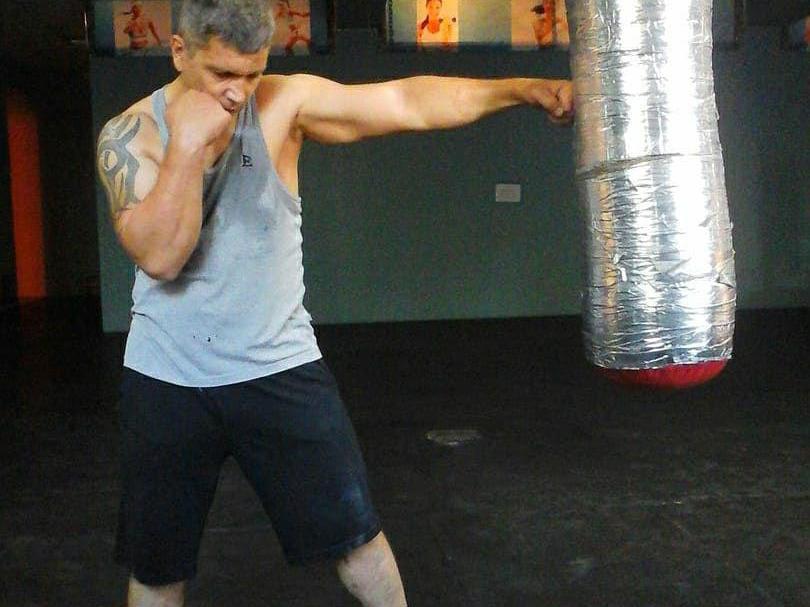
Yulia«s first husband Viktor was known for his passion for sports and fitness.
This brief episode was like a preparation for everything the woman had to endure through a relatively short period of time. First, Yulia«s niece died. It all happened literally overnight: a rotavirus infection, dehydration, kidney failure, and death. The girl was 8 months old, she was a long-awaited child, and her mother — Yulia»s own sister — experienced the tragedy very hard.
«The grief and pain we went through divided my life into before and after. I realized that no one — not in my circle, not in hers — could help her. I wanted to take away half of her sorrow, but it«s impossible. It was hard to believe that there were no tools to help a person get through this. Instead, so many demands are placed on a person who has lost a child… My sister barely pulled through on strong tranquilizers, even though she had two other children,» Yulia said.
Not long after the little girl«s funeral, another sorrow struck the family: Yulia»s mother died from brain edema after a traumatic brain injury. And soon after that, her brother fell seriously ill.
«This was during the height of the pandemic. In Barnaul, Russia, doctors said his brain was dying and advised placing him in a nursing home. We couldn«t do that, but we also couldn»t bring him to our home — we lived in a small apartment with my husband, child, and mother-in-law. That«s when we placed him in the House of Healing and Prayer, which later became our center for social palliative care “Viktor and I”,» the Siberian woman explained.
Yulia cared for her brother, and when he passed away, life again gave her no time to catch her breath. Her husband — Yulia«s support and anchor — was diagnosed with large-cell lymphoma, with more than 10 tumors on his small intestine. Over four months of illness, he changed beyond recognition. NGS had already written about the couple when they prepared small Easter gifts for patients at the hospital where Viktor was staying.
«By that time, we already knew a lot about palliative care, so we were able to love to the end: to say goodbye before he was taken to the intensive care unit. I came and accompanied him to the ICU, we were able to say the most important words to each other. We understood that he was dying, and I was staying,» she recalled.
What Is a Good Death
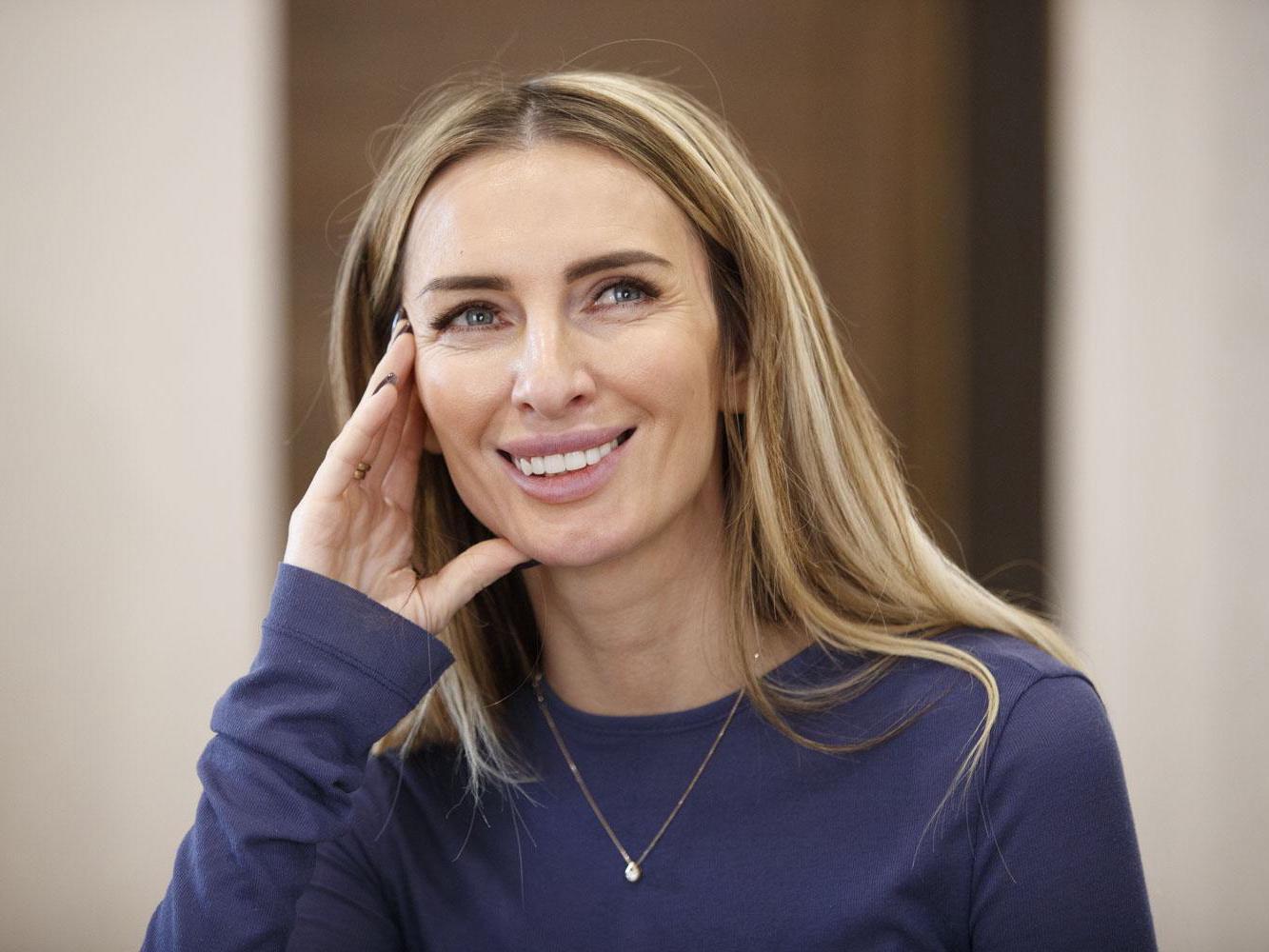
Yulia recently turned 38, the same age at which her brother passed away.
Five years have passed since then. Yulia married Alexander, who accepted the woman with her grief, young child, and big dream: to make it less painful and scary for people to die.
«If you look at it from the outside, it seems like I«m cursed: death after death, death after death. But I consider myself a very happy person. I know that everything I had to go through gave me the opportunity to feel life differently, not to put it off for later. If I can go to the mountains today, I»ll go to the mountains. If I can help, I«ll go out and help,» the Siberian woman explained. «I haven»t died, I don«t know what it»s like. But as long as I can help someone else, the deaths of my loved ones have some meaning. Remarque has a phrase: “courage from despair”. You«re strong not because you»re strong — you have no way out. That«s about me.»
So it happened that Yulia took the lead of the hospice in Blue Bay. She and her husband decided to renovate it and create comfortable conditions for those whose lives are coming to an end.
And in the hospice, they also teach how to talk about death without fear.
«Why are people always alone at the end of life? Because no one talks to them. Until the very end, everyone says that everything will be fine, “we«ll still go fishing with you, we»ll go to the sea”. As a result, all the most important conversations that should happen before death don«t occur. Because one person is afraid of death, and the other is dying,» Yulia noted.
Life experiences can be different for everyone: one might never form a union, have children, or climb the career ladder. But one day will definitely come for everyone — the day of death, she emphasized.
«When I was studying to be a death doula, we had an assignment: we had to formulate what a good death is. My good death seems to me like this: I«m lying in bed, with some linen curtains on the windows that I love, textiles, the room is ventilated, fresh air, I have no pain. I know I»m dying, and people I love come to me. They all talk to me, but not about death, but about what connected us in life. And I, wise with experience, give advice saying: “You do this, and you don«t give up”. That»s my good death,» Yulia shared.
At the same time, the woman pointed out, by the end of life, a person should be free from any pain: physical, emotional, spiritual, and social.
How the Hospice Is Organized
The three-story building with an attic in Blue Bay, where the hospice is located, still belongs to Protestants, but the Sviridov family runs everything there. On the first floor, there«s an entrance hall and shower rooms, including for washing patients on gurneys. On the second floor — a small kitchen, dining room, a common »ward«, and a separate room for extremely critically ill patients. There are eight beds in total.
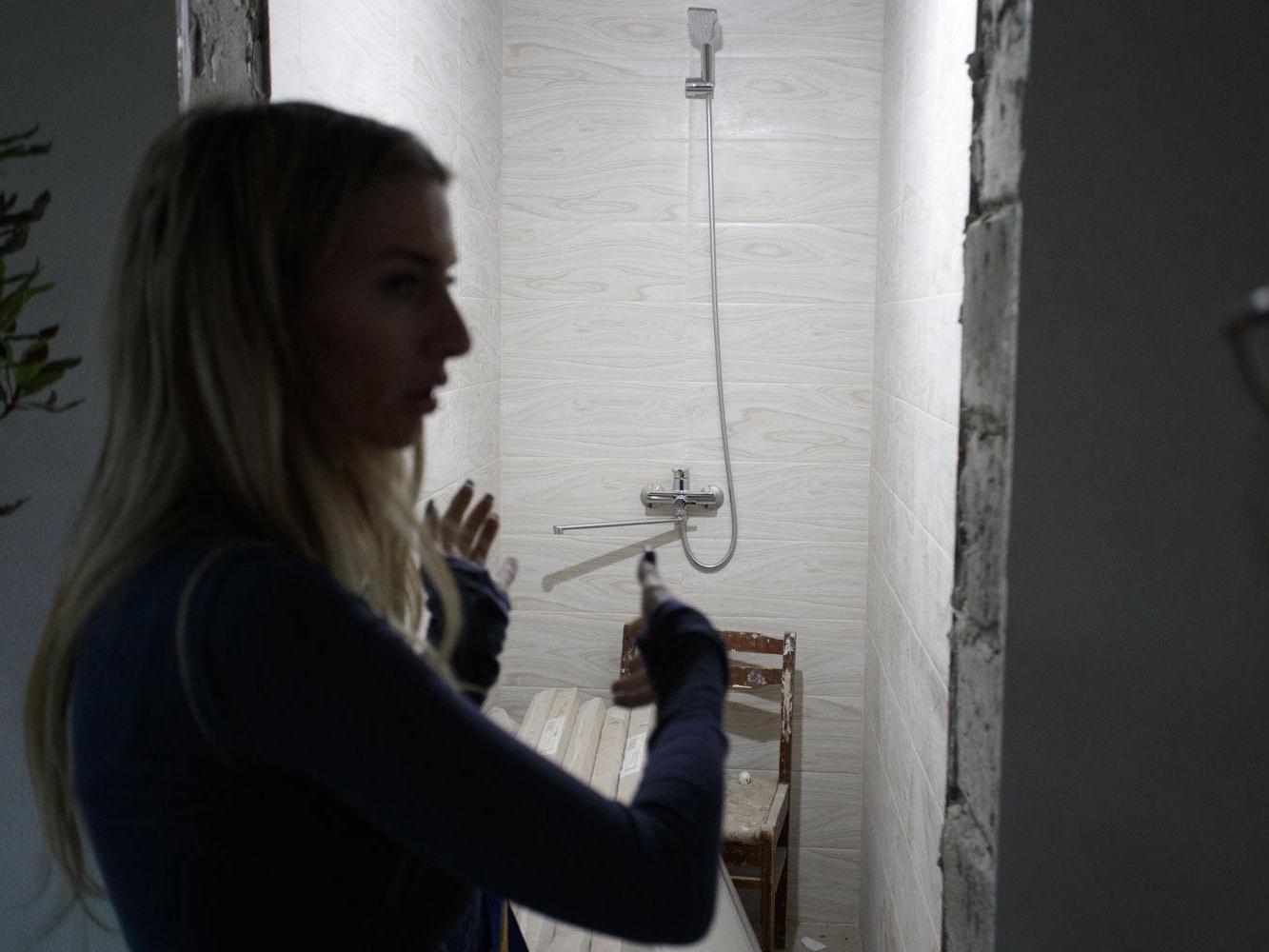
The couple has recently completed renovations in the shower rooms of the center.
On the third floor, construction is ongoing: there will be a room for accompanying persons, a staff room, and a cell for meetings with priests of any denomination.
«And on the third floor, there will be a wall of memory. We always dreamed that it would be a wall with plaster birds flying into the sky and plaques with names,» Yulia shared her plans. «Of course, I remember absolutely everyone, absolutely every story.»
The attic is also under construction — there will be a psychological relaxation room with a cinema and soft seating.
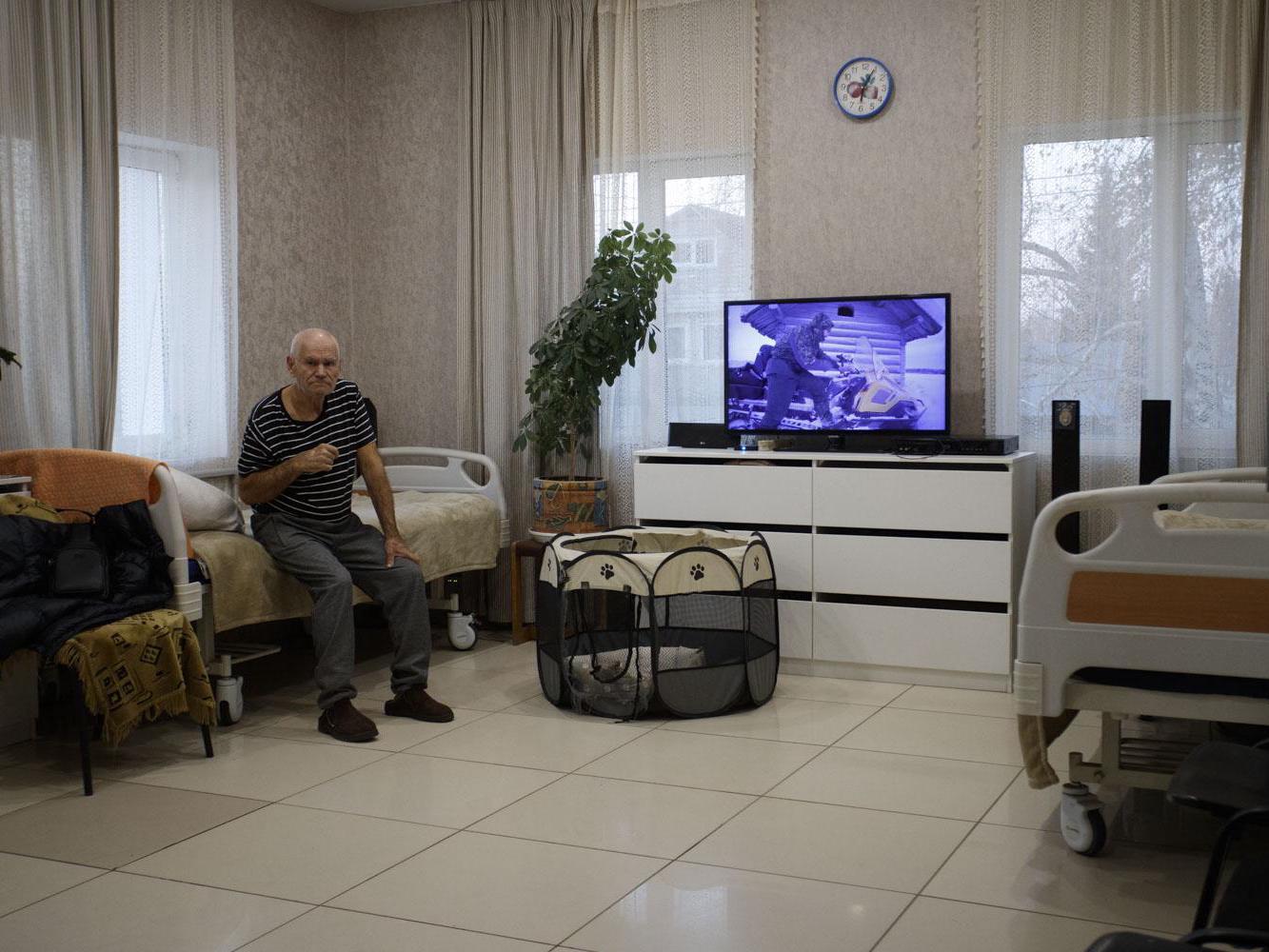
The resident nicknamed «Grandpa» came with the house when the center was established.
Currently, three men live in the center. The oldest one came to the Sviridovs with the house, like a household spirit. He is not quite a typical patient; his diagnosis differs from those of most residents.
«Usually, men with stage four cancer, at the end of their life journey, come to us. Most often, their relatives call me and say: “I have a father/brother/husband with stage four cancer, we«re in line for a medical facility, but the wait is two weeks”. And I understand that the person won»t make it,» Yulia explained.
All those who care for the terminally ill are volunteers. It so happened that they are all men, and only for this reason women are not yet accepted into the center. But that will change in the future.
A specialized palliative care team from Baryshevo often comes to the house. They provide pain relief and write prescriptions.
Sometimes the police and a hearse come. The Sviridovs admit that at first this frightened the neighbors, but they learned more about what happens in the center and got used to it. They even help however they can.
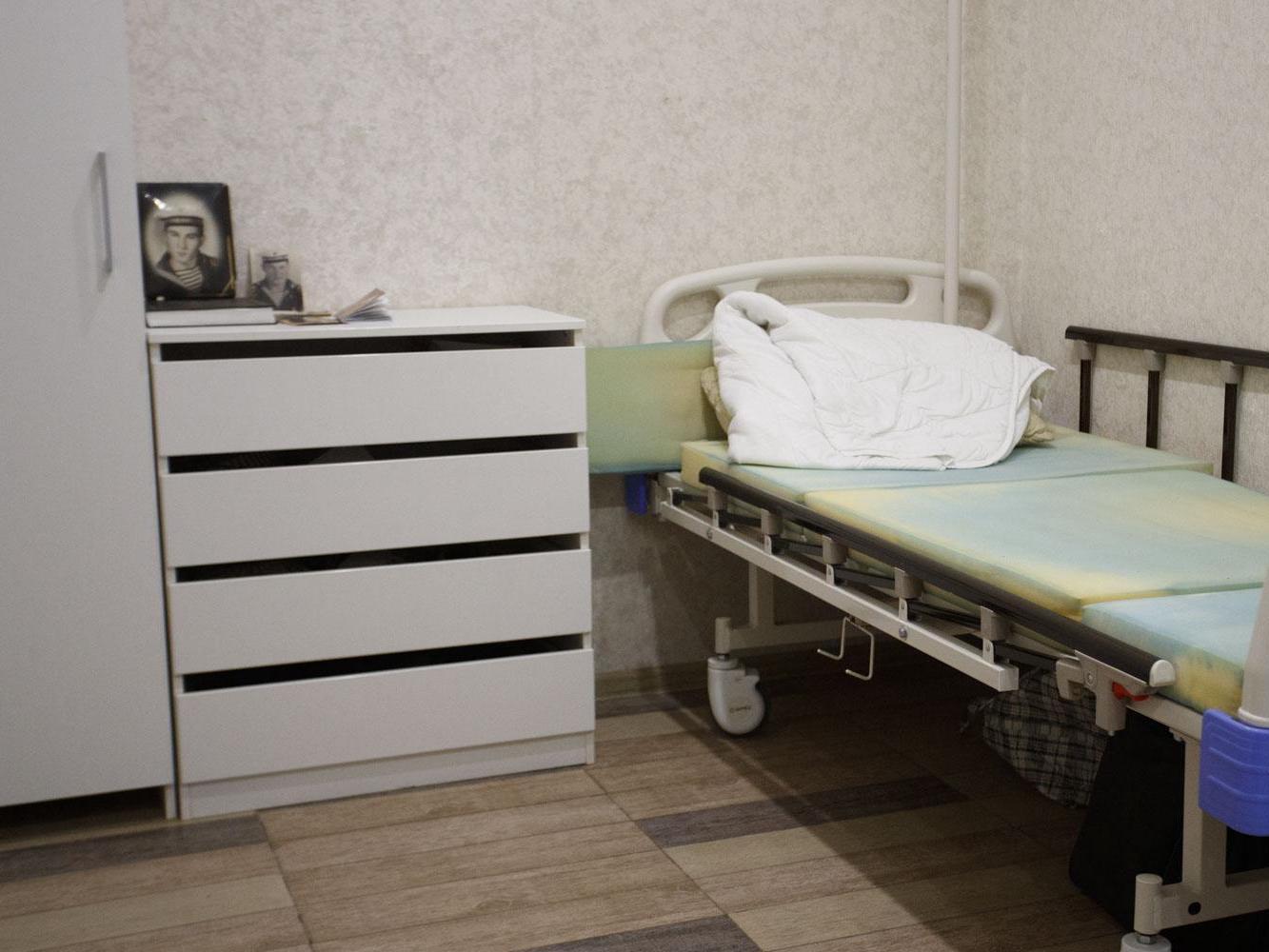
This room is designated for critically ill patients and contains only one bed.
Stay at the center is free. Yulia emphasized that for her, this is a fundamental point.
«We«re often asked: “What do you live on?” A person at the end of life needs almost nothing. Actually, people want little, for example, sea buckthorn juice. What does it cost me to make sea buckthorn juice? For this, you don»t need to pay 60,000 rubles a month (about $632 at current rates). At the end of life, needs narrow to the level of “just so someone is nearby, and I feel not alone, so it«s not scary” — that»s all. This we can definitely provide,» the director of the hospice explained.
She and her husband cover the main expenses themselves, but of course, caring people also contribute something. Relatives of the patients also donate a lot. For example, beds when they are no longer needed. At the same time, the center provides medical equipment it has for free for caring for palliative patients at home.
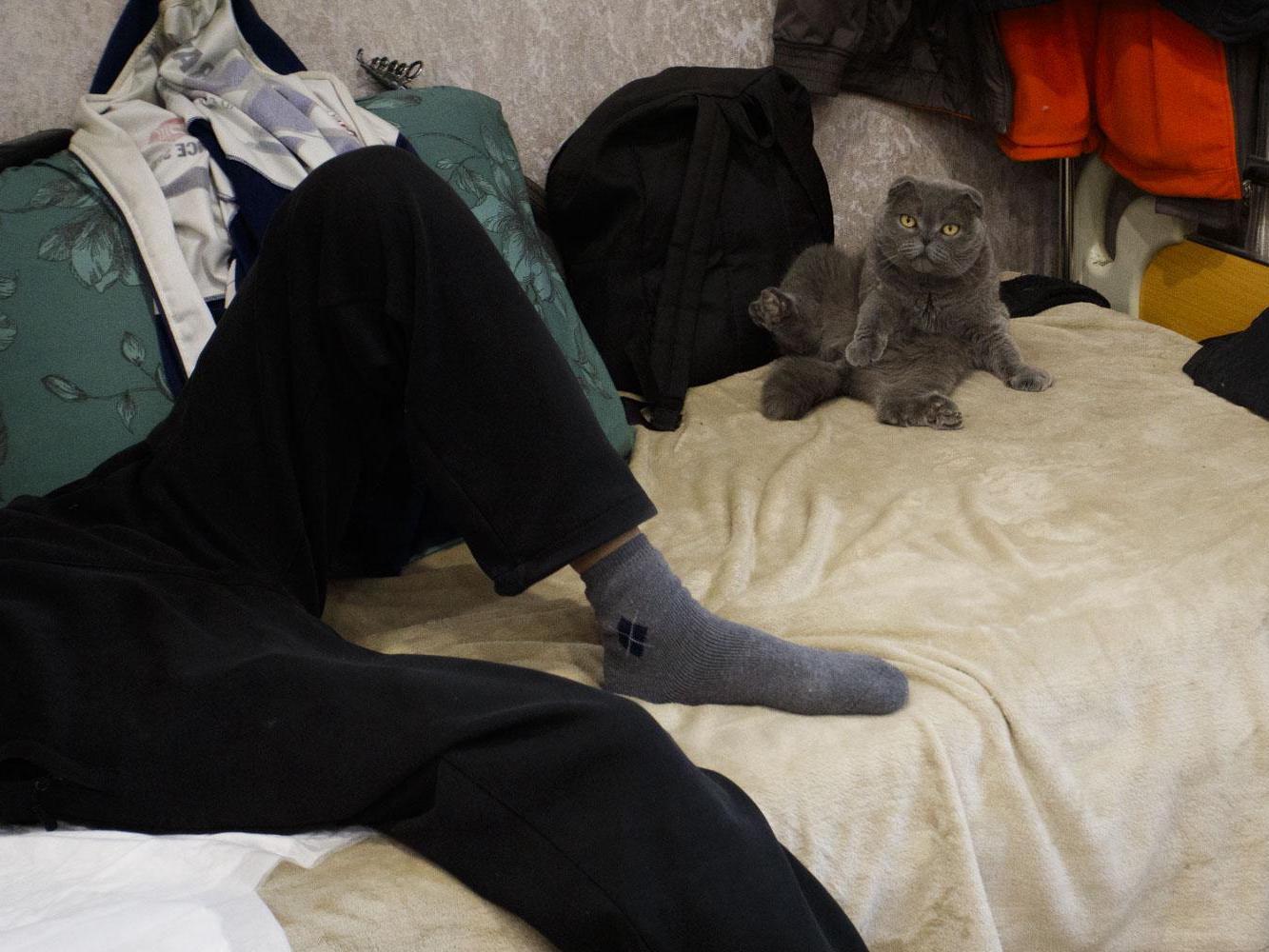
The cat prefers not to be petted but stays close to people at all times.
Once, these rooms looked completely different. Yulia recalls that colorful curtains hung on the windows — whatever fabric someone gave, that«s what was hung. The wallpaper also consisted of disparate fragments. The couple set a goal to completely transform this place. To make it bright, clean, cozy, a place where a good death comes to a person.
For the residents of the center, the Sviridov family tries to create a homely atmosphere as much as possible — even keeping pets is allowed.
Last Wish
The center carefully respects the last wishes of its residents. For some, it«s to visit the Ob Sea, for others — to reconcile with relatives. One of the men, after spending many years in prison, asked to find his relatives. His sister didn»t even want to talk to Yulia. His son replied that he has had another father for a long time who raised him, and he doesn«t want to know anything about the one who gave him life. But his brother did forgive him.
«I asked: “What kind of judgment do you want for him? He spent his whole life in prison. Now he«s dying of cancer. Tell me, what else should happen to him for you to forgive him, well, while he»s alive?” And he somehow switched immediately. Now they call each other, talk about fishing — both are avid fishermen,» Yulia Sviridova said.
Another man was from Uzbekistan and dreamed of ending his life surrounded by family, in his homeland.
«But with stage four cancer, they don«t allow you on a plane. We went through a huge process, three tickets were wasted, but on the fourth flight, they took him under our responsibility. He flew home to Uzbekistan, met all his relatives, and died the next morning,» Yulia Sviridova emphasized the importance of fulfilling last wishes.
In 2024, NGS reported on why it«s important for some of us to plan our death and how it relieves deep fears.