Ryazan Mother Founds Rehabilitation Center for Daughter with Rett Syndrome
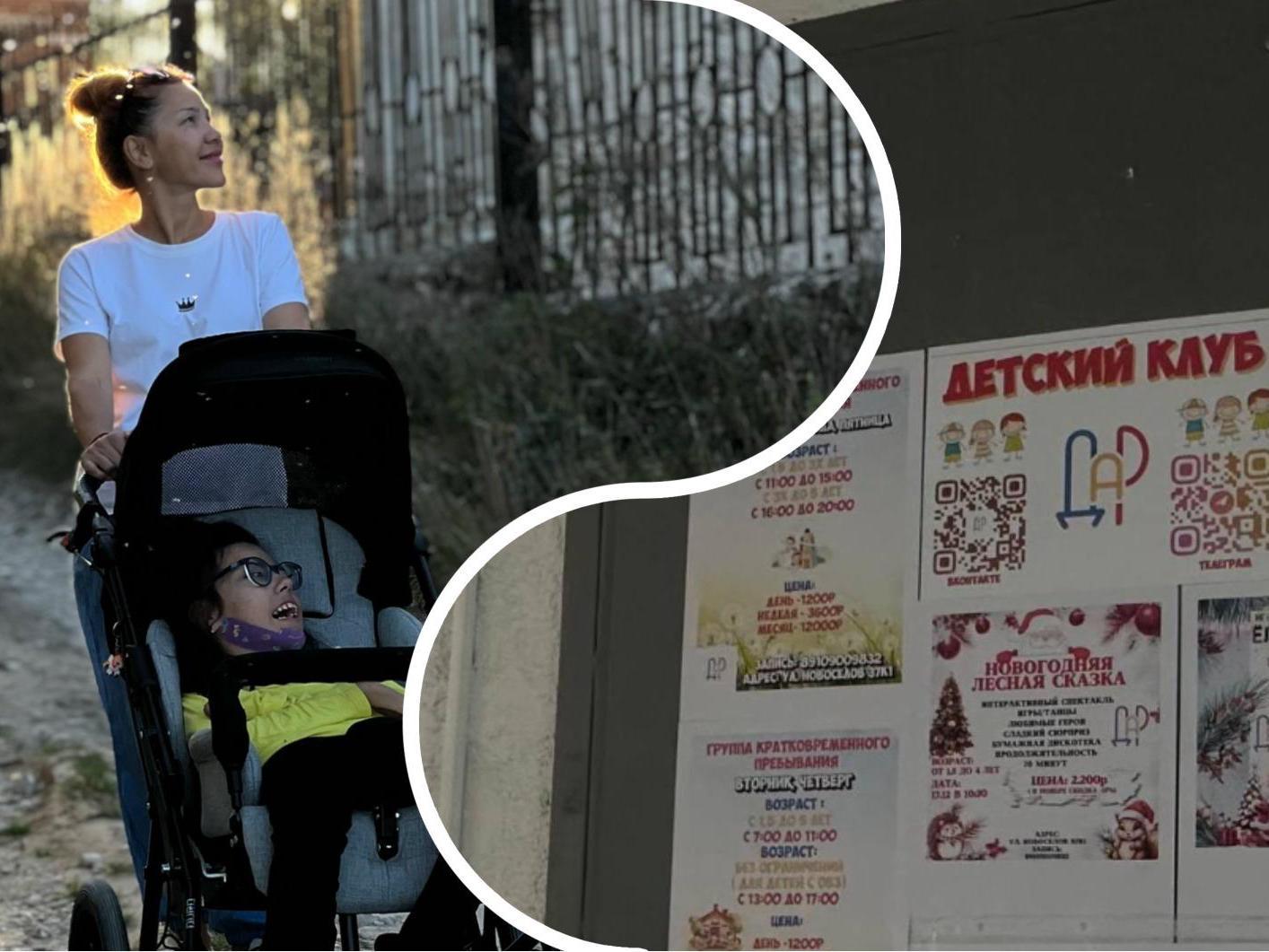

A beautiful red-haired woman sits in a chair drinking coffee, waiting for children with disabilities to arrive for rehabilitation, while opposite her is her 17-year-old daughter in a wheelchair. Varya has a rare genetic disorder called Rett syndrome. But initially, the girl was diagnosed with cerebral palsy.
Rett syndrome is a rare genetic neurological disorder. Children may lose acquired speech, motor, and social skills after a period of seemingly normal development.
And the beautiful woman next to sweet Varya is Oksana Sukharnikova, founder of the regional public organization «Children-Angels of Ryazan,» a mother of two and a grandmother. Now she has learned to accept life in all its forms, but it wasn«t always that way.
Oksana openly told YA62.RU how she learned about her daughter«s diagnosis, how she lived through these years, and how children in wheelchairs are treated in Ryazan.
“Others could see my child was severely disabled, but I didn«t realize it”
Oksana«s pregnancy went smoothly. After giving birth, she decided not to take maternity leave and continued working in a restaurant in a managerial position. Our heroine started noticing oddities that many wouldn»t even pay attention to when her daughter turned six months old.
“It seemed to me that she had fallen into depression — how can that happen in such a young child? We immediately called a neurologist, I said: «She»s not like my first child.« They told us we were exaggerating and that Varya was just developing at her own pace. When she turned one, I continued to notice that something was wrong.
There was a feeling that the core was pulled out of Varya«s actions. For example, she walks, but won»t stand up or walk on her own, only stands with support against a wall, draws, but leaning on something. I went online to search by symptoms what it could be — autism spectrum disorder and Rett syndrome came up. That«s when panic set in and we went to Moscow for examination,” recalls Oksana Sukharnikova.
According to her, Moscow doctors focused on neurological issues. When Varya turned three, her mother went to a cerebral palsy center and there, for the first time, they said her child was disabled. Oksana herself didn«t understand it then.
“The doctors persuaded me to go and get disability status, and back then [2010–2011] it was even harder than now. I came, and the commission, as it seemed to me, easily granted disability, and I thought, gods are sitting there and will tell me what to do with the child next,” says Oksana.
Gradually, it began to sink in why doctors asked not to worry: saying, “this happens.” At home, Oksana found information online that the average life expectancy for “severely disabled” children is four years. Varya was diagnosed with cerebral palsy.
Varya was diagnosed with Rett syndrome only at age 16 — in 2024. Neither MRI nor various examinations and hundreds of consultations before that had detected the genetic flaw. The clinical picture became clear when Oksana consulted with a renowned doctor from Moscow.
From that moment, life divided into “before” and “after,” and for herself, Oksana decided she would do everything to care for her daughter and invest in her.
“I immediately told my husband about the diagnosis and that I would be fully with Varya. There was a conversation where I asked him to make a choice now: either leave or stay, because if he lives with us for some time and then leaves, it will be painful. He stayed with us,” noted Oksana.
After Varya turned four, it was almost impossible to get free rehabilitation. Frankly, back then there wasn«t such tolerance towards “severely disabled” children, and rehabilitation means were lacking — the 2010s. Today, Oksana Sukharnikova speaks about this openly and without tears. But back then, her moral state was difficult.
“If a parent accepts the child — they are normal”
The period before “Angels” Oksana considers one of the hardest. The mother was learning to accept her new life and cope with difficulties, and after the first rehabilitation at the public organization, no miracle happened. The Ryazan woman simply realized — she is not the only one raising a child with special needs, but others have learned to get out of a depressive state.
“The main thing is to accept both the child and the new life. Yes, you have such a child and he will live — if a parent accepts him, he is not special, but normal. Simply, in the mornings, I brush my teeth and Varya«s, we live on the same schedule,” says Oksana.
Another moment that strongly affects parents« psyche is thoughts: “What if?…”. Such things, according to Sukharnikova, drive one even deeper into melancholy. One just needs to learn to accept both the child and one»s new life.
“It«s scary every morning to get up and check if she»s breathing or not. It«s already a worked-out system: I come in, if Varya is sleeping quietly — I»ll come closer to see if everything is okay. But I«ve learned to live with this: while she sleeps, I go to training, do sports, and let»s go live on with her!” shared Oksana.
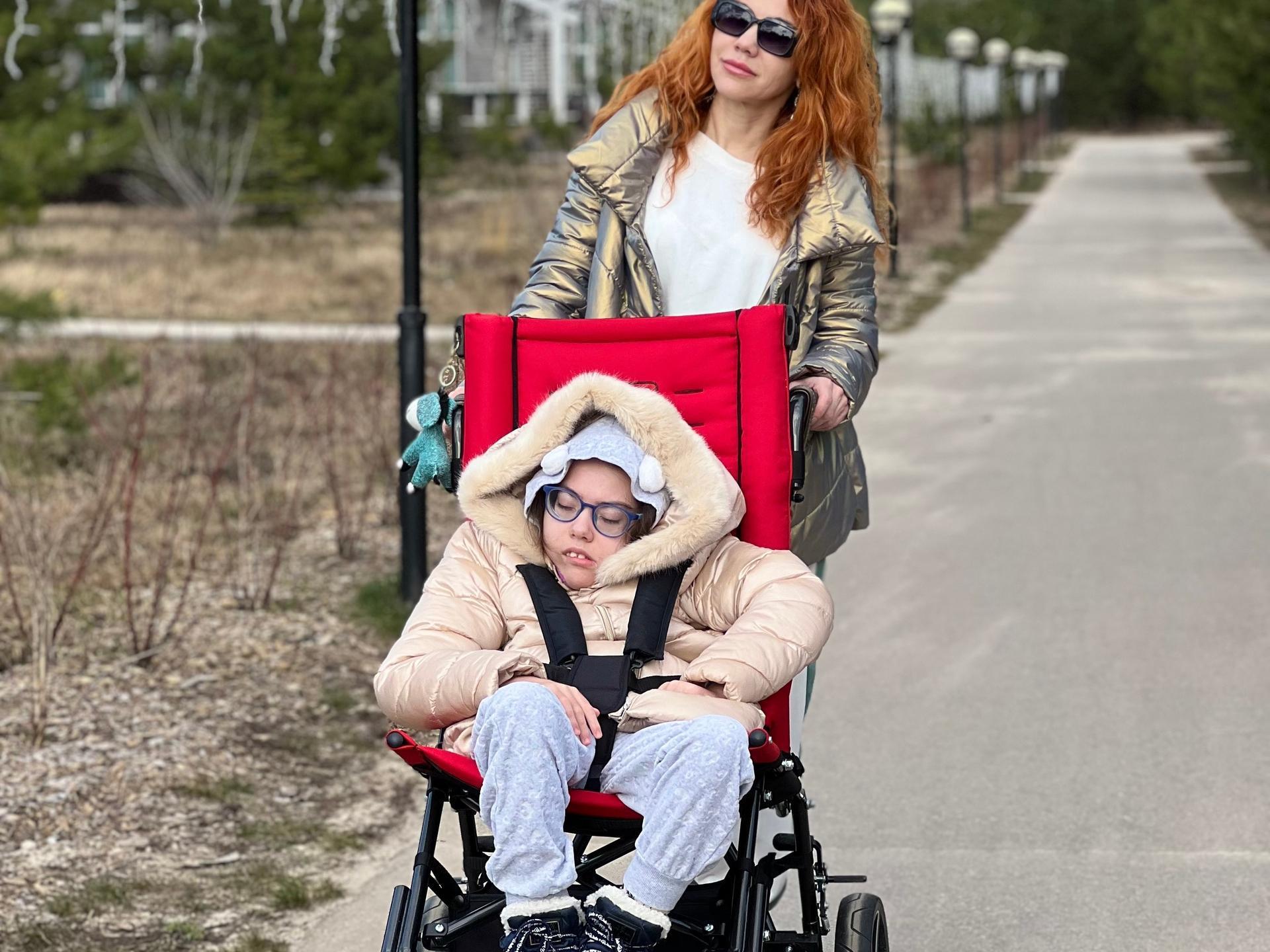
“I was like in a zoo”
Now residents of Ryazan are more accustomed to wheelchairs, but in the 2010s, the attitude was completely different. People weren«t so tolerant and could allow themselves things they probably wouldn»t say now.
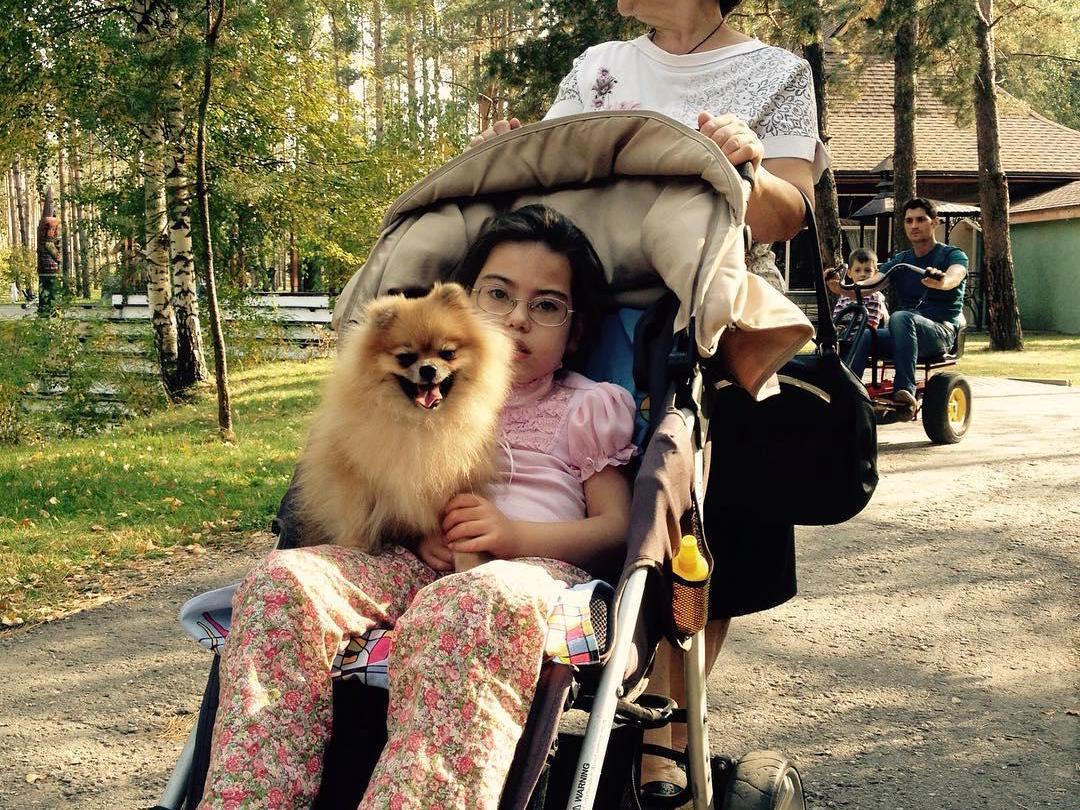
But one situation during a walk with Varya crossed all boundaries. An important note: back then, a little dog — a Spitz — often sat on her knees in the wheelchair.
“A dad was walking with two girls, and one, about 10 years old, says: «Dad, buy a dog! Look, even she has a dog.» And such things often happened. And once, a mini-hotel in Crimea refused to accept children for rehabilitation. They literally answered us: «The management refused, they don»t want to see your “drooly” children, and there«s a cafe nearby and people will be unpleasant to look,»” recalls Oksana.
Earlier, according to Oksana, even doctors treated special children differently.
“In Moscow, they prescribed us assistive devices, we got a receipt to compensate the money, and already in Ryazan I noticed there was some hitch. I come to the hospital here with shaking hands because I don«t know what will be in the doctor»s head. I give her these papers, and she looks and says that the ending is written incorrectly and we need to redo the receipt.
I«m just in shock — I say that we need to go to Moscow again, and I can»t go anywhere without Varya. She just answers in a rude tone: «What, you didn»t understand me?!« When I said it was illegal, she threw the papers in my direction and kicked me out. My tears just gushed out,” recalls Oksana.
From that moment, for several years, she didn«t go to free hospitals anymore. Closer to 2020, the situation changed drastically: doctors started treating everything adequately, and if there are incidents, they are quickly resolved through the head of department.
Assistive devices — technical means of rehabilitation (crutches, wheelchairs, etc.).
Among the unpleasant stories, there is a very good one from the “tens” years. When Oksana put three-year-old Varya in a sandbox, the “proper” moms quickly took their children away, but a woman “non-conformist,” as they often say about people with bright style, made a nice gesture.
“Everyone dragged their children away and my Varya was left alone. I remember, such bitterness inside, though I didn«t show it. And that mommy saw this, took out a child — about 10 months old, probably — from the stroller and sat them down with Varya in the sandbox,” recalls Oksana with a smile.
According to her, people 45+ years old treat children with disabilities with some embarrassment and might discuss them behind their backs. But Oksana is pleased that the younger generation reacts calmly and can even ask what«s with Varya — that»s better than talking behind one«s back and being afraid of people in wheelchairs.
How Did “Angels” Reach Ryazan?
When Varya was three, Oksana learned about the existence of “Children-Angels” in Russia. She found a forum where she communicated with other moms, and one of them advised going to them for rehabilitation. In Ryazan in 2011, doing this was almost impossible: “severely disabled” children weren«t accepted. Especially for free.
In “Children-Angels,” rehabilitation courses are paid. But the organization doesn«t profit from them: the money goes to pay for visits by the best specialists from different parts of Russia. Including travel, accommodation, meals.
Right at the rehabilitation, Oksana was surprised by how parents maintain a positive attitude.
“I was in wild depression, completely out of this reality, and I saw that parents with ‘severely disabled’ children laugh and love activities. I attached myself to them and became friends — communicated mainly with people from other regions, in Ryazan I saw few such parents and they were unsociable,” recalls Sukharnikova.

But after several years, it was Ryazan parents of “special” children who turned to Oksana with a request to help organize “Angels” here. Our interviewee didn«t want to do it alone due to the huge costs, including moral ones.
Another girl took up the task, but after two courses, she left.
“There was a choice: either we close the organization in Ryazan, or we continue. Victoria Korneva in 2018 offered me to take this up, I thought for a long time — a whole evening, and agreed,” says Oksana Sukharnikova with a smile.
Victoria Korneva is a mother of a child with cerebral palsy from Elektrostal. She created the website “Children-Angels,” which later grew into a nationwide organization.
Oksana«s main goal was to unite parents: not only rehabilitation but also meetings. The Ryazan woman knows firsthand what it»s like to be a mother of a child with a disability.
“I was in internal tears, on the outside I didn«t scream, maybe rolled on the floor when no one was around. Once I sat at home, didn»t go outside from January to spring. My older child even went to the store that was right in the building. Moms live like that. It seems like the whole world has stopped,” admitted Oksana.
At first, there were 19 people in the Ryazan “Children-Angels,” and now — more than a hundred.