Potassium Levels: What Blood Tests Indicate


Symptoms of potassium deficiency include muscle weakness, cramps, dry skin, and heart rhythm disturbances.
Potassium is a crucial element that is not synthesized in the human body, yet it is responsible for transmitting electrical impulses along nerve fibers. With its help, signals from the brain reach the muscles, and internal organs receive instructions on how to function. A doctor specified the normal potassium range in blood and explained what health issues a test result may indicate.
How to get a blood test for potassium
Thanks largely to potassium, messages from the senses reach the brain quickly, allowing a person to feel heat, cold, and pain, and to react to danger.
«Potassium is not produced in the body; it can be obtained only from food. Adults need at least 3,500 mg of this substance daily. Children’s needs are slightly lower: from 1,000 to 3,200 mg per day. For comparison, 100 grams of red beans, pistachios, dried apricots, and chickpeas contain about 1,000 mg of potassium», — emphasized Olga Ulankina, Candidate of Medical Sciences and physician-expert at Gemotest (Gemotest Laboratory).
You can suspect a potassium deficiency if muscle weakness appears, your legs and arms cramp, and the skin has become dull and dry. In severe cases, a lack of potassium affects the heart — the rhythm becomes irregular.
For a potassium test, blood is drawn from a vein. It requires no special preparation. It is important to avoid additional stress and vigorous physical activity.
Normal potassium levels in blood
Laboratories may use their own reference ranges — this depends on the equipment used for the analysis. Therefore, only a physician can accurately interpret the result. They will consider the patient’s condition, review other test data, and, if needed, order additional tests.
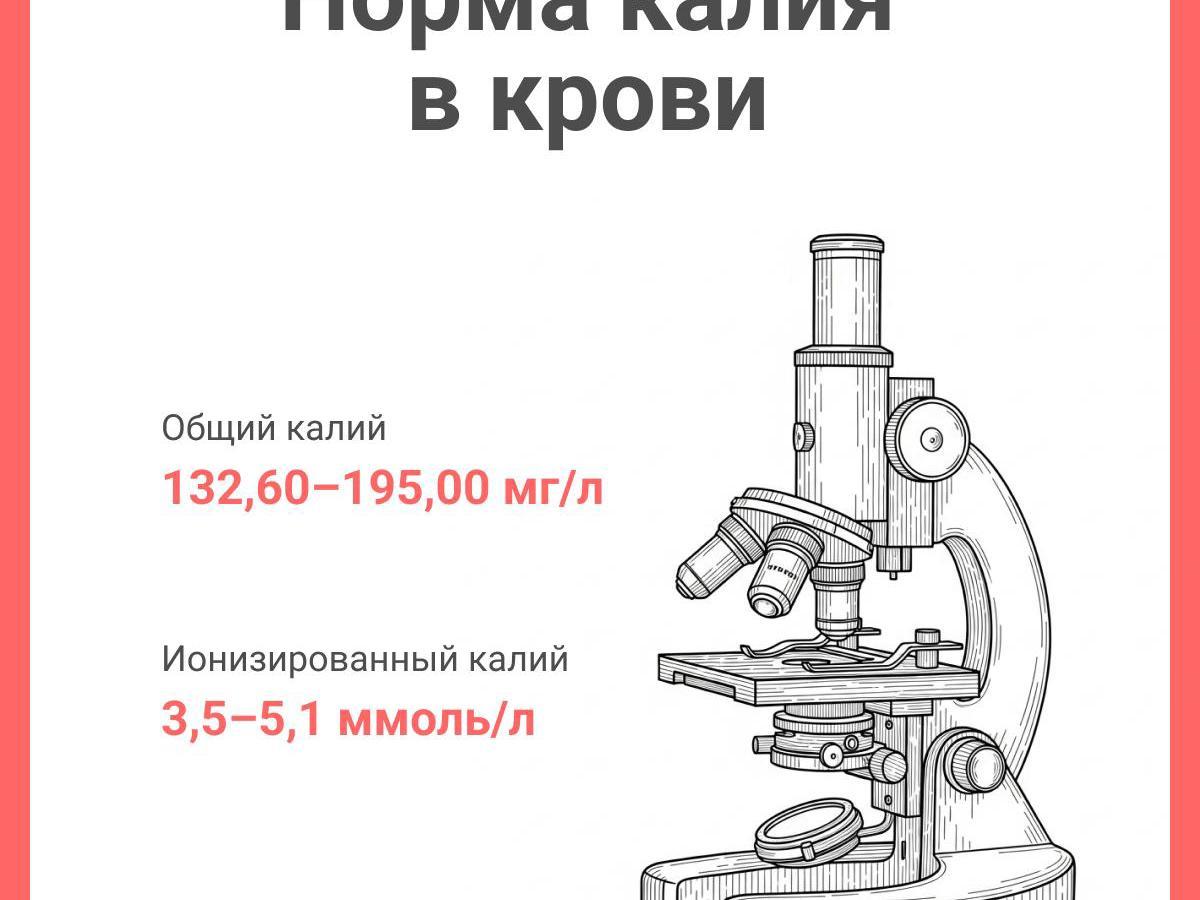
Laboratory experts note that reference ranges vary and require professional interpretation.
What elevated or low potassium may indicate
An excess of potassium is found in people with renal failure, because damaged kidneys cannot excrete the surplus in urine. A similar picture is typical of burns and serious injuries, as well as hormonal imbalance.
«A potassium deficiency may signal that a person’s diet lacks foods rich in this electrolyte. It also occurs with dehydration and metabolic disorders», — explained Olga Ulankina.
A lack of potassium may indirectly point to gastrointestinal diseases, adrenal gland dysfunction, kidney problems, and certain types of malignant tumors. But for all these conditions, potassium deficiency is not the main sign; there are usually more obvious symptoms.
In any case, you should consult a physician. Taking potassium and any other vitamin supplements on your own is dangerous. As a rule, any abnormal test result should first be discussed with a general practitioner.
What else to read about tests
From acute kidney failure to stones — blood creatinine norms.
What a ferritin blood test can show — norms in one image.
From leukemia to purpura: platelet count norms — a key explainer.