Kurgan Showman Doubles as Ambulance Driver for Five Years
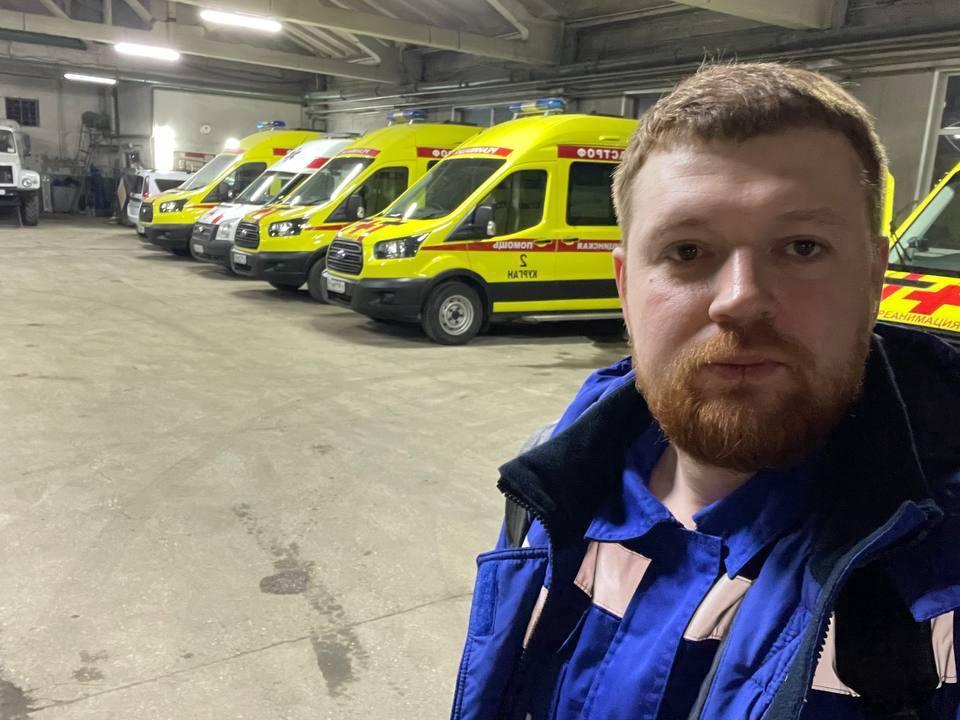

Stas Volosnikov is a well-known event host in Kurgan. Some might have seen him on one of the city«s stages, some on TV or radio, and some as a wedding host. But few know that Stas has been working as an ambulance driver for five years and also runs a driving school. A correspondent from 45.RU met with Stas ahead of the new year to find out how hard it is to work as an ambulance driver and how, despite being busy, he manages to spend time with his family.
Instead of 150 Guests, Only 14 Showed Up

Stas Volosnikov is now 33 years old, and he started his working life at 15, when he began working at the summer venue «Imperial» on Troitskaya Square. He first worked as a sound operator for a couple of years, and then in 2009, when the art director was fired from the establishment, Stas was transferred to that position.
— Then director Irina Aleksandrovna said: «Our art director must also be a host.» So I started combining roles. I was a sound operator–host. Then I moved to «Grand House» and worked on sound there, and from 2012, around the end of the year, I started hosting weddings.
He conducted his first wedding in a duo with host Oksana Ozhogina, after which he began taking solo bookings. Among the most unusual orders, Stas recalls a wedding where, instead of the promised 150 people, only 14 showed up.
— Tables were set in the large hall of the «Academy» Cultural Center, artists from all over the Urals came, the program was good and expensive. I don«t know why, but there were 12 people in the hall and the newlyweds instead of 150. Then everyone celebrated—the artists and the banquet hall staff.
About the new year, Stas says that for the last few years he hasn«t taken orders, trying to celebrate with family. And his wife Sveta, who runs a dance school and show ballet, also tries not to take orders on December 31.
— Last new year, we went to my mom, then to her mom, stopped by friends, congratulated everyone, and by about two, half past two in the morning, we were already sleeping peacefully at home.
On the Ambulance During the Pandemic
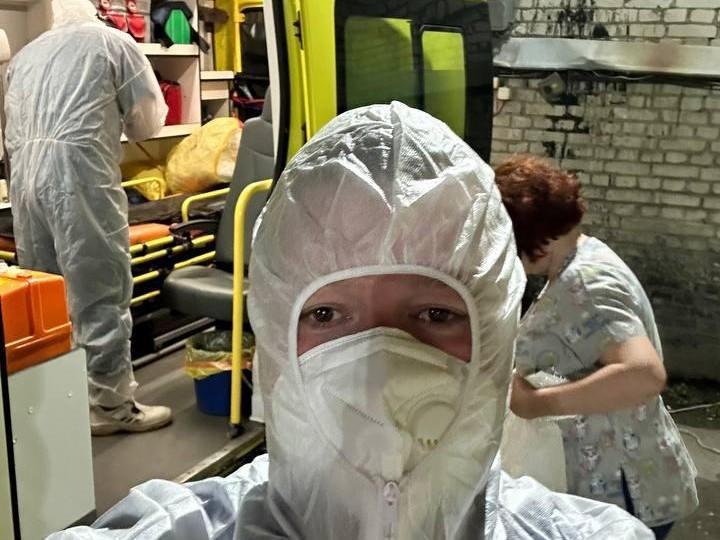
In 2020, unexpectedly for everyone, our lives froze, the pandemic began, and the entertainment industry was out of work.
— I remember the first days, late March–early April. We were sent on a week«s rest then. My friends and I rented a cottage for a week, rested and had fun. We thought it would all end. Then everything around remained closed. At some point it got boring, a month passes, two, and nothing opens. I don»t remember who suggested it to me, but basically they asked me: «What»s your license status? What categories?« I already had B, C, and D open then. »Well then, go work on the ambulance, they always need drivers there.«
About his license, Stas says he was always interested in cars, so when studying at a driving school, he immediately decided to take several categories. But when learning to drive, he never thought that in 10–15 years all the obtained categories would come in handy.
— When they suggested it, I thought, why not? I came to the Kurgan Emergency Hospital and said: «I want to work with you.» Then the head of the motor pool, Oleg Valeryevich, said: «There are no free cars right now, but new cars will arrive soon, and we»ll call you.«
And so, from late October 2020, Stas was called and hired. He passed a medical examination, training on using special signals, processed all the documents, and received keys to a new car. The first shift was on November 3.
— I came for the shift, having already met the shift workers beforehand, they handed over the car to me, and I said: «What do I do next?» They said nothing, sit and wait until the dispatch center determines who, which medics, on which cars will go. And when they assign a medic, he«ll find you himself.
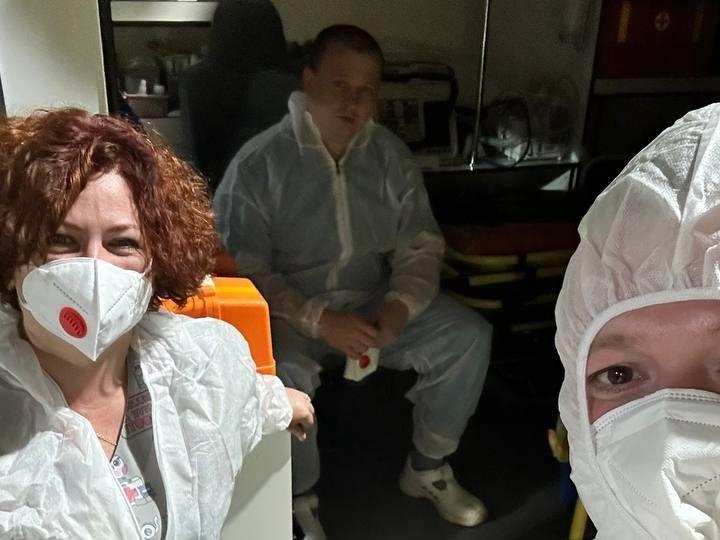
Stas got the 31st team and car number 31. In his first team was paramedic Nina Ikonnikova, who still works on the ambulance. It was she who gave the new driver his first experience, showed him where everything is in the car, and what each piece of equipment is for.
His mother took his new job with understanding and support. But his wife was worried for a long time at first, then calmed down, but still, if she sees footage of an accident with an ambulance somewhere, she starts worrying again.
— I say, well, I like it. Everyone knows, understands that you don«t work there for the salary, but just because you like it. In my life, it somehow works out that whatever I do, I only do what I like. If something stops, I just take and leave.
At first, he worked with a regular linear team. Then in April he moved to cardioreanimation, and in June he ended up in a resuscitation team. He still rides with that one.
— We have regular linear teams in the ambulance that go to all main calls, also two resuscitation teams and two cardio teams, for heart patients. There«s also a specialized psychiatric team and a children»s team with a pediatrician doctor.
About working during the pandemic, Stas says it was harder then than now, cars hardly came back, calls and hospitalizations were long. The ambulance would arrive at the hospital and stand in line to admit a person because there was no space. There were cases when patients were simply taken home. On some days, Kurgan teams even had to take COVID-19 patients to Shadrinsk and Belozerskoye.
— The mileage was crazy for drivers and medics. Moreover, not only people were sick, but also medical workers. Everyone tried to recover as quickly as possible. Tests were done multiple times, meaning no symptoms anymore, but without a test no one would allow you. They took tests many times to get back to work faster. Someone would come in the morning, realize that«s it—they»re sick. But they understand that there«s no one to work in the dispatch center on 03, no people to sit on evacuation, so what to do? They went, worked, saved. I would honestly shake hands with some medics, they worked to the bone.
Then it all passed, of course. Stas says that now the increased number of calls is seasonal, related to the incidence of ARVI and influenza. About a thousand calls per day can come through the entire region. All calls are received by the dispatch center in Kurgan and distributed across the region.
— It happens that people don«t think and immediately call an ambulance. Once a guy calls: »I have a high temperature of 38.5°C (101°F).« The senior dispatcher asks him: »Did you take any antipyretics?« The caller answers that he didn»t, because he doesn«t know which medicines are needed. And that»s how they call an ambulance right away. Of course, they gave him a consultation, sent him to a pharmacy. That«s if after medication there»s no improvement, then you should call an ambulance. I think people should go through the initial stage of treatment themselves, because there are many such calls when the ambulance«s work could have been avoided.
Among such calls, Stas mentions calls from people with high blood pressure, temperature. He says it«s often easier for them to call an ambulance than to take appropriate pills. Because of this, calls pile up and there can be delays in the team»s arrival.
Volosnikov also notes that the ambulance service is not fully staffed. The BSMP (Emergency Hospital) needs both paramedics and drivers. This is partly due to salary, which, in Stas«s opinion, isn»t enough if you have a family, mortgage, other expenses. Some employees take side jobs and instead of a schedule of one day on, three off, they work one day on, one off.
The Whole Ambulance Is One Big First Aid Kit
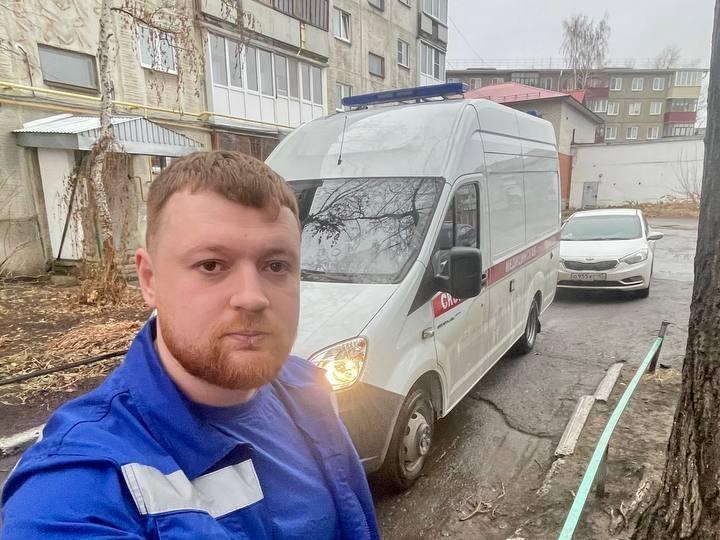
During his work on the ambulance, Stas mastered the basics of first aid. When riding with a team, he has to help. He has even assisted with cardiopulmonary resuscitation.
— I used to think it was easy, press 30 times, make two breaths with an Ambu bag (a breathing bag for artificial lung ventilation. — Ed.«s note) and then again. But once we arrived at a call to one of the workshops at KMZ. A man was lying by a machine with clinical death, and the factory paramedic was already working with him. So I started helping doctor Dima pump the heart. And it turns out such resuscitation lasts 30 minutes, and it seems easy, but when you pump for two minutes, you»ll break out in sweat. You have to press the chest three to four centimeters. In general, from the side it«s simple, in reality it»s not at all like that.
Stas also had to learn about the defibrillator«s work. It turned out that this device isn»t for starting the heart, but for temporarily stopping it, after which the heart should start working stably.
— They taught me to give injections, I now calmly do it to myself. If a person has a good vein, I can put one there too. I know how to assemble systems for IVs. I know where to place the «bumps» for taking an ECG. I don«t really understand the ECG itself, but I know it shouldn»t be curved, but sharp at the peaks. If it«s sharp—that»s good.
Working in resuscitation taught him to provide assistance in car accidents, knife wounds, electric shocks. In case of poisoning, Stas says they taught him to do lavage. It turns out, when poisoned people drink a lot of water, and then it comes back out, such a method is called «restaurant-style.» In general, the interlocutor concludes, he can definitely provide first aid.
— People try to consult with me, but I tell everyone that I«m just an observer. Our medics really try to teach me some terms, words, but it»s useless, they are really complex. But I learned the composition of our car. Where the ventilator is, where the defibrillator is, where the rest is. Sometimes I bring something when the paramedic calls from an apartment and asks to bring it. Once during a technical inspection, they ask me: «And where is your first aid kit here?» I answer him that the whole ambulance here is one big first aid kit.
For car repairs, there«s a special base. If an ambulance breaks down on the road, they come and take the car to the garage for repair.
A Strongly Expressed Savior Syndrome
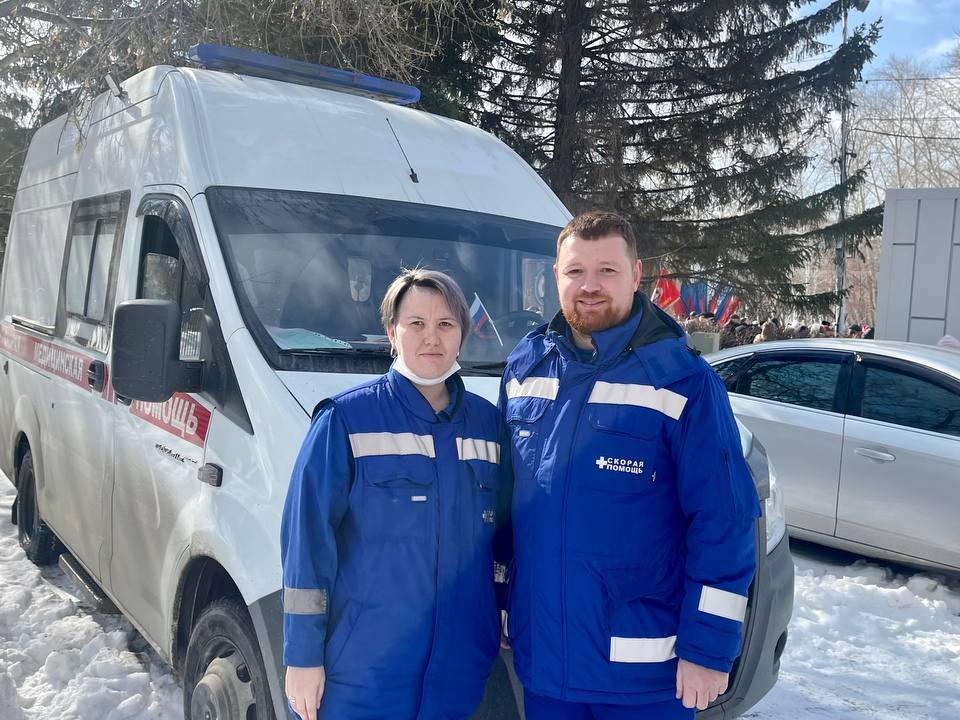
Due to his media presence, the host is sometimes recognized by those they come to on calls. Sometimes among patients, there are newlyweds whose wedding Stas hosted.
— In Zaozyorny, we once came to a poisoning. A guy drank vinegar due to unrequited love, we lavaged him, helped. I come out, and his sister is standing there: «Hello, do you know Stas Volosnikov?» I answer: «Yes, that»s my blood brother.« She said we look very alike, and I went back with a smile on my face.
Now Stas manages to combine work as a host and driving an ambulance. Reflecting on why he still works on the ambulance and doesn«t quit, Stas says that five years have flown by unnoticed.
— We have a very good team, an amazing boss. Everyone on the ambulance knows where I work, so if I can«t come on some dates, I call the shift workers. Usually we substitute for each other, no one refuses. So I went on tour with artists, and then I»ll go on vacation and only start work on January 1. Such a big vacation turned out. I mean, before this, the maximum I took was maybe a week, a week and a half somewhere. And it accumulated.
Stas adds that if it weren«t for the resuscitation team he now rides with, he probably wouldn»t have stayed in the ambulance. After all, in resuscitation it«s a bit easier than on linear cars.
— Our calls are all quite urgent, emergency: falls from height, knife wounds, gunshots, road accidents. Some really urgent–urgent cases. On the line, there«s a headache, a sore finger, crying, can»t calm down, they call for such things. And there«s my savior syndrome somewhere inside me. It had to be vented somewhere. Psychologists I»ve talked to say just that: «You have a strongly expressed savior syndrome.» Well, so, probably in the ambulance I found the place where I kind of mute it a bit.
Despite his busyness and work, Stas manages to be home. Though he says that he and his wife have different schedules. Sometimes when he«s home in the evening, Sveta conducts dance trainings. And when his wife is home, Stas might be on shift.
— I leave—she«s still sleeping. And when she comes, it happens I»m already sleeping. But so far I still manage to give her time, sometimes I manage to drop by during the day. I once thought, if I don«t have enough time, what would I give up? But I never came to that thought, what to give up. I do what I enjoy and like.
In his Telegram channel, Stas has recently been posting videos of him rushing to calls. He says subscribers like watching such «races.» But from his medical work, the channel also shows instructive videos of drivers violating traffic rules, as well as footage of car accidents that happened in Kurgan.
Such an attitude towards traffic rules is not without reason for Stas. Since last year, he has been running the driving school «Rost.» The school has been operating in the city since 2009, but the owner changed plans, and so it happened that at the end of 2024 Stas bought this business and became the owner. He invited Alexander Shmykov, a colleague from the creative field, as a partner. And now the two of them are engaged in teaching Kurgan residents to drive.
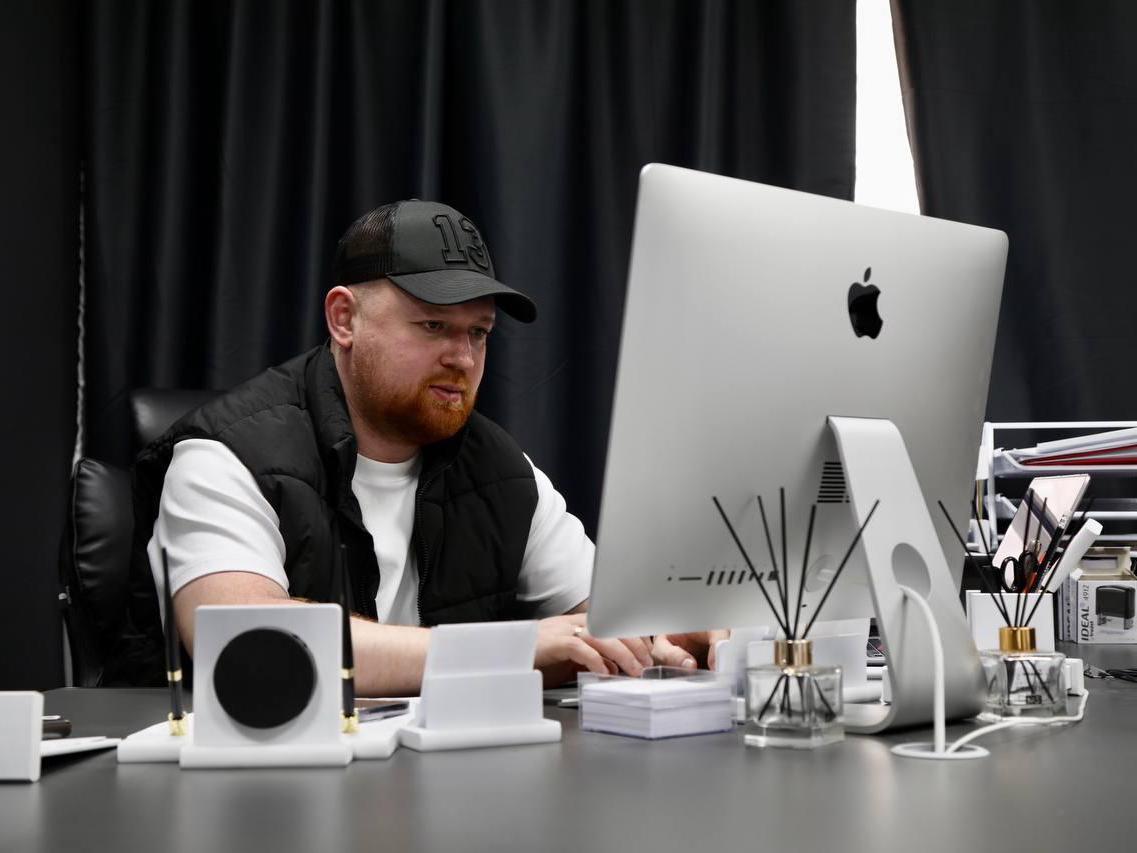
— When I came to the driving school from the other side, I learned a lot. Before, we thought they were failing us on purpose on the exam. Now I understand that excessive nervousness is to blame for everything. You forget everything, your hands shake, the inspector sits behind, and that«s it, you forget all the rules, you start making mistakes. I haven»t found that lever and method to make examinees not nervous. We even bought a uniform for the internal exam to get used to it, but it still doesn«t help. What they studied for three months is forgotten, and everything starts from scratch when the inspector appears before the exam.
According to Stas, almost everyone passes the theory, but driving—about 35–45 percent. The rest go for a retake. As a business, the owner evaluates the driving school positively. When they just took it over, repairs, furniture updates, and other expenses were needed. But since March, April, the school has been paying for itself. For now, due to the future renewal of the car fleet, they are breaking even. But they are no longer investing their own money.
New Year on the Ambulance
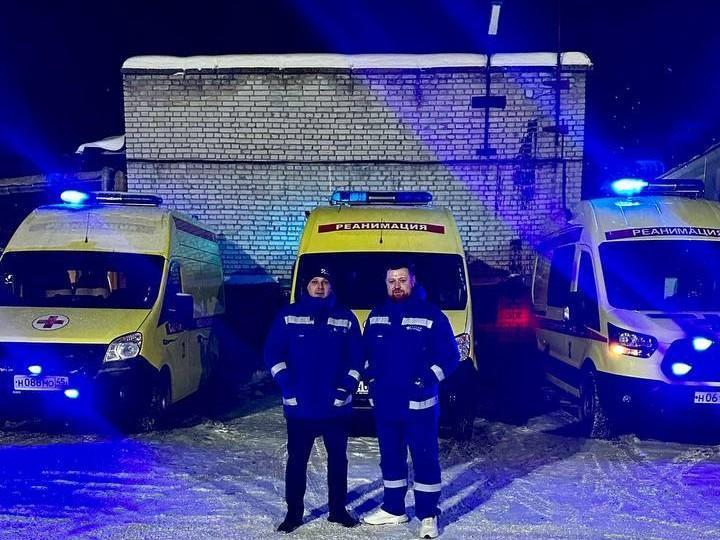
This year, Stas is scheduled to be on shift on January 1. He says it«s easier in that regard for those who work on December 31, because on the 31st everything is still good, people are celebrating, happy.
— A couple of times I worked on December 31, right on new year«s eve. And we celebrated the holiday on a call. It happened right in some apartment. And on January 1, in the morning, calls start from drunk people, those unconscious, after fights. Colleagues told me they went on calls after unsuccessful firecracker explosions. But in general, the first three days are busy, harder to work. Plus, when you go on a call, you don»t know what to prepare for. But I would advise everyone, to avoid an ambulance visit on the holiday, just know your limit.
By the way, in his entire career as an event host, Stas has never played the role of Father Frost; he says he never managed to try on that role. Ahead of the new year«s feast and January holidays, 45.RU asked Stas to wish something to our website readers.
— Since today our conversation was more about the ambulance, about medicine, then, of course, I«ll probably wish everyone health. As they say, health won»t increase, but at least may it remain at the same level for everyone and not get worse. And first of all, for those who read, may family support them, that«s the most important support. Yuri Nikulin once said, if in the morning you want to go to work, in the evening you want to go home, then you have everything good both at home and at work. So, I wish everyone support both at home and at work. And, of course, achieving all dreamed dreams, fulfillment of wishes in 2026, because I»m sure if you dream about something, it will definitely come true!