Igor Gunin: Sold TV for heroin, now a rehab counselor
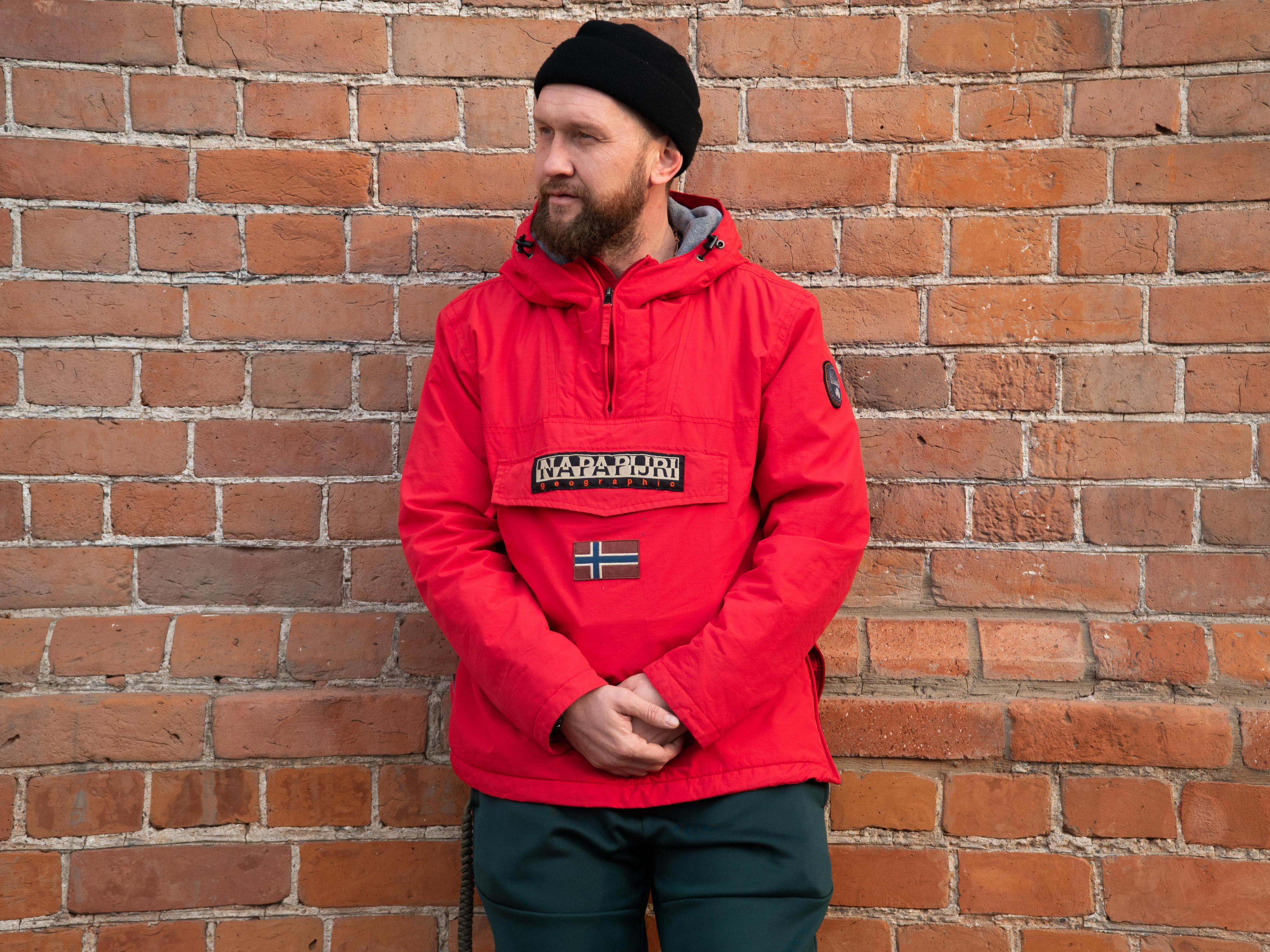

In 2025, Krasnoyarsk Krai ranks fourth in the top 5 for the level of drug addicts. At times there were more, at times fewer, but Krasnoyarsk resident Igor Gunin remembers when drugs could be bought right in the city center. He told NGS24.RU how he «got caught in the grip» of addiction and why he has been clean for over 10 years.
“I was just trying it”
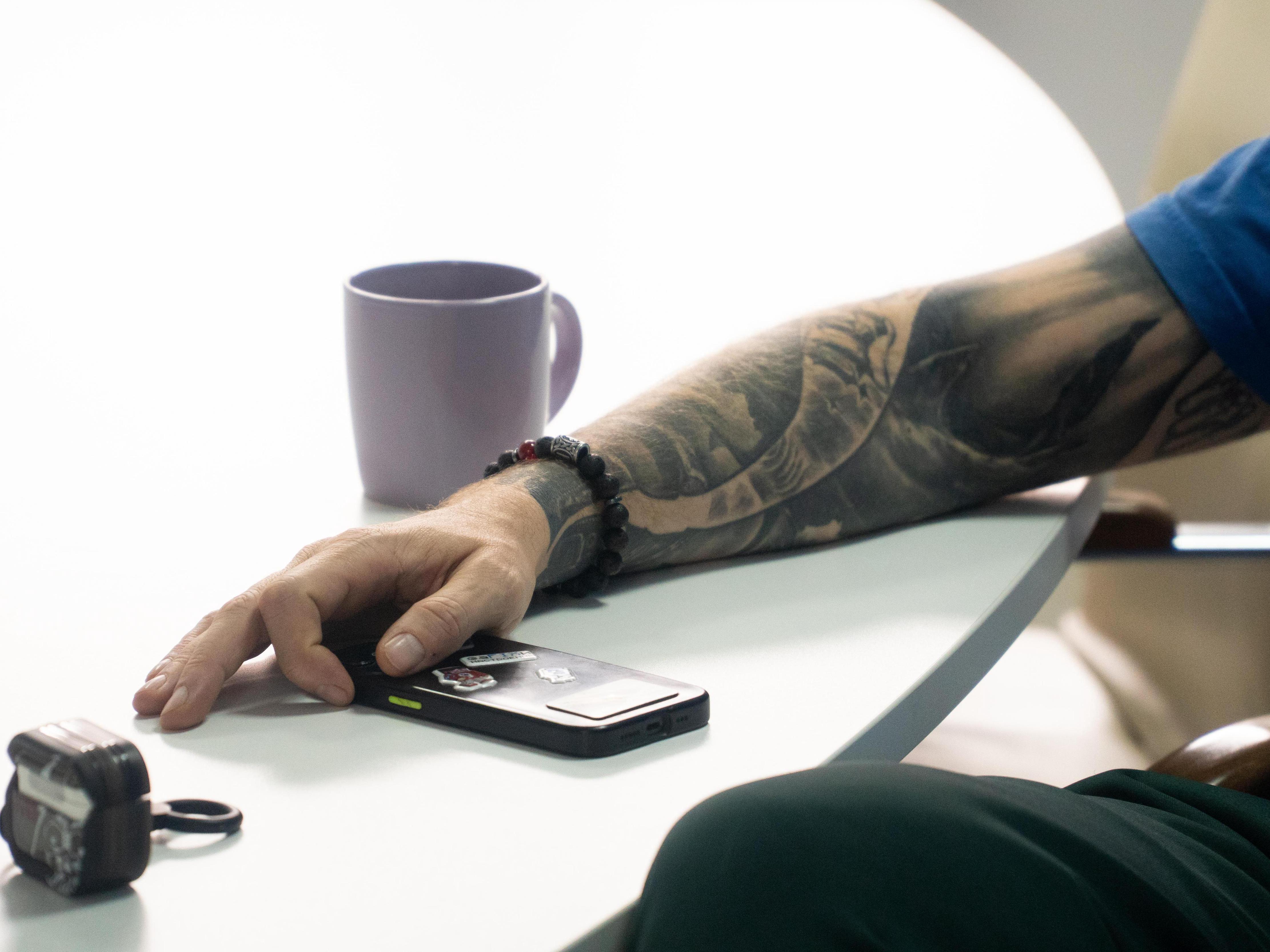
The first question asked at the meeting with Igor was how long he has been sober. The man laughs and asks: “Down to the seconds?” And indeed he can say—there is an app on his phone with a counter that tracks his sober days.
— 4979 days—a beautiful number, but I’m waiting for five thousand,—says Igor, looking at the number on his phone.
Converted to years, it’s almost 14 years. Now Igor pays little attention to the numbers in the app, but he says that initially it was significant. After hearing this impressive number, interest naturally arises: how and where did it all start?
— With vodka,—laughs Igor, diving into memories.
What’s important: in this dialogue, we’re talking not only about drug addiction but also alcohol addiction. Usually they go together; sometimes drug addicts switch from substances to alcohol, or continue into drug dependence without alcohol.
The first time Igor tried alcohol was in the eighth grade. Not far from the school, there was a kiosk that sold all sorts of things, including alcohol. He and his friends decided to drink, “to feel braver and more adult” at one of the first evening school discos.
A bit later, Igor first smoked makhorka (it belongs to the same genus as tobacco, but its leaves have more nicotine—Ed. note), also with friends, and after that tried heroin.
— On one hand I liked it, on the other hand I was scared at that moment, because I saw all those horrible stories—how bad it can be. But that didn’t stop me; I was just trying it. Many people think: “Oh, what a horrible thing—heroin.” Yes, I agree, but at the same time, no less horrible is alcohol. They stand in the same line—alcohol and drugs, any—they are all equally horrible,—he believes.
Even now, Igor does not divide drugs into bad and good or light and heavy—he views all extremely negatively, but in his teenage years he tried various types. All this was accompanied by alcohol, but there was a difference—they could use drugs even during lessons, while they mainly drank only on weekends.
According to the Krasnoyarsk resident’s memories, his addiction progressed “unnoticeably and systematically,” and it didn’t even interfere with living under the same roof as his parents. By evening, the effects of the drugs wore off, and there was no smell, so no one even guessed about his son’s habits. Moreover, the teenager was often out with friends who had the same interests as Igor.
— A lot influenced me then, and the subculture I was in shaped my idea of what life is. The school period—one moment, it passed as it probably should have for a child back then (in the nineties—Ed. note). Because yes, I finished school, but my academic performance started dropping by the 11th grade. The subjects I liked, I always got A’s in, but the others started slipping because my behavior, including, began to worsen,—recalls the Krasnoyarsk resident.
Igor Gunin studied in a class with a focus on biology and chemistry and attended additional classes, as they were called then, at the technolaga (Reshetnev University—Ed. note). However, he often went there because drugs were sold nearby. That’s where Igor enrolled after the 11th grade, but his studies quickly ended; after the first session, the Krasnoyarsk resident, so to speak, “disappeared.”
— I remember the moment—the first semester at the institute passed. I passed all my exams and thought everything was great. Then New Year’s holidays came, and somehow I unnoticeably returned to the institute in May,—says Igor.
“Easier, probably, not to notice it”
Igor’s life cannot be called unusual, as often shown in series or films that romanticize addiction. He, like everyone else, worked, tried to build a family, and sometimes met with friends. By the way, he also finished the institute, but through correspondence studies. And despite using, Igor always remained socially involved, but even after five years from the start of use, he didn’t understand that he was addicted.
— The thing is, my social circle was formed in a way that supported use. That is, what we did in the evenings—we could have some beer. And since I was in this society where everything is acceptable,—it’s very hard to identify addiction in yourself. And with people who don’t support use, there is distancing, on the contrary,—he explains.
In his circle, there were no sober people, simply because “they had nothing to talk about with him, and he—with them.” All free time boiled down to use, and it didn’t matter what—drugs or alcohol.
— For example, a birthday, and first of all, we think about how and where we will celebrate. But celebrating not in the sense: we’ll invite animators, have cake, balloons,—but we’ll go somewhere to relax, and there will definitely be alcohol or drugs,—explains Igor.
At 25, Igor’s morning began daily with the same scenario: in one of the courtyards in central Krasnoyarsk (there, according to the former addict, lived two drug-addicted brothers) at 10 a.m., a group gathered, everyone pooled their money, whatever they had. After that, one person went to get drugs, then they used, the next “meet-up” (as Igor himself called it—Ed. note) was at two in the afternoon, and then—at five in the evening. If there was no money, Igor could resort to theft.
— I went to a friend’s house and took something—“snatch”—and left with a phone or camera,—recalls Igor.
He even stole from his parents. Once, Igor says, he stole a gold chain from his mother, and she, apparently, immediately realized it was him, so she took all the gold to work. His parents also took the apartment key from Igor, just in case.
Despite this, his mother only found out about her son’s use at 26—that’s when his first, but far from last, overdose happened. And even though doctors confirmed it, his mother didn’t fully believe in her son’s addiction.
— I went with a buddy to my mom’s house, we overdosed. Mom called an ambulance, doctors came, they resuscitated us. But even then, mom didn’t believe it. She asked something, and I said: “No, that’s all nonsense,” and we came to the point where it was calmer for mom at that moment. Easier, probably, not to notice it,—recalls the Krasnoyarsk resident.
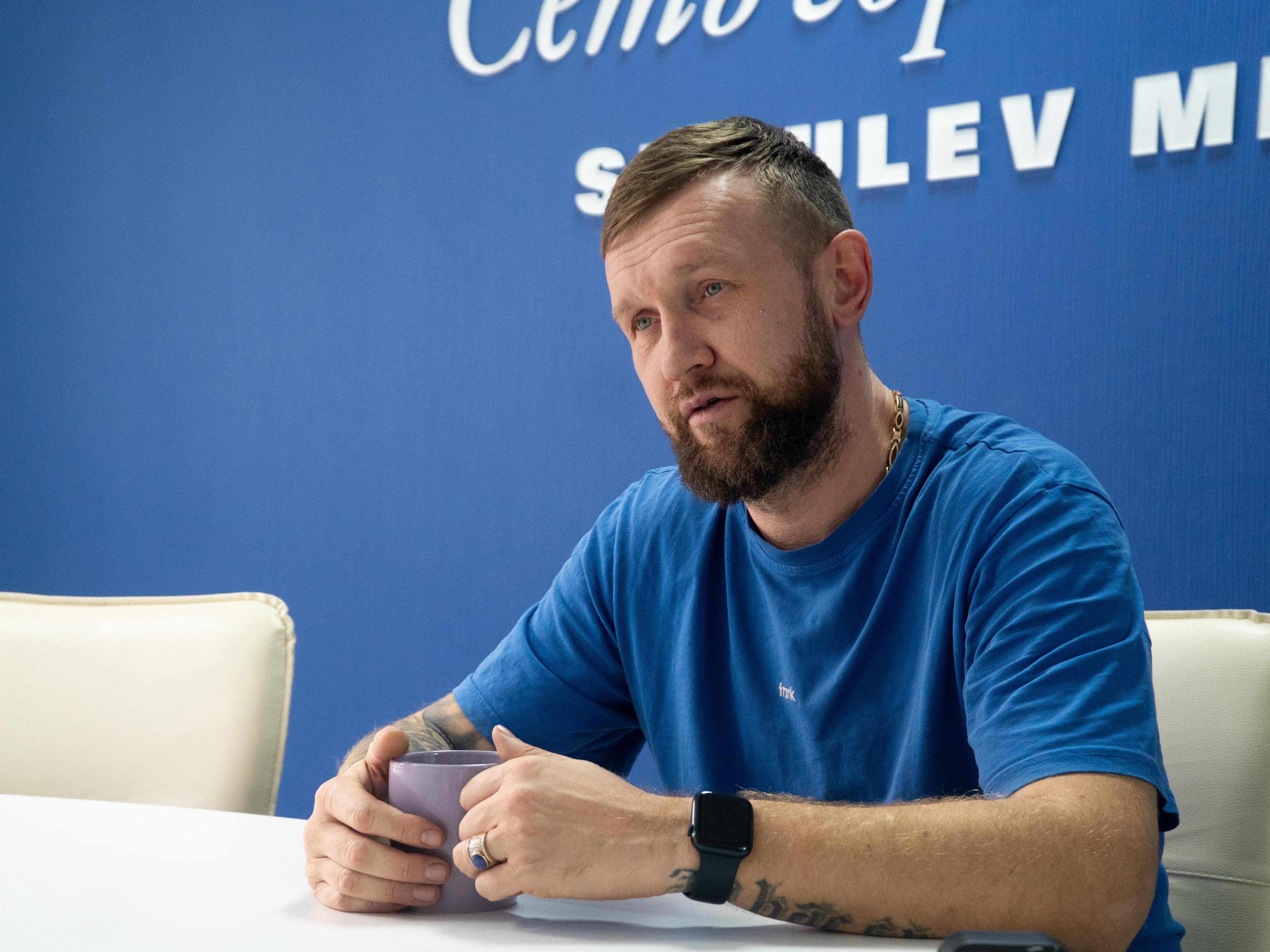
Later, the parents did acknowledge their son’s addiction and tried to help him with talks, asked him to “get his act together,” and again that phrase: “Of course, I won’t do it anymore.” But Igor said it only to avoid continuing the unpleasant conversation.
Igor didn’t specify when exactly he had a girlfriend and when they moved in together, but when asked if she knew about his addictions, he answered: “Yes, we drank together, it was fine.”
After the first destructive relationship came the second, but more serious—Igor got married. But due to addictions, he and his wife regularly argued, and Igor promised he would quit, but those words were just for show. A few days later, he would go for alcohol or a dose.
— It’s impossible to live with an alcoholic or drug addict—everything falls apart. It’s not the fact of use that interferes, but what happens to the person. An alcoholic doesn’t always drink every day, but the issue is their behavior; it’s very hard to be in a relationship with them, it’s like a powder keg. Alcoholics and drug addicts—they are unreliable people, irresponsible,—explains Igor.
In the new relationship, Igor’s mother-in-law found out about the addiction and decided to, roughly speaking, treat him thoroughly—she sent her son-in-law to Tura, a village in the Evenkiysky District of Krasnoyarsk Krai.
— It was a very successful trip, I’m joking, of course. I came there for a month and lived like a king, in the sense that everyone thought I was healthy and wouldn’t use drugs anymore. But when I was boarding the plane, I was already calling the dealer. More precisely, I called her in advance so she would wait for me,—says Igor.
That whole month, Igor really didn’t use drugs—in Tura, where he lived with his mother-in-law, they weren’t easy to get. But there was plenty of alcohol, so Igor’s sobriety was questionable; moreover, he says he went north not to work but to “lay low.”
Additionally, as Igor tells it, he once brought a 50-kilogram TV to Roma people just so they would give him some substance; at that time, the man had no money. They didn’t want to take it for a long time only because the device had no remote. But after that, they exchanged the “bulky” TV for a substance in a smaller dose.
And to get alcohol, the Krasnoyarsk resident once “wore down” a saleswoman in a store who had stopped giving credit. Igor brought an iron to the store and for five hours tried to sell it to the familiar woman for 100 rubles.
— There was nothing left in the house. Well, there was a computer on which I only watched something. From it, all the guts that could be sold were already sold. But for it to work, the minimum remained—the RAM and something else. And I had even sold the home landline phone by then,—recalls Igor.
Path to recovery
The so-called “puzzle” came together for Igor at 27. Then he first decided to go into a rehabilitation program.
— There was a harsh crisis, it was around January. I had no money after New Year’s, work was bad, and my wife and I had a fight then, I was living alone. I drank for a month without working, and she called me, saying: “Maybe you want to get treatment?” and I answered: “Well, probably.” Then I went to a rehabilitation program,—recalls Igor.
In this program, Igor stayed for six months, and when he left rehab, he thought he was now a healthy person. But that opinion was mistaken—the man returned to drugs. Nevertheless, he says that the first rehabilitation program laid a good foundation in him, and that helped him see it through to the end the second time. Igor says the second rehabilitation was successful because he became sober.
— And the psychocorrection that was there, and the psychoeducation that was there. Simply then the puzzle came together, I saw some reality of my life. Despite it being unpleasant, I saw it,—says Igor.
It’s not to say that these were the only attempts to return to a sober life. Before rehabilitation, Igor tried many things—he got coded, changed girls, his social circle, and even moved, but, as it turned out, you can’t run from addiction.
— I got a job in one place, the guys were such good fellows, but they moved to another city, opened their own business there. They invited me to join them, they understood I had problems. And I thought: “Exactly, this is my chance to start a new life.” They demonstratively packed me up, loaded my things, so I would work. They crossed me and sent me off: “Go for it, old man.” I also thought I would start a new life—new social circle, new place. But after a day I returned, even my things were left there, I didn’t even go back for them,—Igor recounted.
The second rehabilitation lasted a year and a half. And, essentially, it continues to this day. Now Igor Gunin is a rehabilitation specialist, he helps other addicts “break free.” Returning to his memories, the NGS24.RU journalist asks what he would do if he were in his mother’s place during the overdose at 26.
— In the first overdose, I wouldn’t have done anything. After a certain period, I would have found a good specialist, talked to them, they would have explained to me—what addiction is, how it progresses, and what to do about it. Then, in my mother’s place, I would have tried, roughly speaking, an intervention, to motivate for treatment,—says Igor.
According to his personal experience, addicts become sober within a week, but that’s not enough. For normal stabilization of a person, at least a year and a half is required.
— In any case, everything must be correct—first diagnosis, then a outlined rehabilitation program. From the entry point to the exit point, what needs to be done. It happens that, for example, it’s an early stage, and it might take a shorter period of time,—explains the rehabilitation specialist.
Igor himself worked as a peer consultant for 10 years. And this is not the last person during a drug addict’s rehabilitation because, as a rule, consultants usually go through the same path as patients in a rehabilitation center. Moreover, they may have special education—as a psychologist, psychiatrist, or psychotherapist.
Previously, NGS24.RU published an interview with 19-year-old drug addict Daniil. In it, he delved into his past and told how his addiction started and why, in his opinion, he began using.