University Admissions in 2026: Key Deadlines, Changes, and Budget Places


Universities have published admission rules — with adjustments adopted by the Ministry of Science and Higher Education for 2026. Graduates will face a number of changes — in the allocation of places, targeted admission, and exam procedures. Here’s what applicants and their parents should prepare for.
When to submit documents and enrollment consent forms?
For bachelor«s applicants, the admission campaign dates in 2026 will remain unchanged. From June 20 to July 15, you need to submit applications to chosen universities — this applies to those applicants who will have to take internal entrance exams (DVI). The exams themselves will begin on July 21; you need to follow the schedule on university websites. If you don»t understand which entrance exams are being referred to, then you or your child are likely applying based on Unified State Exam (USE) results and can submit an application until July 25. DVI are provided for creative specialties: design, painting, graphics, acting, journalism, and so on.
On July 27, universities will publish competitive lists — you can follow them on educational institutions« websites or through the portal on Gosuslugi. August 1 (12:00) is the deadline for submitting enrollment consent forms for applicants without entrance exams and for those applying within quotas. Enrollment orders for the priority stage will be published on August 3.
Next, enrollment based on the general competition will take place — consent forms can be submitted until 12:00 on August 5. If you successfully pass the selection, you can find yourself in the enrollment orders as early as August 7.
Documents for fee-based programs will be accepted from June 20 to August 18–21 (for specialties with DVI — until August 6). Competitive lists will be published on August 24, contracts can be concluded until August 26, and you can see yourself in the enrollment order — until August 28.
Document submission for master«s programs will begin on June 20 and end on August 20 for those applying for budget places and August 28 for those applying for contract places. To enroll on a budget basis, you must submit an enrollment consent form to the admissions committee by 12:00 on August 24.
How to apply to a university?
The process of submitting documents to universities is changing this year: previously, students could submit applications through a personal account on each university«s website. Starting from 2026, this option is no longer provided for by federal rules. Applications can be submitted in three ways: online — through the Gosuslugi portal, in person by contacting the university»s admissions office, and by registered mail.
The document package includes an application, passport data and diploma with supplement, photographs, and documents confirming benefits or individual achievements (Olympiad diplomas, the GTO badge, and so on).
An applicant can apply for up to 5 fields of study in 5 different universities. The chosen fields must be ranked for each university — graduates will be enrolled according to the priority system. If during the competition results it turns out that you are eligible for a budget place in a field with first priority, you will be enrolled there. If places on this program are filled by applicants with higher scores, you will be automatically enrolled in the second, third, and so on — wherever your competitive scores are sufficient. If you are eligible for several programs at one university, you will be enrolled in the one with higher priority.
Priorities can be changed until the end of document submission — through Gosuslugi or at the university«s admissions office.
Which exams to take?
Starting from 2026, the list of fields where physics or history have become mandatory entrance exams has expanded. You can find out which subjects you need to take for specific programs on university websites in the «admission rules» section.
How to apply for targeted training and what about medical students?
This year, significant changes affect targeted training. Previously, the university allocated targeted places — now each such place will be assigned to a specific customer of targeted training. You can find a customer on the Rabota Rossii (Work in Russia) portal — it is somewhat similar to a job search service: companies publish their announcements indicating the university where the student can enroll and the terms of the contract. A graduate can view available options and respond to an offer.
Targeted applicants are enrolled within a separate competition — as a rule, it is easier to get in under this quota than on a general basis. For individual targeted achievements, which are conducted by the customer company as part of career guidance activities, applicants can receive up to 5 additional points.
An applicant can sign a contract with only one organization and can participate in only one competition under it. If after enrollment the student refuses to sign a contract with the customer, they will either be expelled from the university or transferred to a fee-based form of study.
Russian President Vladimir Putin signed a law according to which state-funded medical students are required to sign a targeted training contract for residency before passing the final certification. For specialist program graduates, mandatory work assignments will not be required, but if a young specialist does not work the period established by the Ministry of Health order with a mentor, they must undergo primary accreditation every five years. For more details on what future doctors should do and where to find a medical institution with a mentor, Fontanka explained here.
Who is eligible for quotas?
Quotas are a part of the total number of budget places (usually 10% of the total places for each field) allocated by the university for separate competitions. Besides the targeted quota, there are two preferential categories of applicants: the special quota and the separate quota.
Within the special quota, the following can enroll:
children with disabilities;
people with disabilities of groups I and II;
people with disabilities since childhood of all groups;
orphans and children left without parental care;
people with disabilities due to military injury or illness acquired during military service, of all groups;
combat veterans (VBD).
Within the separate quota, the following enroll:
Heroes of Russia and citizens awarded three Orders of Courage, including during the special military operation (SVO);
military personnel, employees of law enforcement agencies, as well as citizens called up for military service by mobilization or who have signed a contract — provided they participated in the SVO — and their children;
children of healthcare workers who died from COVID‑19.
This year, the procedure for allocating places is changing. Previously, universities determined a strict number of places for each preferential category before the start of admissions, but now universities can redistribute them. If there are fewer offers from customers for targeted training than places under the targeted quota, universities can transfer the remainder to applicants under the separate quota. Previously, unfilled places automatically went to the general competition — now universities will first offer them to SVO participants and their children, and only then to regular state-funded applicants.
At the priority enrollment stage, if necessary, places can also be redistributed between the special quota and the separate quota.
According to Fontanka«s observations of the admission process in St. Petersburg, places under quotas are rarely filled completely — usually the lion»s share goes to the general competition. However, there are individual universities and programs where regular state-funded applicants were not accepted at all. To read about how many places remained after priority enrollment last year and where there was a large influx of targeted, preferential, and Olympiad applicants, click here.
How to enter a university via Olympiads?
Winners and prize-winners of the All-Russian Olympiad for School Students (VSOSH) and international Olympiads can enter universities without entrance exams. The diploma is valid for 4 years (meaning you can enroll if you won a prize in 8th grade), and USE confirmation is not required.
Also, winners and prize-winners of competitions from the list of the Russian Council of School Olympiads (RCSO) can count on admission without entrance exams (BVI). To clarify which Olympiads a university accepts, check the educational institution«s website in the published admission rules.
Top universities, as a rule, limit participants of list-based Olympiads: only winners get budget places within priority enrollment, and prize-winners receive 100 points for the subject corresponding to the Olympiad profile. Moreover, a diploma from a list-based Olympiad must be confirmed by scoring at least 75 points on the relevant Unified State Exam (USE). Several Moscow technical universities have already introduced restrictions, so you need to carefully read the requirements of each chosen educational institution.
When calculating the total score, the applicant«s individual achievements are taken into account — for these, you can get a maximum of 10 points. You can familiarize yourself with the list of such achievements on university websites — they may also differ depending on the institution.
What about paid admissions?
Recall that starting from 2026, the government, not the universities themselves, will determine how many students to accept on a contract basis.
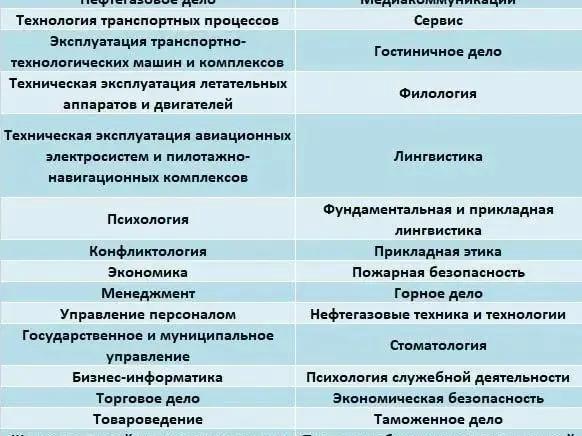
The agency has identified 46 fields in which state regulation of paid admissions will be introduced for the upcoming intake. For each specialty in each university, the average number of first-year students enrolled on a contract basis will be calculated — and exactly that many places will be allocated for contract applicants in 2026. Most importantly — if in 2025 the average USE score of applicants enrolled in any specialty on a commercial basis was less than 50 points per subject, then paid places for that specialty will not be allocated at all.
Almost all social, economic, and humanitarian fields come under control. Starting from various types of linguistics and ending with politics, international relations, hotel management, and psychology, as well as engineers, architects, oil industry workers, dentists, and fire safety specialists.
For more details on the changes, Fontanka explained here.
What has changed for college graduates?
Now, entering a university without the USE based on the university«s internal exams is only possible if you choose a program of the same profile as the previously obtained secondary vocational education. In other cases, taking the USE will be required. In other words — if you studied to be a cook or hairdresser in college, you can no longer enter an IT or medical program at a university based on internal exams.