Chelyabinsk Teachers Criticize Plan for Longer Kindergarten Days
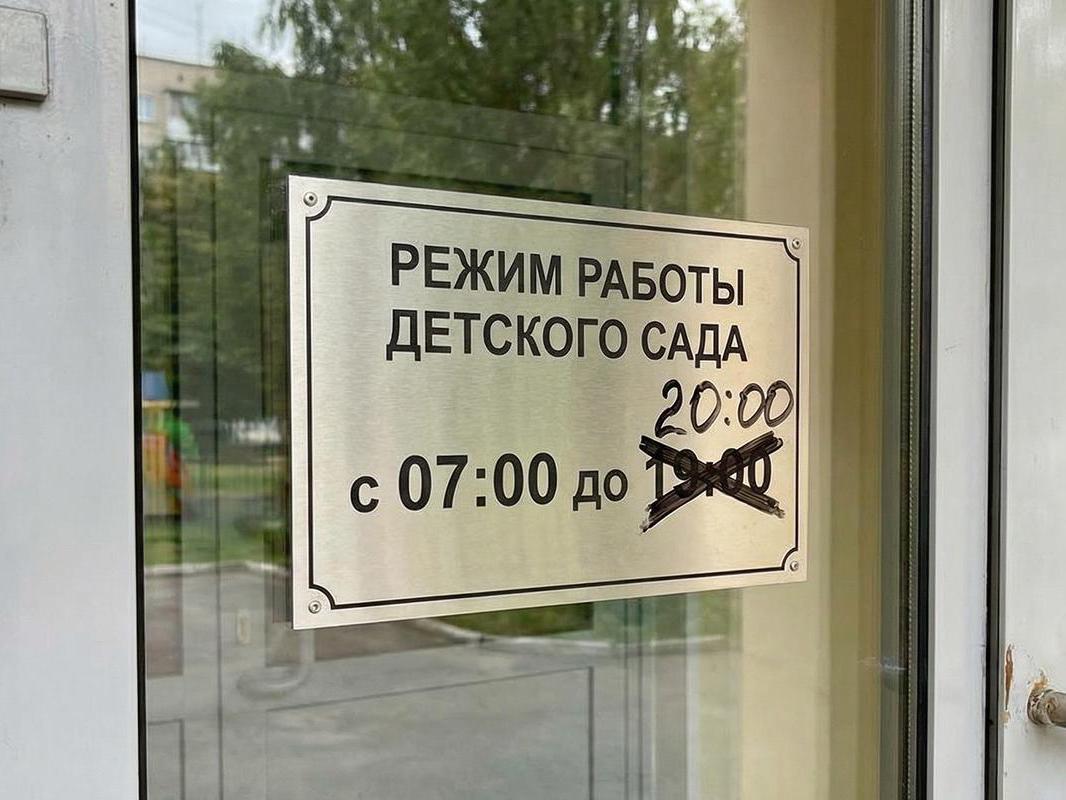

President Vladimir Putin has proposed extending kindergarten hours until 8 p.m. to help women return to work faster after childbirth, he said during a meeting with the government. Deputy Prime Minister Dmitry Chernyshenko said the Cabinet would work on the issue with regional governors. However, teachers themselves, as found by 74.RU, are not thrilled with the idea. Moreover, in their opinion, it could negatively affect the children«s mental health. More on what educators, parents, and psychologists think about the authorities» initiative is in the 74.RU report.
«Those Who Stayed Will Quit»
Kindergartens in Chelyabinsk typically operate for 12 hours – from 7 a.m. to 7 p.m. Teachers admit that many parents pick up their children by 6 p.m., and only a few stay until 7. Therefore, preschool workers see no urgent need to extend the working day.
«It would be relevant to have duty groups,» a kindergarten teacher believes. «Usually, a few children remain in the groups until 7 p.m., so let the head of the kindergarten initiate one duty group, and teachers would take turns on duty there, for example, once a week. If we work every day until 8 p.m., then we, the teachers, will have no personal time. As it is, there»s no one to work – salaries of 30,000 rubles (about $333) – that«s a joke, and then those who stayed will quit. Honestly, very few specialists in preschool education are left; people who come to work in the profession mostly have retraining.»
The heads of kindergartens we spoke to also see no point in extending the working day.
«The initiative has been announced, but no mechanisms have been proposed, there are many unclear nuances and questions,» says the head of one of Chelyabinsk«s kindergartens. »On the one hand, I understand parents, for some it really would be convenient. But on the other hand, kindergartens have such a problem as staff shortage — that«s practically everywhere. Teachers sometimes work all day when there is no second teacher, and they have their own children too. And now the working day will be increased? Suppose, okay, they will adjust, but then the entire schedule, the work of other employees will have to be changed. If a child leaves later, then dinner should be later, the daily routine will have to be changed.»
«We will adjust, figure out how to organize teachers, but then the question of payment arises. I doubt the state will find funding for this initiative,» shares another kindergarten head. «Another point is moral — we are sounding the alarm because parents should spend time with their child. And they will only sleep with them if they pick them up at eight in the evening, because according to the schedule, it»s already time to go to bed at nine.«
«An Exception, Not the Norm»
Psychologists say that spending more than 12 hours in kindergarten is even dangerous for a child«s psyche — a child»s nervous system is not designed for such a long load.
«Duty groups are needed, but based on real parental need, and doing it just like that is to cripple children»s psyche,« explains a psychologist from a kindergarten in the Central District. »Increasing preschoolers« time in kindergarten to 13 hours is an unfavorable and risky decision. By the 10th–11th hour of stay, most children show pronounced exhaustion: self-control decreases, anxiety increases, behavioral and psychosomatic reactions appear. Extending the day increases the gap with a significant adult and undermines the child»s basic sense of security. With a 13-hour schedule, the child essentially lives in the institution, not in the family. This shifts development priorities: instead of emotional stability, adaptation to survival in an environment of demands is formed. Such a format is permissible only as an exception, not the norm.«
Just Increase Their Salaries
«I work until 6 p.m., I come for my child at 6:40, and he is always the last one,» says Elena, a mother of a preschooler. «The teacher often looks at me with such condemning eyes, as if to say, I couldn»t pick him up earlier. And I couldn«t. I think they shouldn»t extend their work until 8 p.m., I«d like them to just work on schedule — if until 7, then until 7, so that they don»t execute me with looks or words.«
Some kindergartens have long had duty groups.
«In our kindergarten, at 5:30 p.m., children from the whole kindergarten are taken to duty groups — one duty group for four groups,» says another mother. «The teacher is on duty until 7 p.m. about once a week. The last child is picked up at 6:30 p.m. — that»s the latest. I myself pick up one of the last, but my child asks for it himself, he likes kindergarten, he loves playing with children.«
«Don»t increase the working hours for poor teachers, just increase their salaries,« notes another parent. »In fact, this will be used by mothers who are on maternity leave with a second child, or non-working mothers, to rest.«
We asked the regional Ministry of Education and Science how many teachers are currently lacking in the Chelyabinsk Region. They did not give a specific number, but only said that kindergartens are more than 95 percent staffed.
«The vast majority of preschool educational organizations operate on a 12-hour schedule, which corresponds to the standard schedule. To meet the individual needs of families, in particular, parents working in production with shift schedules, duty groups are formed at kindergartens. Also available are several organizations with round-the-clock stay, where currently there is low demand and there are free places,» commented Anton Tumanov, Deputy Minister of Education and Science of the Chelyabinsk Region, to 74.RU.