Tula Region inflation at ~7%, above national average


Annual inflation in the Tula region in December 2025 decreased to around 7%, while consumer prices rose by 0.73% in a month, according to an analysis of statistics and data from the regional branch of the Bank of Russia.
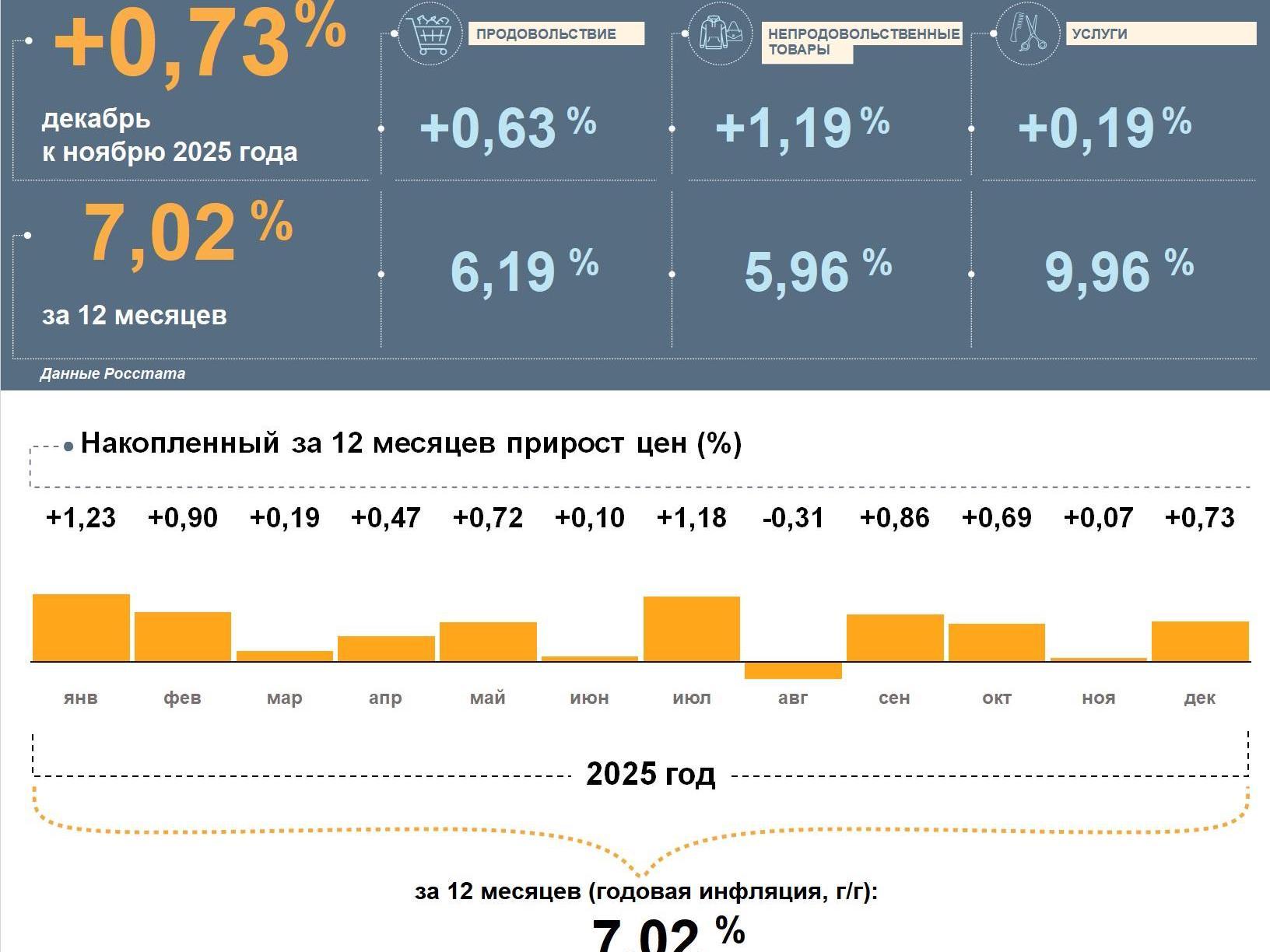
The regional indicator remains above the national average — overall, inflation in the country was around 5.6% for the year.
What got more expensive and what got cheaper
According to the analysis, prices in the Tula region increased for a number of goods and services in December:
Fruits and vegetables became noticeably more expensive on the shelves, especially cucumbers, onions, and sweet peppers, due to the increased cost of greenhouse vegetables and rising expenses for producers and suppliers.
Sugar and rice continued to get cheaper: sugar for the third month in a row, and rice due to excess product stock on the market.
Passenger cars rose noticeably in price (by 8.6% over the year). This is due to the increase in the recycling fee rates from January 1, 2026, and growing demand for imported used cars.
Cultural services, such as movie tickets, became more expensive, in part due to rising rental and wage costs.
Communication services became cheaper — sellers attribute this to a shift in demand to more affordable price segments.
What this means
The data show that price growth in December was moderate, and overall in 2025, inflation in the region decreased compared to earlier periods when it exceeded 9–10% in some months.
Experts at the Bank of Russia note that the decrease in inflation is supported by tight monetary policy (high interest rates), and according to forecasts, in 2026 inflation may drop to 4–5% and stabilize near the target level of around 4%.