Russian Gasoline Prices Now Exceed U.S. Levels
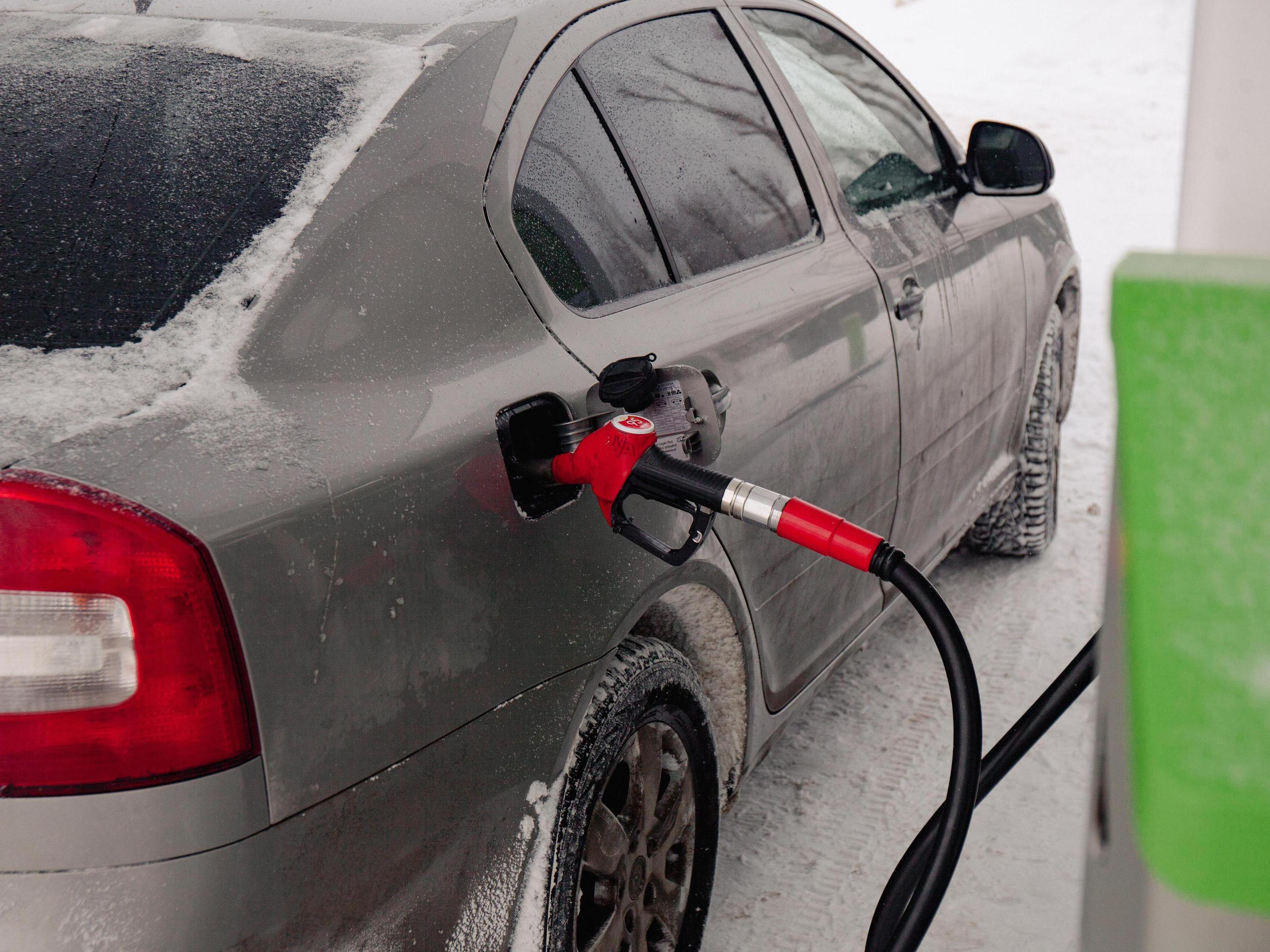

A liter of gasoline in Russia has, for the first time, become more expensive than in the United States, by almost 5 rubles (approximately $0.07 at current rates). Estimates suggest the price gap already exceeds 8% and is set to widen in the near future. This comes as global oil prices are falling and the United States itself is entering a period of relatively cheap fuel expected to last at least two years.
The paradox of the situation is underscored by statements from the Russian Ministry of Finance: budget revenues from oil and gas have turned out lower than planned. This means pressure on the domestic fuel market will persist—primarily through taxes and excise duties, which remain a key element of the Russian pricing system.
To understand why falling oil prices do not lead to cheaper gasoline in Russia and what risks remain, MSK1.RU spoke with analysts—Igor Yushkov, President of the Fund for National Energy Security and expert at the Financial University under the Government of the Russian Federation, and Nikita Maslennikov, leading expert at the Center for Political Technologies.
Refinery Safety is the Key Factor
— Why is gasoline in the U.S. now cheaper than in Russia, despite Americans having higher incomes?
— Well, Americans have a completely different pricing model. Their gasoline price depends to a much greater degree on oil prices. Therefore, when oil gets cheaper—and right now we see oil is very cheap, their WTI is trading at $60 or even lower—gasoline follows. For us, 70–80% of the cost of a liter of gasoline consists of various taxes, fees, and excises, says Igor Yushkov.
— So, our price practically doesn«t depend on fluctuations in the global market?
— Broadly, yes. In the U.S., the price rises or falls depending on global oil quotes. In our case, the retail price of gasoline and diesel for consumers never drops so sharply. On the other hand, we don«t have such unpredictable fluctuations.
For example, in 2022, amid anti-Russian sanctions, the price of oil jumped to $120 per barrel. The U.S. then broke the historical record for the cost of gasoline and diesel—the highest prices ever. Our situation looked more predictable. Motorists may disagree with me, but price stability is nevertheless present.
— And how is this stable, as you said, price formed in Russia? We don«t have direct state price regulation, after all.
— The state still regulates it to a significant degree. Every year, a so-called indicative price for gasoline and diesel is set, from which all sorts of payments are calculated. This helps maintain stability, although, unfortunately, prices are gradually rising.
Over the last two years, the retail price of gasoline and diesel has significantly exceeded the inflation rate. Gasoline in 2024 and 2025 rose faster than inflation, diesel—only last year. The main reason is the increase in taxes and excises. Last year, excises on gasoline and diesel rose by 14–16%, and from January 1 of this year—by just over 5%. All of this is immediately factored into the cost per liter of fuel.
— So it turns out that price growth in Russia is primarily linked to fiscal charges, not global oil quotes?
— Mostly, yes. But these funds are returned to society: they pay the salaries of teachers, doctors, and other state employees. Of course, this doesn«t make it any easier for motorists.
— What is your forecast for fuel prices this year?
— Our inflation is decreasing, so it will be difficult to keep fuel price growth within its level. But a sharp rise like last year—about 12% for gasoline and 8% for diesel—probably shouldn«t be expected. Most likely, there will be relative stabilization. The main condition is ensuring the safe operation of oil refineries.
Last year, due to unscheduled repairs at refineries related to attacks, we were on the verge of a gasoline shortage. Much more diesel is produced than consumed, while gasoline almost entirely goes to the domestic market. If we cut gasoline production by 10%, we are already close to a shortage.
Furthermore, high exchange prices create economic difficulties for independent gas stations. They buy fuel on the exchange, but antitrust restrictions do not always allow them to raise retail prices. Therefore, some simply stop selling gasoline, creating not a physical but an economic shortage.
Refinery safety is the key point. The fewer the downtime incidents, the fewer losses for companies, fewer additional costs and repairs. Then the rise in exchange prices will be controllable, and the economic shortage can be prevented. I think by the end of 2026 the situation will be better than in previous years.
Fuel to Become 5–6% More Expensive by Year«s End
— Judging by Rosstat data for the first weeks of the year, gasoline price growth in Russia has begun to slow down slightly. Why?
— It could be related, of course, to such difficult weather in this last week. Consumption has, of course, decreased following the intensity of trips. But to estimate what the price dynamics will be on average, we need to wait at least for the results of January as a whole. And forecasting for the entire 2026 year is possible in the first half of February. Because then it will be clear how consumption is reviving and whether there will be a price spike, says leading expert at the Center for Political Technologies Nikita Maslennikov.
— Nevertheless, inflationary pressure remains?
— The pro-inflationary background, of course, remains—it stays at a level outpacing overall inflation. For gasoline, this is certainly true. But how strong the growth will be is still an open question, because anti-inflationary factors are also at play.
The first concerns the leveling of prices at independent gas stations and those owned by large oil companies. This is important because, for oil-company-owned gas stations, gasoline actually began to decrease in price at the end of last year. But now this has reached private independent gas stations as well.
This is related to the fact that there will apparently now be a price leveling between these groups. In particular, the question of introducing a standard for small wholesale sales of gasoline on the exchange—up to one million tons—is being resolved. This is being done so that independent gas stations can buy fuel directly on the exchange.
— And how will this affect the ordinary consumer at all?
— When small wholesale is regulated through the fuel exchange, it will play a role in price stabilization. Previously, there was an unpleasant effect: in the first minutes of trading, large wholesale buyers would purchase the entire exchange volume of gasoline. Then intermediaries would appear, and gas stations would buy fuel not directly on the exchange, but through them—at a higher price. They are now trying to change this situation.
There is a second significant factor that will affect prices—this is the law signed at the end of November last year on concluding new investment agreements for modernizing refineries.
These agreements have been in effect since 2019, but last year, when drone attacks on Russian refineries sharply intensified, their deadlines either shifted drastically or required additional expenses from companies. Besides planned modernization, which is conducted twice a year, unscheduled equipment repairs and the need to restore capacity lost due to fires and attacks emerged.
Now these agreements are being extended. Previously, their logic was simple: if you fulfill obligations on modernization and capacity expansion, you receive an excise discount—the so-called reverse excise on crude oil—and an investment premium. If deadlines were missed, companies lost these benefits.
Now this mechanism is effectively being restored. Even if deadlines are missed, refineries get the opportunity to retain the investment premium and excise discount. This creates an additional incentive to calmly increase capacity and, accordingly, expand the supply of gasoline of all classes and diesel fuel.
— But overall, what forecast can be given for the growth of diesel and gasoline prices, considering the factors you listed?
— Since the start of the year through January 19, gasoline of all classes has risen in price by an average of 1.3%. At that, in the first 12 days there was a sharp jump—recovering VAT and other factors. Now the dynamics are stabilizing, and further on we need to see how the situation develops.
I think the growth will be more moderate than last year, but it will still, most likely, outpace overall annual inflation. It is now expected to be around 5–6% for the year, maybe a little higher—this is a realistic forecast for now.