The centuries-old mystery of Prince Menshikov's missing grave
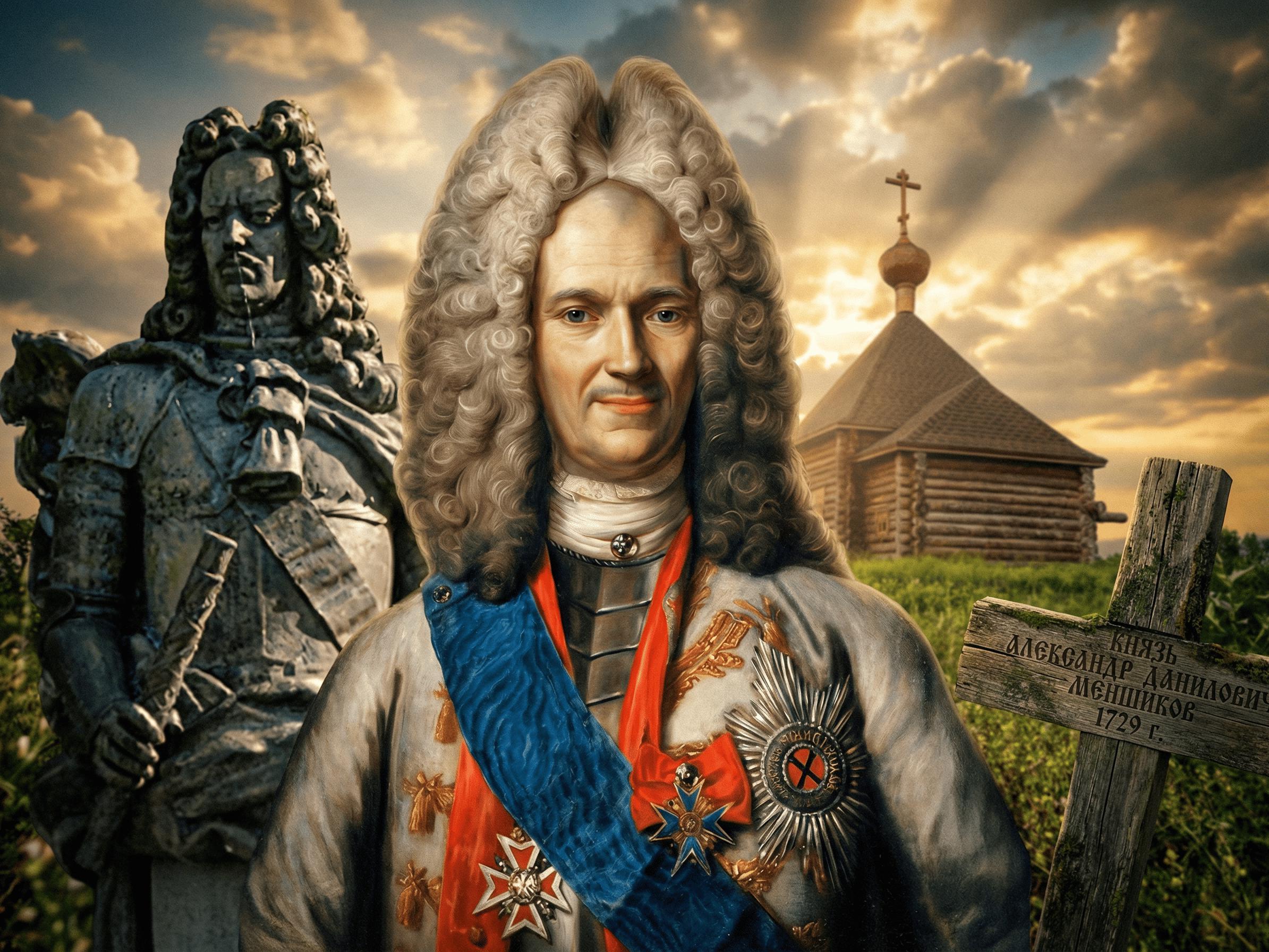

The mystery of the prince«s burial has troubled historians for many years.
In January of this year, Tyumen State University published sensational news — associate professor Sergey Turov had finally found the grave of Russian statesman and military figure Alexander Menshikov in Yugra (Khanty-Mansi Autonomous Okrug). For many decades, the burial place of the closest associate and friend of Peter I had remained unknown. 86.RU tells how the grave of His Serene Highness Prince Menshikov was sought over the years.
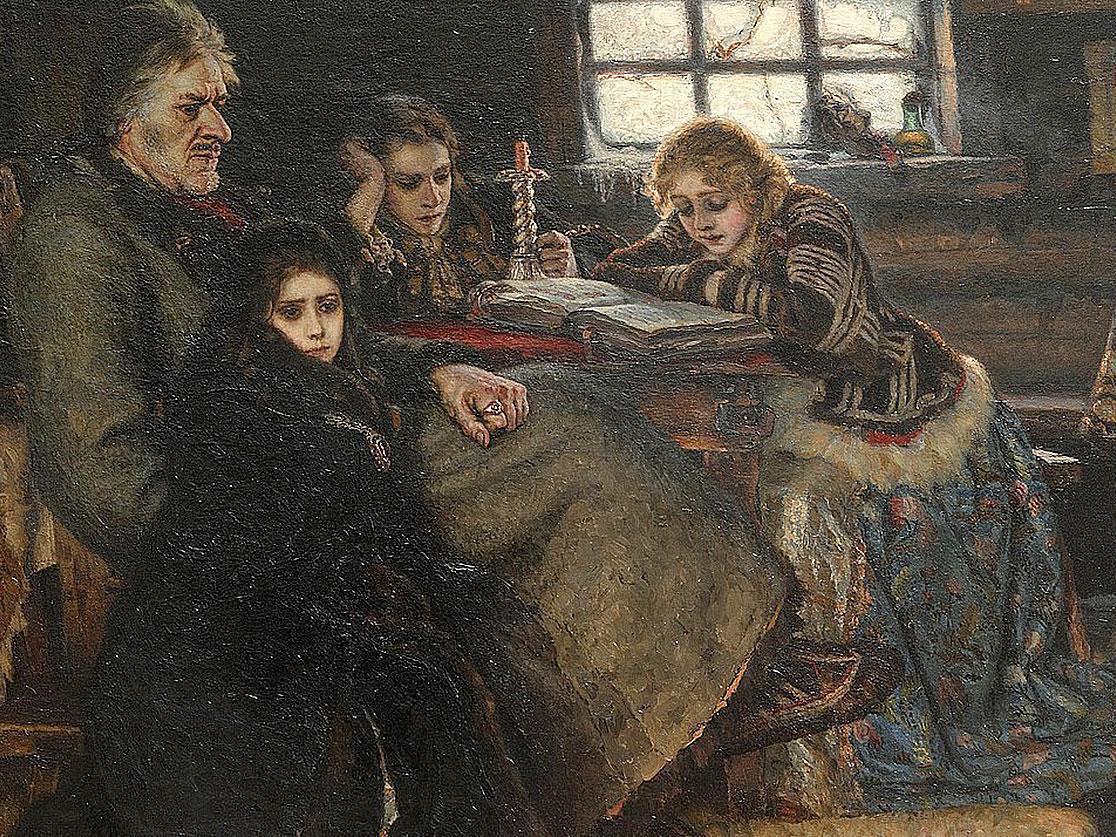
The artist depicted the prince during his period of exile.
Twice-Opened Grave
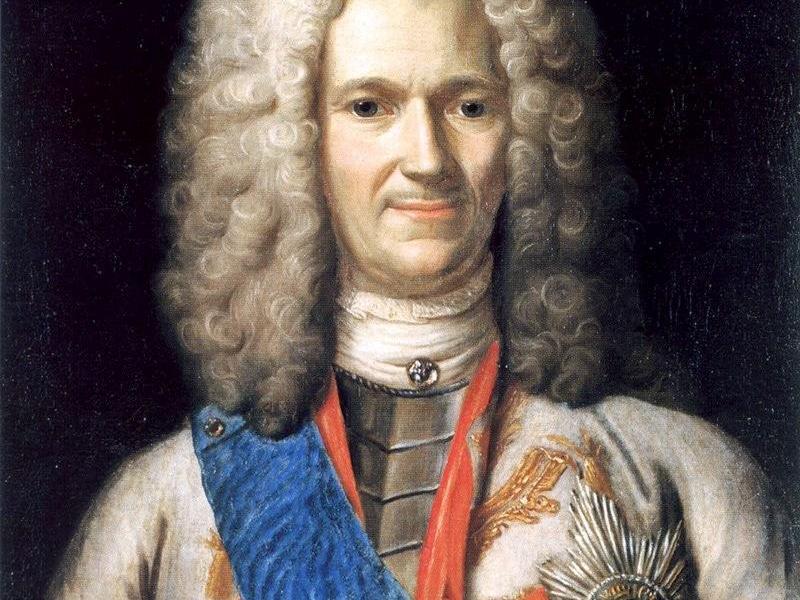
Menshikov served as the first Governor-General of St. Petersburg.
After the death of Peter I, his closest associate Alexander Menshikov remained at the court of his widow, Empress Catherine I. But after some time, he fell into disfavor. As a result of the palace coup on September 8, 1727, he was overthrown, deprived of property, titles, ranks, and awards, arrested, and exiled with his family to Siberia. His wife Darya Mikhailovna died on the way and was buried in the village of Verkhny Uslon near Kazan. Menshikov himself lived in a Yugrian settlement for about a year and a half.
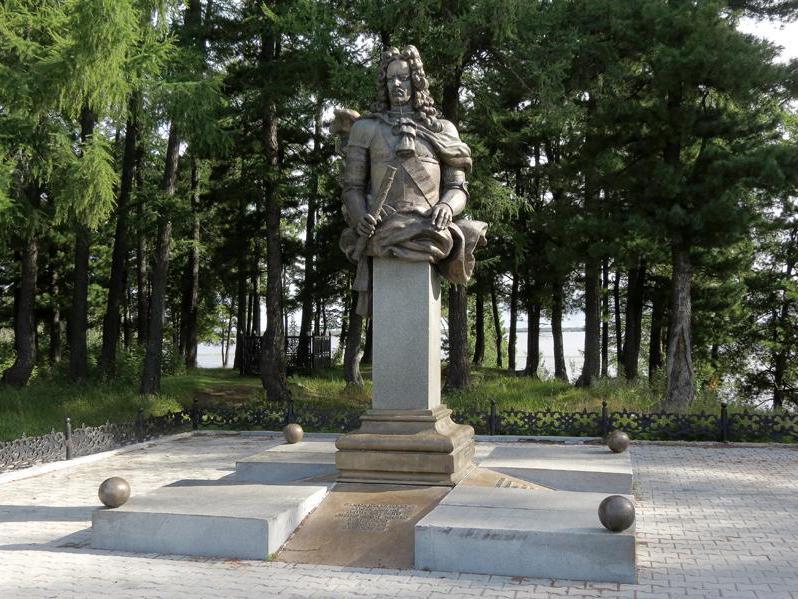
The monument was erected in Berezovo approximately three decades ago.
During his short stay in Berezov, Menshikov managed to build a church dedicated to the Nativity of the Most Holy Theotokos on the banks of the Sosva River. He worked alongside carpenters, dug the earth, hewed logs, and helped finish the interior. When the church was built and consecrated, the exiled prince became a churchwarden. In exile, His Serene Highness lived modestly, prayed a lot, and communicated with common people, who came to love and respect him. Alexander Danilovich passed away on October 22, 1729.
Menshikov was buried on a slope near the altar part of the Nativity Church. According to legends, a chapel was erected over the grave. But it burned down during a fire in 1764, which completely destroyed the church. Therefore, the burial site of Menshikov was eventually lost.
The search for the grave was initiated in 1825 by historian and Tobolsk governor Dmitry Bantysh-Kamensky. At his order, the town governor Andreev conducted an investigation that was successful. Cossack Ivan Shakhov indicated the probable location of the grave, which had been pointed out to him in his time by Berezov tradesman Matvey Bazhenov, who died in 1797 at the age of 107. The elder claimed that he was among those who lowered Menshikov«s coffin into the ground.
The grave was located 20 meters from the bank of the Sosva River on a slope, not far from the preserved foundation of the prison fortress where the Menshikovs had been held many years earlier. The prison, incidentally, also burned down in 1806.
On July 30, 1825, the grave was opened. After examining the coffin and the body, town governor Andreev sent a report to the governor that Menshikov«s grave had been found, accompanying the message with pieces of cloth and silk fabric cut from the deceased»s garments.
The grave was opened a second time on January 6, 1827, with the personal participation of Bantysh-Kamensky, as the governor wanted to make sure that the body found in Berezov was indeed Menshikov«s.
«Upon opening the coffin, I recognized in the deceased the famous commander of the times of Peter the Great, from a family portrait that I had previously owned. At the same time, town governor Andreev informed me that the body of the former Prince Menshikov had changed from before, turned black, and the cloth, braid, and silk cover had decayed,» Bantysh-Kamensky described the event. «Medical board inspector Albert descended into the grave, removed from the deceased a pectoral cross, a bow from a ribbon that was on his chest, and a particle of hair from an eyebrow to send all this to the great-grandson of A. D. Menshikov, Prince Alexander Sergeevich. The grave was filled with earth, a mound of turf was made, and a wooden grating was installed around it.»
Not the Real Prince?
In 1842, Siberian ethnographer Nikolay Abramov became interested in the burial of Alexander Menshikov. He studied the eyewitness accounts of the exhumation and concluded that the opened grave was not that of the prince at all.
According to Abramov, «judging by the clothing, it was a female burial, possibly of Menshikov»s daughter Maria.« And the grave of the statesman himself, the scientist believed, no longer existed.
The last attempt to find the foundation of the church built by Menshikov, near which he was buried, was made in 1992. Then 12 control excavations were carried out, but nothing was found.
In 2026, the story of the search for Alexander Menshikov«s grave continued. As reported by Tyumen State University, Sergey Turov»s research makes it possible to indicate with a high degree of probability the burial site and also to reconstruct the grave monument — the chapel.
«With the help of modern archaeological methods and instruments, it will be possible to find the grave of Alexander Danilovich without conducting endless excavations. The administration of the Berezovsky district plans to conduct research,» the university reported.
The First Monument to Menshikov in Russia«s History
The stay in Berezov of Peter I«s associate is commemorated today by a monument installed in the settlement. The monument by sculptor Antonov and architect Mamaev became the first monument to His Serene Highness Prince Menshikov erected in Russia. It was donated by the historical and memorial society »Prince Menshikov« and solemnly opened on June 27, 1993, as part of the anniversary celebrations marking the 400th anniversary of the founding of the settlement of Berezovo.
The monument is installed on the left bank of the Severnaya Sosva River. A bronze bust of Menshikov in military armor and a flowing cloak, with the ribbon of the Order of St. Andrew and a field marshal«s baton in his right hand, is placed on a pedestal made of light Ural granite. At the base, four (oriented to the cardinal directions) inclined bronze plates are fixed. The inscription on the frontal plate reads: »Grateful Russia to the associate of Peter the Great, His Serene Highness Prince Menshikov Alexander Danilovich.«