Martiros Saryan: Steppe Childhood, Tretyakov Acclaim

Saryan gained renown for luminous landscapes that reimagined Armenia’s mountains, valleys, and light.
Painter Martiros Saryan spent his childhood in the Don steppe and worked at a post office in Nakhichevan-on-Don, where a street would later bear his name. He then became a world-renowned artist known as the «painter of happiness».
In the project «Rostov — that’s us» we recount the story of one of the founders of the modern Armenian national school of painting.
He lived in the Don steppe — under the open sky
Martiros Saryan was born in 1880 in the town of New Nakhichevan (later Nakhichevan-on-Don, now part of Rostov-on-Don, Russia). The family had nine children, and Martiros was among the youngest. At first his father, Sarkis, lived with his brother, but they quarreled; Sarkis then took his wife and children and moved them out into the bare steppe. Later he recalled how the whole family slept under the open sky.
Packs of wolves roamed the steppe. Wild animals were frightening, of course. But three-year-old Martiros was quite happy then — if only because his faithful watchdog and friend, the dog Polkan, was nearby.
Life without a roof over their heads did not last long — over the summer the family managed to build a house and put up a stove.
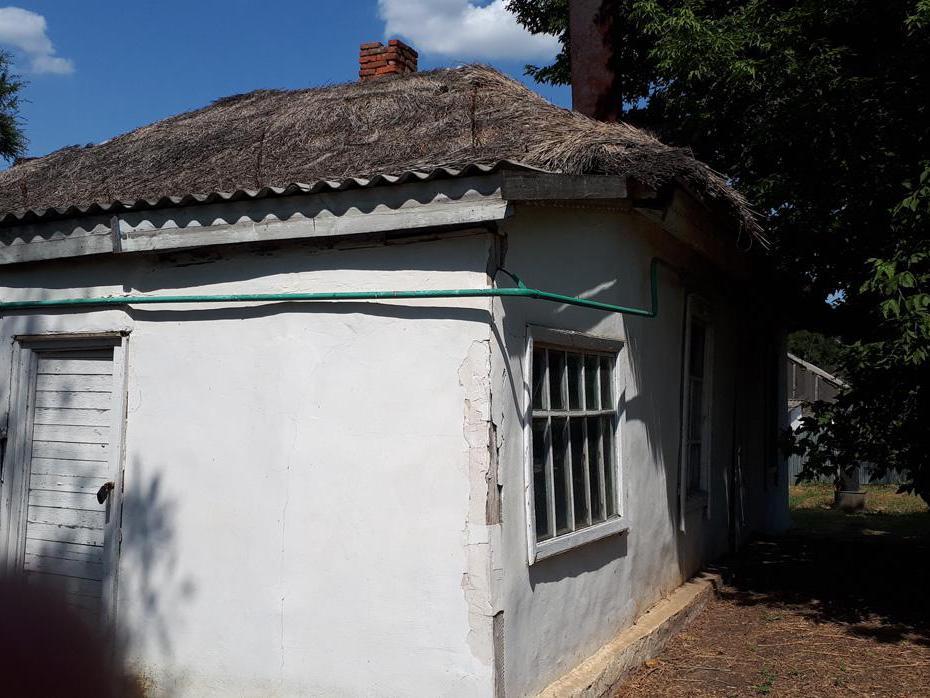
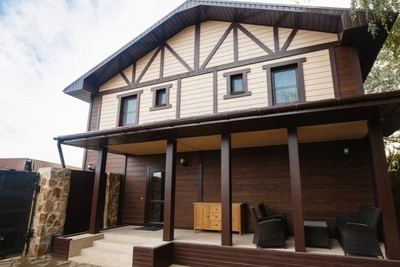
Saryan’s family home in Nakhichevan-on-Don survives, reflecting the settlement’s Armenian roots.
«I was three or four years old; I was happy and carefree. There was all the space a child could want for running. No dwellings nearby. All around, the horizon and the boundless steppe, beautiful in its barrenness and austerity. In the Azov steppe, near a reed-choked river, on a low hill my father dug a well, built a little house of sun-dried brick and roofed it with reeds. Our large family lived in it as if in a palace,» Saryan writes in his autobiography «From My Life».
Martiros’s father and mother dreamed of their historical homeland — Armenia. Saryan’s forebears had left that land and, starting in 1775, began resettling from Crimea to the steppes along the Sea of Azov. Thus the artist’s grandfather Mkrtich and his brother received plots on the banks of the Sambek River, northwest of Nakhichevan.
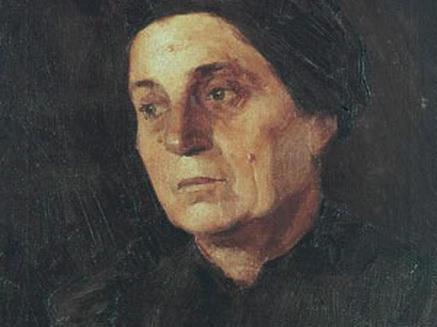
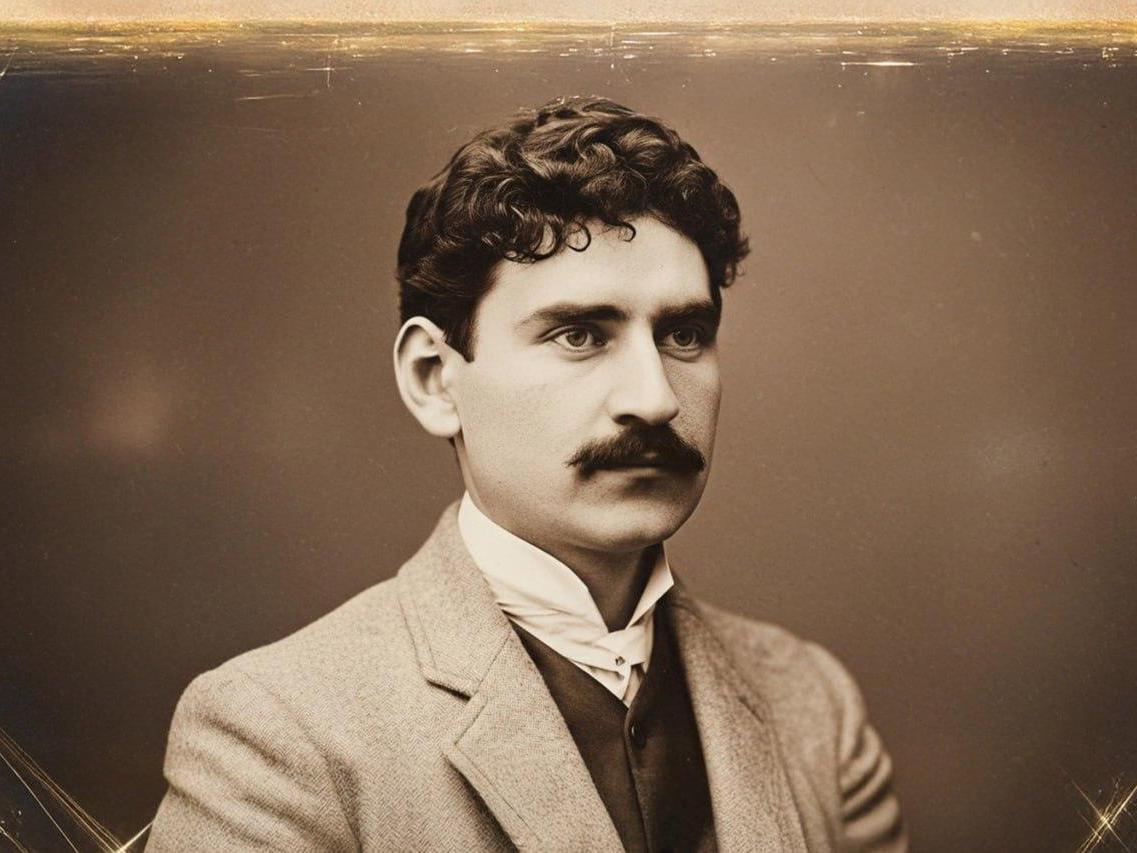
An early portrait reveals academic training before his signature coloristic breakthroughs.
«Even as children we would listen to our parents’ tales, full of love and longing, that we had a homeland — Armenia, with its mountains and gorges, rivers and forests, its fruitful orchards and fields. They told us all about it and added that when we grew up we would certainly go there,» the artist writes.
At the age of seven, Martiros and his older brother were sent to New Nakhichevan, which he had left as an infant. There the boys entered the Armenian–Russian city school. There was nothing like the freedom of the farmstead; at first Martiros felt as if he were in a cage.
«In the city everything seemed very cramped to me. The houses stood too close together. Like little wild creatures caught and locked in a cage. They had to be tamed and turned into people, useful people…» Saryan recalls.
He hid in a corner at the post office and sketched visitors
After finishing school — at 15 — Martiros took a job in an office that distributed magazines and newspapers. He worked there only seven months. The hardest thing for Saryan was carrying home twice a day the heavy bundles of paper.
«The work became especially difficult when autumn came, and then the harsh Rostov winter with its piercing cold winds,» Saryan recalls.
In his free time — and when the manager was away — Saryan read newspapers and magazines. Most of all he liked looking at the illustrations. Sometimes Martiros drew at work — hiding in a corner of the office and sketching the visitors, among whom there were striking types. He didn’t advertise his secret pastime, of course. But one day Saryan was found out — and that became the starting point of his artistic path.
«The visitors, noticing what I was doing, asked me to show my drawings. I couldn’t refuse, and they liked them. Among the visitors was a friend of my older brother Ovanes — Ambardanov, a pupil of the Moscow Lazarev Institute. He looked at my drawings with particular interest and thereafter never missed a chance to demand new ones,» the artist writes. (Lazarev Institute of Oriental Languages, Moscow.)
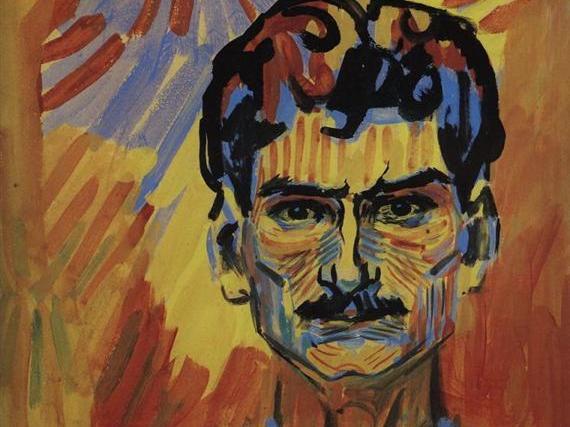
A 1909 self-portrait shows growing confidence; the State Tretyakov Gallery holds the work.
One visitor to the post office — a Cossack whom Saryan had sketched — did not like it at all. He feared the drawing would bring a curse down on him. The young artist was fired. Ambardanov advised Martiros’s older brother to send him to art school. He was told first to study with another artist from New Nakhichevan — Amayak Artsatpanyan, then a student at the Moscow School of Painting, Sculpture and Architecture (Moskovskoe uchilishche zhivopisi, vayania i zodchestva — MSPSA). In the autumn of 1897 Saryan enrolled there as well.
Arriving in Moscow, Martiros first visited the Tretyakov Gallery — and from then on went there almost every day. Saryan and his classmates also went to the theater, where they were fortunate to see the celebrated actors Feodor Chaliapin and Maria Yermolova. One of Martiros’s friends was the painter Kuzma Petrov-Vodkin. (The State Tretyakov Gallery — Gosudarstvennaya Tretyakovskaya galereya, GTG.)
Saryan studied in the workshops of the painter Valentin Serov and the Russian impressionist Konstantin Korovin. Artistically they were crucial figures for him. The influence of the former is visible in Saryan’s early works — for example, the 1904 painting «Armenian Woman from Nakhichevan», still quite restrained and softly gray, without the vivid colors and rich palette that would later make his art unforgettable.
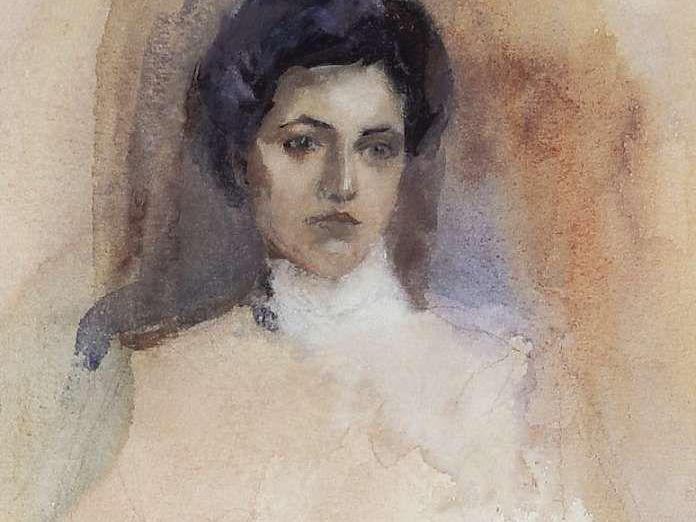
This restrained 1904 canvas precedes the saturated palette that later defined Saryan.
«Painter of happiness»
Saryan traveled to his historical homeland for the first time in 1901, when he was 20. He went with another student, Gevorg Miansaryan. Martiros was especially impressed by a trip to the ruins of Ani, the ancient Armenian capital.
Ani is a ruined medieval Armenian city. From 961 to 1045 it was the capital of the Bagratid Armenian kingdom. Today the site lies in Turkey.
«Astonishing is Armenian architecture coming from the depths of centuries, the remnants of which have miraculously survived in deep gorges and ravines, on the slopes of impregnable mountains and in fertile valleys. Much was wantonly destroyed and disappeared forever, and most of what remained gradually crumbled, left without any oversight,» Saryan writes.
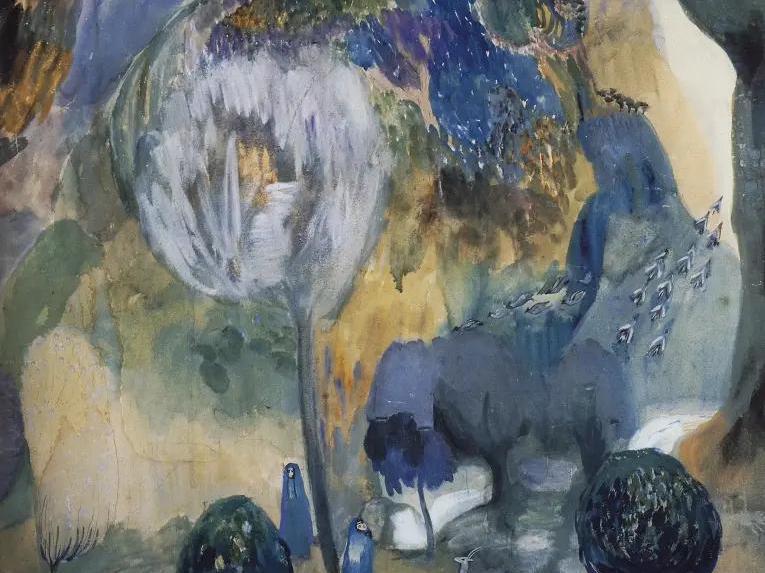
Impressions from Armenia’s gorges shaped his early landscapes with stylized forms and heightened color.
Armenia’s history, culture, and nature helped shape Saryan as an artist. He is most often associated with landscapes, which captivated him during that journey and which he later studied in the workshop of Isaac Levitan. Saryan did not strive to depict Armenia’s mountains and gorges realistically; he painted them as he perceived them. Hence the unnaturally bright colors, unusual figures, and abstract images found in his canvases.
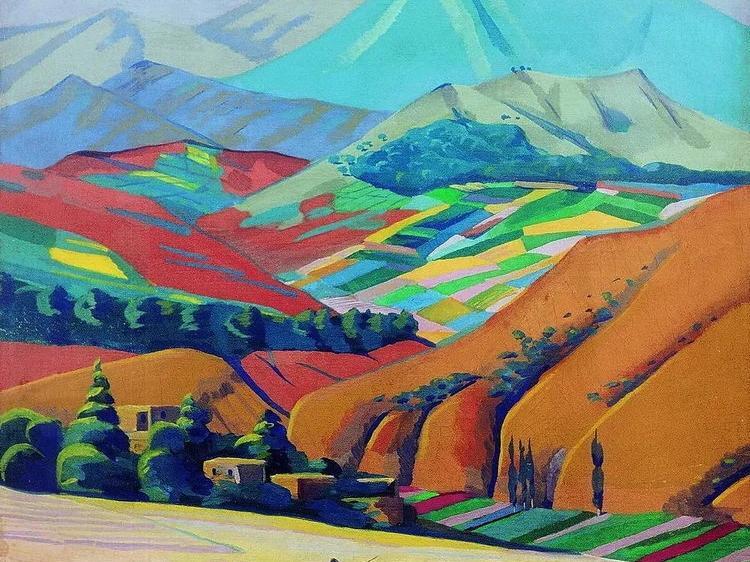
Postwar works continued exploring Armenian topography through simplified planes and vibrant tonal harmonies.
Saryan’s paintings began appearing in galleries in the 1900s. He exhibited with the Blue Rose association («Golubaia Roza»), which included fellow students from the school — first in Saratov, then in Moscow. Of artistic movements the «Blue Rosists» were closest to the Symbolists; they valued Mikhail Vrubel, for instance, very highly.
At first, the less progressive critics did not much care for Saryan — his images were too unusual. But in time the world recognized him. Here, for example, is what the French poet Louis Aragon would write in 1960:
«It is a rediscovered treasure: as if the floodwaters had receded and the Yerevan valley had turned into the purest color of the future. This color is so beautiful that the centuries must assign Saryan, alongside our Matisse and Cezanne, one of the foremost places. Perhaps Saryan’s place will be even higher, for he is the painter of happiness.»
Tretyakov Gallery
Success began to come to Saryan in the 1910s. From 1910 to 1913 he traveled widely, visiting Turkey, Egypt, and Iran. The Rostov native headed East to understand it better and «justify [his] searches in painting». He wanted to show the Eastern world. After a trip to Constantinople (now Istanbul) he returned to Moscow deeply impressed. The artist painted bright, colorful Asian streets — and Eastern dogs. He had loved animals since childhood.
«The greatest interest for me was the street — the rhythm of its life, the vivid crowd, and the dogs… living here in entire family packs,» Saryan recalls.
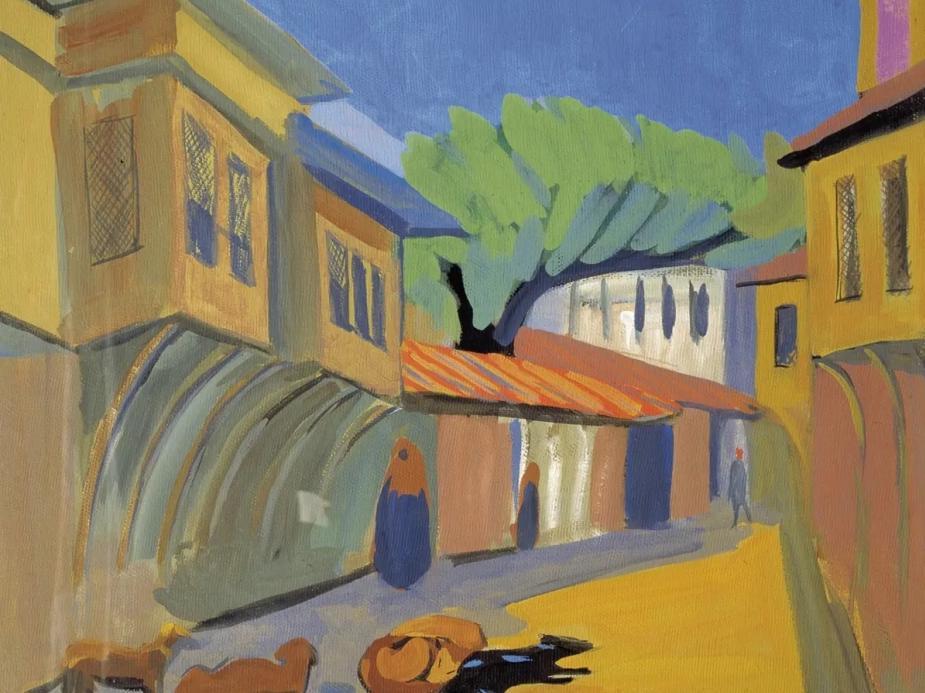
Constantinople’s street life and stray dogs became vivid subjects after his eastern travels.
In the early 1910s the Tretyakov Gallery began buying the artist’s works. Today it holds his «Wisteria», «Green Jug and Bouquet», and «Street. Noon. Constantinople» — among others. In those same 1910s Saryan met the already well-known poet and artist Maximilian Voloshin, who wrote the first serious article about the young painter.
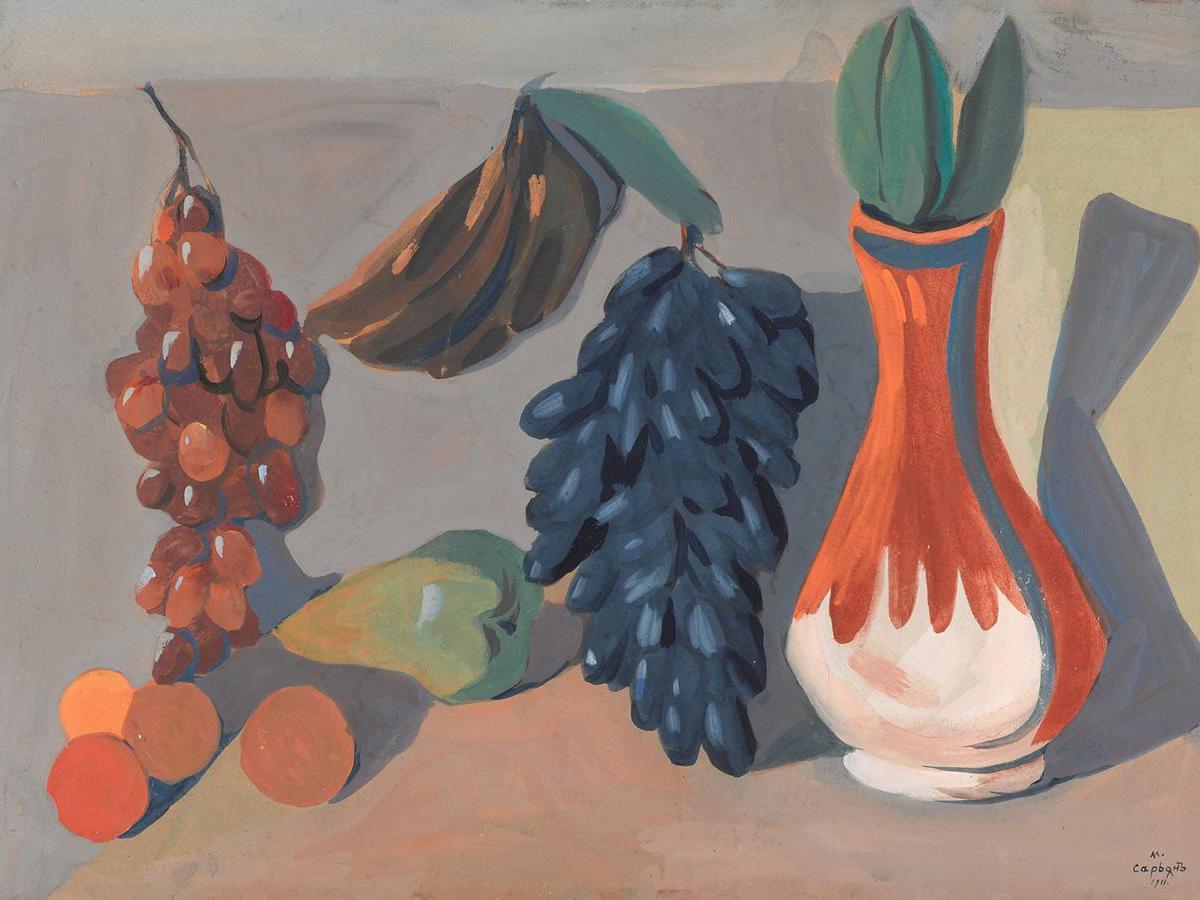
Still lifes distilled form and color, echoing his search for essential, radiant motifs.
«Saryan is only at the beginning of his creative realizations. What he has given so far is extremely important, as it introduces a new boundary in our painterly attitude toward the East and attests that soulless and stifling Orientalism has ended,» Voloshin wrote.
He returned to Rostov and moved to Armenia
In 1915 Saryan met his future wife, Lusik Aghayan, the daughter of a famous Armenian writer and educator. They met in Tiflis (now Tbilisi, Georgia), where he was recovering his peace of mind. Before that the artist had been helping Armenians fleeing genocide in the Ottoman Empire — events that deeply shook him.
The artist met his future wife in a café, where he «couldn’t take [his] eyes off the captivating image of this young woman». They married a year later and remained together until the end of his life. They had two sons — Lazar and Sarkis. Lusik became his muse for many years — we can see her in many of Saryan’s paintings.
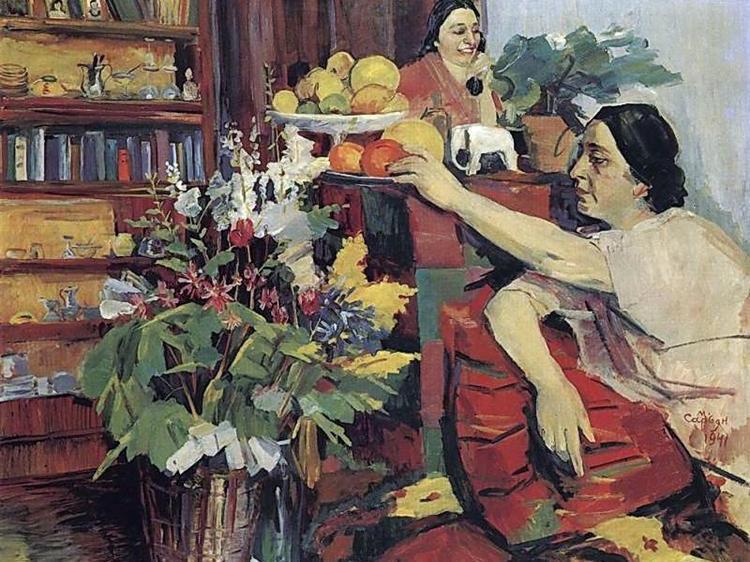
Portraits of Lusik Aghayan Saryan recur, intertwining family life and artistic inspiration.
In 1918–1919 the young family lived in Nakhichevan-on-Don. There Martiros Saryan initiated the creation of the Armenian Regional Studies Museum — now the Museum of Russian–Armenian Friendship — and served as its first head. Saryan also collaborated with theater people, helping, for example, to design the production of «Princess Turandot» at the Rostov Musical Theater (Carlo Gozzi’s fairy-tale play).
In 1921 the family settled in Armenia. From there he moved to Paris for a couple of years, but Armenian nature remained the main theme of his work for a long time. In 1937, during the purges of «enemies of the people», the NKVD burned 12 of Saryan’s paintings — those that depicted the very «enemies». Only the «Portrait of the Poet Yeghishe Charents» was saved, spirited away by museum workers. (NKVD — Narodnyi komissariat vnutrennikh del, People’s Commissariat for Internal Affairs.)
Yet it cannot be said that the artist himself had serious conflicts with the Soviet authorities. In 1939 Saryan created a large panel with an Armenian landscape for the Armenian pavilion at VDNKh in Moscow, and in 1961 he received the Lenin Prize for the cycle «My Homeland», created during his travels across Armenia. (VDNKh — Vystavka dostizhenii narodnogo khoziaistva, Exhibition of Achievements of National Economy.)
He saved Rostov’s Surb-Khach
Saryan treated history with great reverence and defended cultural heritage. This concerns not only Armenia, where he founded the first State Museum and the Committee for the Protection of Monuments. Martiros Saryan also rescued Rostov’s Surb-Khach — the Holy Cross Armenian church.
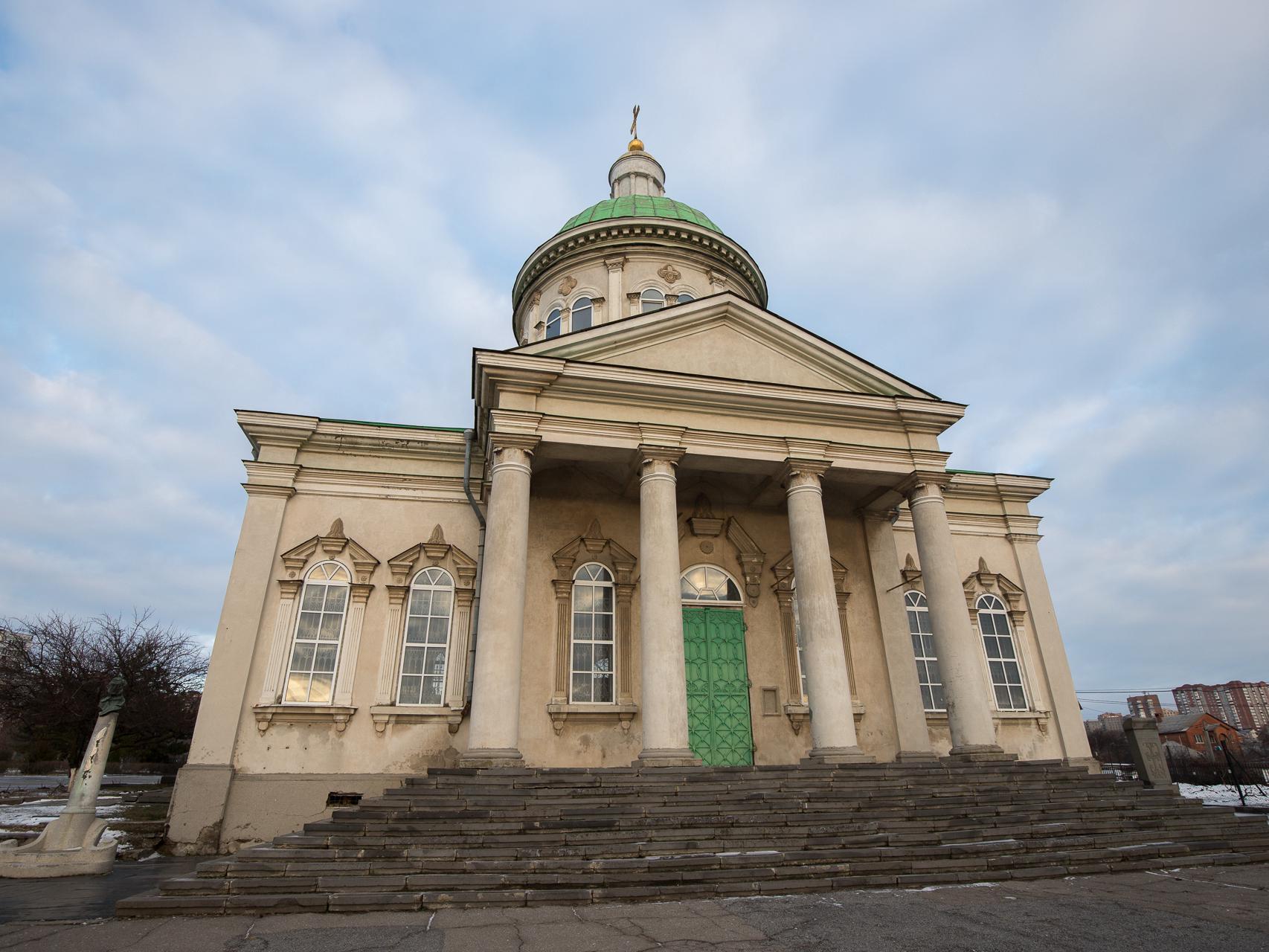
The Surb-Khach Armenian church in Rostov bears scars and careful mid-century restoration.
The church was badly damaged by the Germans during the Great Patriotic War (World War II). In the 1950s the Soviet authorities wanted to demolish it completely. But Saryan not only achieved the church’s preservation and recognition as a historical monument — he also helped with its restoration.
In 1972 Martiros Saryan died in Yerevan at the age of 92. In 2019 a star honoring the artist was installed on Voroshilovsky Prospekt in Rostov-on-Don; a street in Nakhichevan also bears his name.
In September of this year, the Rostov Museum of Fine Arts held a one-day exhibition — «The Palette of Martiros Saryan». Marking the 145th anniversary of the artist’s birth, it presented six Saryan works from the museum’s collection. The painter’s granddaughter, Sofia Saryan, visited Rostov for the first time for the exhibition.