Historian details criticism of Mamayev Kurgan memorial and museum relocation
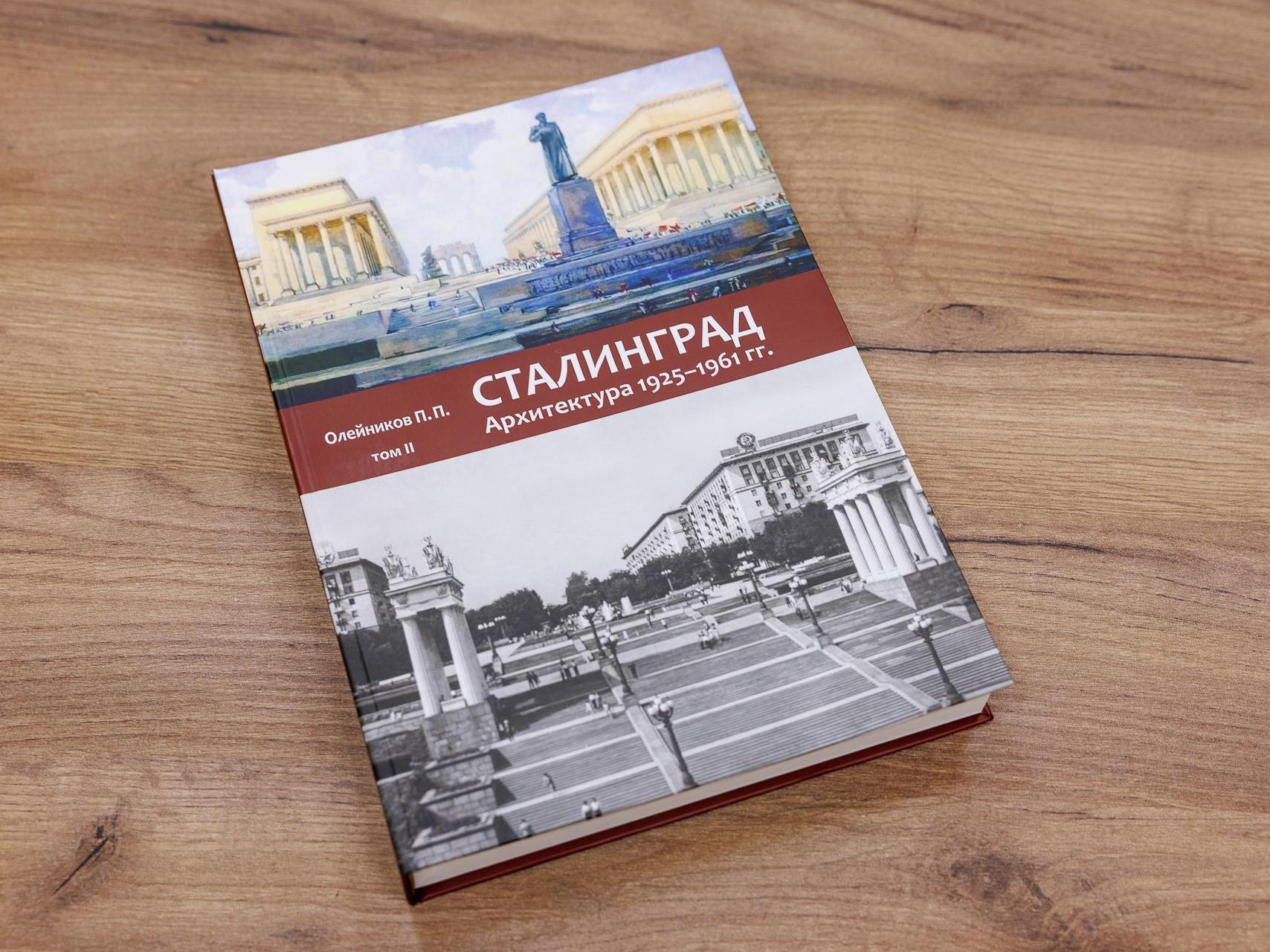

The presentation of the second volume of the monograph on the architecture of Stalingrad-Volgograd took place in the local history museum.
The presentation of the second volume of the extensive research «Stalingrad. Architecture 1925–1961» took place today, 23 January, at the Volgograd Regional Local History Museum. The author of the research, prominent architectural historian, Professor Petr Olenikov of Volgograd State Technical University, detailed the history of the postwar restoration of Stalingrad and its large-scale growth.
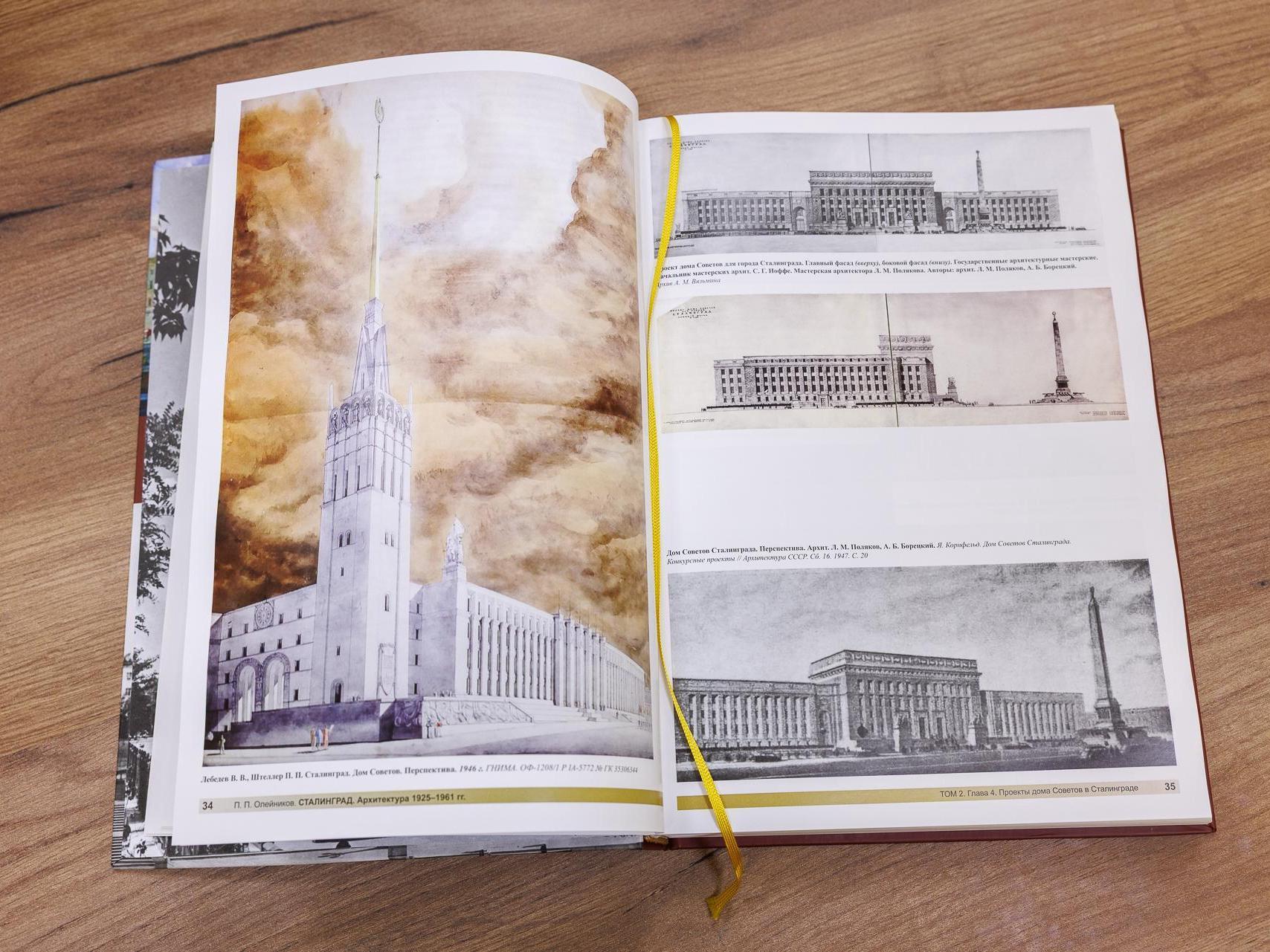
The House of Soviets in Stalingrad was never built, although design work was started several times.
According to Petr Olenikov, his monumental work systematizes knowledge about the development of the city«s architecture and fills »blank spots« in its history. The book uses personal archives of descendants of great architects who worked on creating the city»s most important objects. Both those that still stand and those that were never realized.
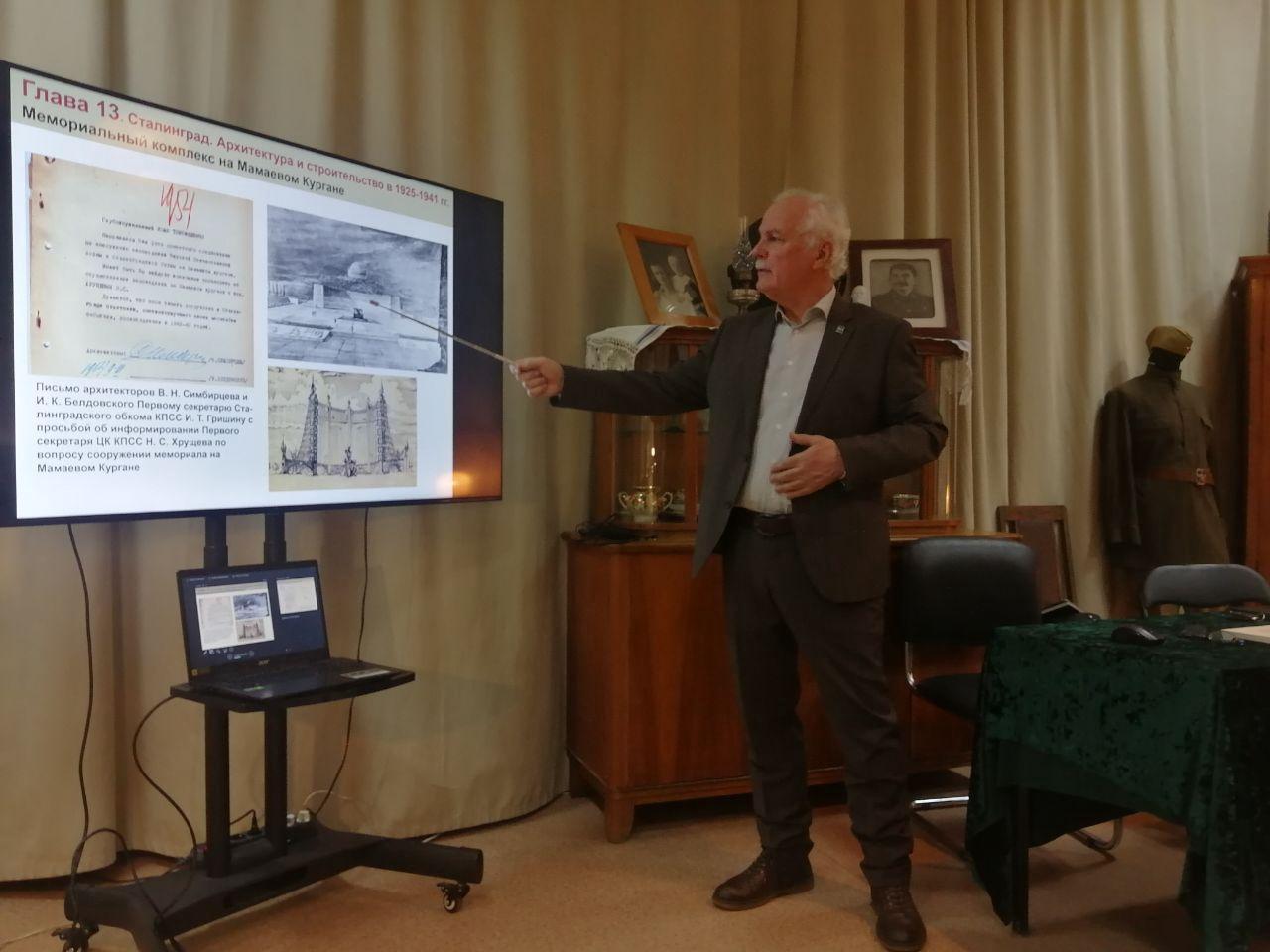
In his work, Petr Olenikov collected thousands of materials on the architecture of Stalingrad.
«Somehow we managed to organize a meeting with the son of Vasily Simbirtsev — the chief architect of Stalingrad from 1944 to 1959,» says Petr Olenikov. «We started communication and cooperation, as a result of which he gave us his father»s archives — documents on Stalingrad from 1944 to 1959. Imagine, what photographs, drawings, projects are there — they are presented in our book. These are documents that had never been published before. On them, Simbirtsev put the date by hand, made notes and signatures. Here we can see, for example, how in 1957 the decision was made to allocate land for the Alley of Heroes.«
The book also tells the history of the scandal that unfolded in connection with the design of the memorial ensemble «To the Heroes of the Battle of Stalingrad» on Mamayev Kurgan.
«In 1960, the famous writer Boris Polevoi (author of »The Story of a Real Man«. — Ed.) published an article in Komsomolskaya Pravda titled »Should the Memorial to the Heroes of Stalingrad Be Like This?« recounts Petr Olenikov. »He was outraged by the absence of a competition, criticized the project, and called it gigantomania. Immediately after this, he was summoned for a conversation by Minister of Culture Yekaterina Furtseva, and then he was talked to at the Central Committee of the CPSU. After that, Boris Polevoi withdrew his statements regarding Mamayev Kurgan.«
Moreover, according to Professor Olenikov, the museum-panorama «Battle of Stalingrad» was initially designed as part of the ensemble on Mamayev Kurgan and was called the Defense Museum, but architects abandoned this idea due to the scale of the future building.
«Israel Fialko together with other architects studied the project and realized that the museum would block the view of the Motherland statue,» says Petr Olenikov. «The architects went to Khrushchev and explained that the project needed to be adjusted. As a result, the museum-panorama was moved to the embankment, where it now stands.»
Recall that the first volume of the book covered the architectural life of the city in the prewar period.