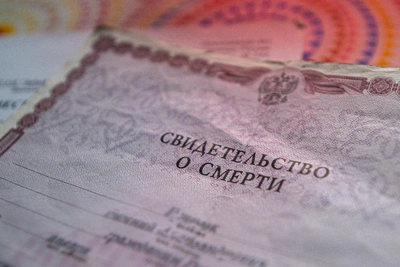
Why Rostov residents fall for scams: psychologist explains

A psychologist explained why Rostov residents believe the dangerous words of scammers.
The damage from phone scammers is counted in billions of rubles (tens of millions of USD at current rates) and thousands of ruined lives. People trust criminals so much that they don«t even doubt their demands to organize an explosion on railway tracks or plant explosives under someone else»s car. Even after being detained, they themselves cannot explain how they could believe the scammers. Why people fall for the blatantly dangerous demands of criminals and whether constant prevention by the authorities is effective, 161.RU asked psychologist Rodion Chepalov.

The damage from the actions of scammers amounts to billions of rubles (tens of millions of USD at current rates).
«Now it»s funny that I believed it«
Scammers psychologically pressure the victim, not allowing them to think rationally.
A Rostov resident Margarita (name changed. — Ed.) became a victim of scammers this summer. The criminals called her, introducing themselves as employees of a law enforcement agency. They claimed that money was allegedly being transferred from her accounts to finance the Armed Forces of Ukraine. They demanded access to her «Gosuslugi» (government services portal) and bank card data and under no circumstances to tell relatives about it.
Sometimes scammers accidentally hit the right image by using specific language or tone.
«Now it»s funny that I believed it. Well, if they considered me a criminal, would they call? They would have come to detain me right away. No one would have messed with me and warned me,« Margarita reasons now.
Margarita considers herself a person with a critical mindset, but at the moment of communication with the scammers she was literally in a state similar to hypnosis. She was unable to hang up and call her loved ones. The Rostov woman recalls constant pressure from the other end of the line.
«He [the scammer] communicated very authoritatively and rudely, didn»t give me even time to think. When I hung up, he called back immediately. I have never been in such a state,« says the Rostov woman.
The criminals gained access to her «Gosuslugi» (government services portal), but not to her bank cards. After communicating with the scammers, Margarita quickly realized that she had become their victim and froze her account on the site. The next day she wrote a statement to the police and turned to the MFC (Multifunctional Center) for help.
«I was in shock at myself that I could believe such a thing. I usually don»t answer unknown numbers at all. But here something terrible happened to me, some kind of «magic»,« recalls the Rostov woman.
No one is immune
Psychologist Rodion Chepalov says that scammers rely not on the «stupidity» or naivety of victims, but on universal mechanisms of the psyche. In a situation of threat or uncertainty, everyone«s anxiety begins to rise, and rationality takes a back seat.
«Scammers purposefully or intuitively hit vulnerable zones: fear of punishment, loss of money, threats to loved ones, social isolation, shame, or »a mistake for which it«s too late to answer». When a person hears a message that coincides with their deep fear, the «fight or flight» reaction is triggered, and critical thinking is temporarily turned off,« the psychologist explains.
Suggestibility is a state, not a constant trait. People with high intelligence and education can also fall for the absurd or dangerous demands of scammers.
«For example, when a scammer speaks on behalf of an »influential organization« or »higher authorities«, the mechanism of authoritative pressure is activated. If urgency is added — »you need to act right now« — the person has no psychological space to check the information. They act automatically, trying to reduce anxiety at any cost,» says Rodion Chepalov.
There is another factor — fragmented trust. Some people may not trust the world in general, but trust a specific style of speech or even a voice.
«Sometimes scammers accidentally hit the right image: they use »correct« formulations, a professional tone, or adjust to the victim»s expectations. At that moment, an illusion of control arises: it seems to the person that by following the instructions, they are saving the situation, and refusal, on the contrary, will worsen it. That is why people can go for obviously illegal actions without realizing their consequences: they are in a narrowed state of consciousness where the main goal is to immediately reduce internal tension,« the psychologist explains.
Are warnings about scammers and their schemes ineffective?
Authorities and law enforcement agencies regularly release posts on social networks or videos warning about scammers, their methods, and, most importantly, the consequences for their victims. But many continue to follow the criminals« instructions even if they have heard about their schemes.
«Prevention in the form of one-time warnings often doesn»t work because knowledge itself does not equal resilience. At the moment of strong emotional excitement, a person does not remember instructions, they act according to a familiar scenario,« explains psychologist Rodion Chepalov.
He recommends learning to resist external influence. To do this, one must become aware of their fears, voice them, and in a safe environment «rehearse» refusals, pauses, and checking information.
«This reduces automaticity and returns a sense of inner support. Many people act unconsciously, on autopilot, because they have never explored their triggers. When there is experience of awareness and practice, an understanding of »what exactly is happening to me now« and »why I am so afraid«, suggestibility sharply decreases. A person learns to withstand anxiety without immediately extinguishing it with submission, and this becomes the main psychological factor of protection against manipulation,» concludes Chepalov.