How to Grow Dracaena: Dragon Tree Care at Home
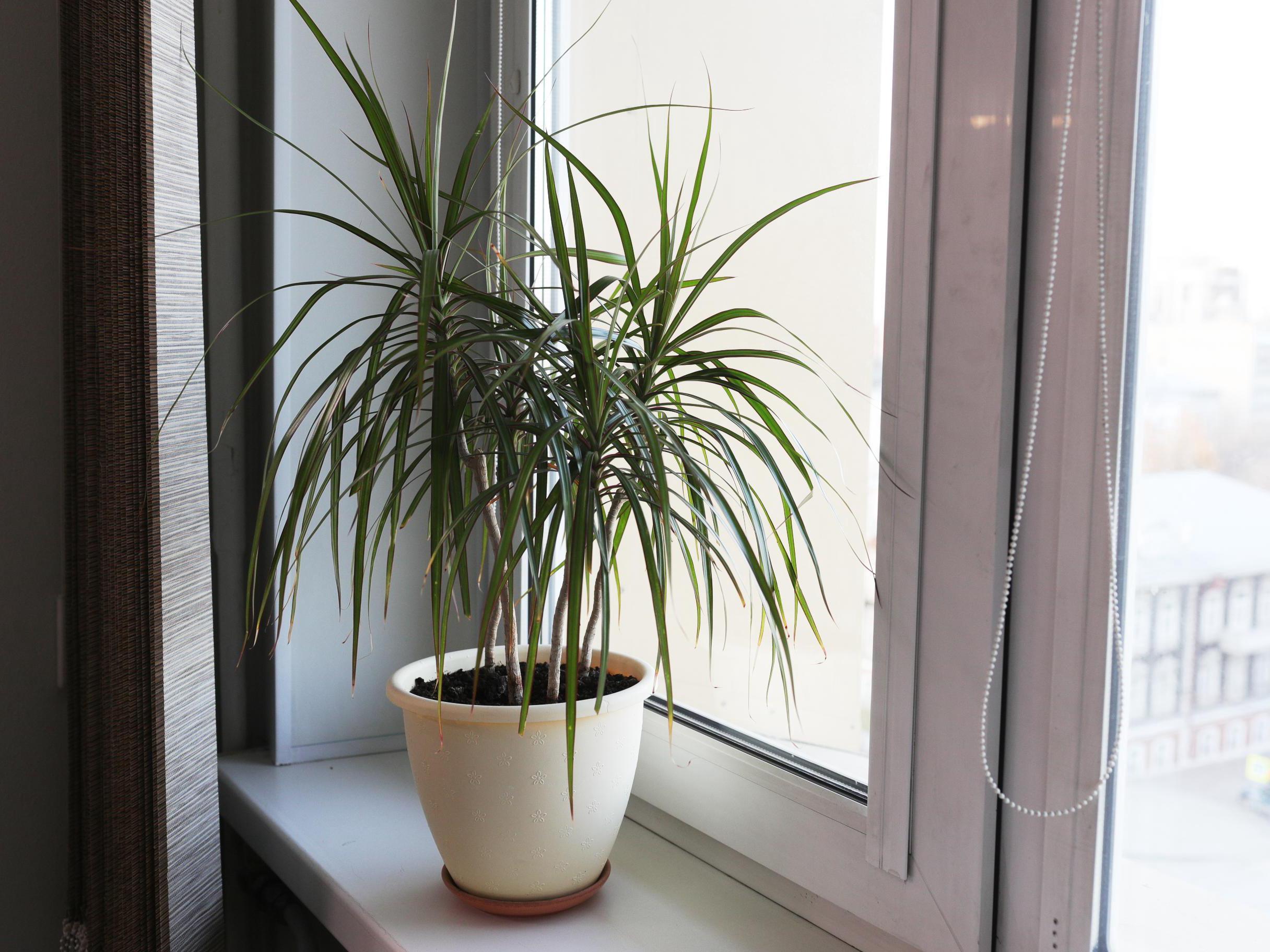

Dracaena or dragon tree is valued for its low maintenance and ability to purify the air. Care at home is simple, and the benefits are many. Many believe that the plant can attract luck and ward off evil spirits. Despite its appearance, it is not a palm tree! We explain how to grow this indoor flower and why it has such a beautiful second name.
Dracaena — Care at Home
There are many myths and legends surrounding dracaena. It is believed that this plant in the home is a true magnet for success in all areas of life. It can ward off evil spirits if placed at the entrance, is considered a family talisman, and protects the home from misfortunes. And, of course, the striking folk name for dracaena — dragon tree — cannot help but attract attention to it.
“The secret lies in the name. In translation from Latin, ‘dracaena’ means female dragon, and this is connected to the bright red color of the plant’s resin,” explained Tatiana Chernova, a practicing landscape designer. “Dracaena has many beneficial properties; it can purify and disinfect the air. The more stems the dracaena has, the more useful it is.”
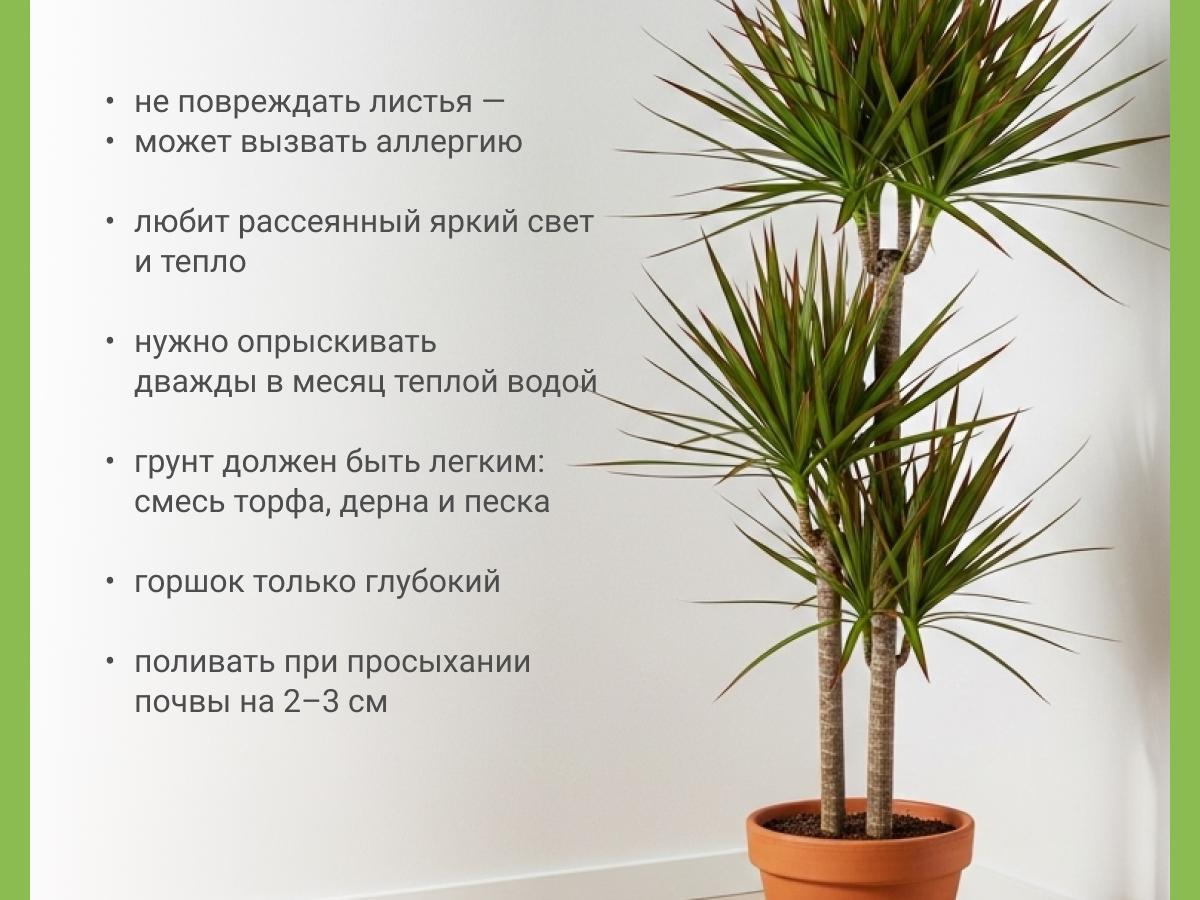
But there are several important nuances. Dracaena can cause allergic reactions and is not recommended as a snack for cats, as its leaves are toxic. The plant’s sap can cause diarrhea and vomiting in pets.
When choosing a plant, you need to carefully inspect the trunk and leaves — they should be strong, without damage or spots. It is important that the soil is clean and free of pests. Dracaena is suitable for both home and office.
“Dracaena is not a palm tree; it only resembles one. It is a perennial plant from the asparagus family, and it is not difficult to care for,” assured the specialist. “Like most plants, dracaena prefers bright, indirect light, warmth, and high humidity.”
You should not grow aloe and cacti near dracaena. Do not place the pot in a draft or under direct sunlight. The room temperature in winter should be above +15 degrees Celsius (59°F), in summer — above +18 degrees Celsius (64°F).
How to Transplant Dracaena
The roots of dracaena grow deep, so for transplanting, you need a tall pot. Dracaena, unlike many other indoor plants, tolerates transplanting well. Before the procedure, it is worth watering it with warm water — this will make it easier to move the soil ball and work with the roots.
“Dracaena is not demanding when it comes to soil: you need a mixture of turf, peat, and sand or a palm mix. It is important that the soil is loose and water-permeable. At the bottom of the pot, drainage is essential,” emphasized Tatiana Chernova. “If the plant is wilting, you need to check all the main indicators: light, water, fertilizers. If something is in excess or, conversely, lacking, you need to adjust it, and everything will fall into place.”
If dracaena outgrows and becomes unattractive in appearance, you can prune it. In this case, the top part of the plant can be planted in another pot, and the bottom part — left alone — to regrow.
How to Water Dracaena
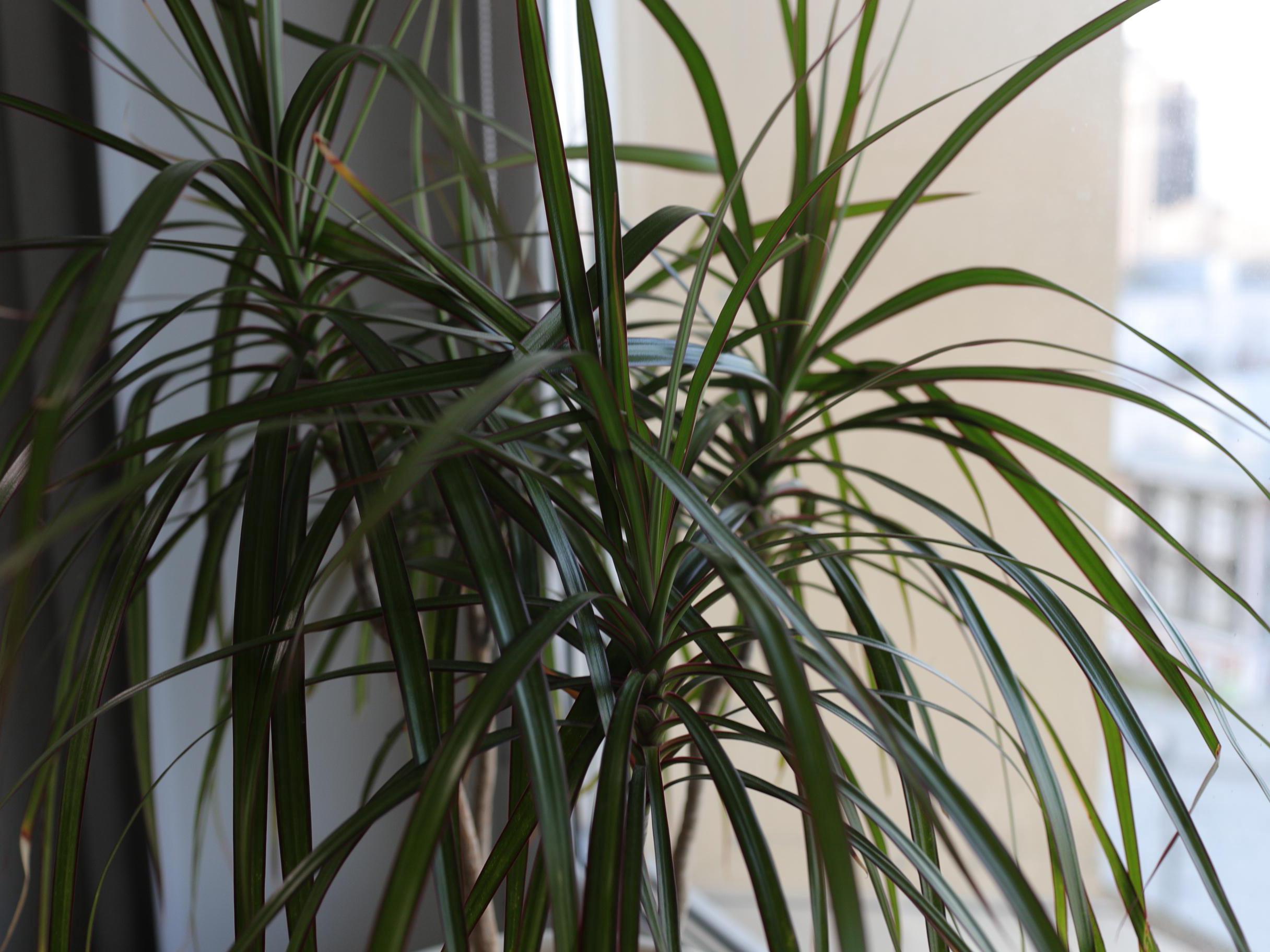
Dracaena loves humidity, so you should spray its leaves with room-temperature water at least every two weeks. From April to September, it needs one to two feedings with complex fertilizers.
“In summer, you need to water about twice a week; in winter, watering should be reduced. The water should be at room temperature. There is nothing complicated about it,” noted the specialist.
Water stagnation can cause root rot, so it is important not to overdo it. The soil should dry out to a depth of about two to three centimeters.
Interesting Facts About Indoor Flowers
Begonia is an air-purifying plant: care at home for the flower that helps fight infections.
Zamioculcas or dollar tree: care at home — from planting to watering.
Ficus benjamina — basic care and watering rules.